










China’s Ministry of Environmental Protection (MEP) circulated four public announcements in May 2013, in which it publicised: 1) 13 major pollution incidents that the MEP handled in the first quarter of 2013; 2) findings of a survey on groundwater pollution in the North China Plain area; 3) results of the MEP’s annual review of major pollutant reductions in all provinces and eight state-owned enterprises (SOEs) in 2012; and 4) a list of nine cases of environmental violations to be handled under the MEP’s close watch. The ministry also invited the media to monitor and provide public supervision of violators.
Implications for foreign investors
In the past year, the ministry has tightened enforcement measures in response to public outrage sparked by frequent environmental scandals. The MEP has not only shown its willingness in cases of severe violations to order entities to rectify violations, cease production and relocate operations, but also to “name and shame” by disclosing the identity of polluters.
This increasingly strict enforcement climate means that foreign companies operating in China must prepare for a more stringent regulatory environment and ensure full compliance with China’s environmental laws. Investors should conduct thorough environmental investigations of operations, and potential targets and business partners.
[ihc-hide-content ihc_mb_type=”show” ihc_mb_who=”1″ ihc_mb_template=”2″ ]
What the announcements convey
The MEP announcement published on 8 May 2013 briefly summarised 13 major pollution cases handled by the ministry’s local bureaus in the first quarter of 2013. Violations included: 1) pollutants discharged without the underlying project being inspected and accepted, or without the waste processing facilities being constructed; and 2) excess emission of waste gas, dust, water and noise pollutants. All of these violations were deemed major violations and the enforcement actions against them were relatively severe. In at least seven cases, the responsible polluters were ordered to suspend production and take remedial measures. In two other cases, the polluters were required to relocate. We expect the MEP to continue to report quarterly on additional major enforcement actions.
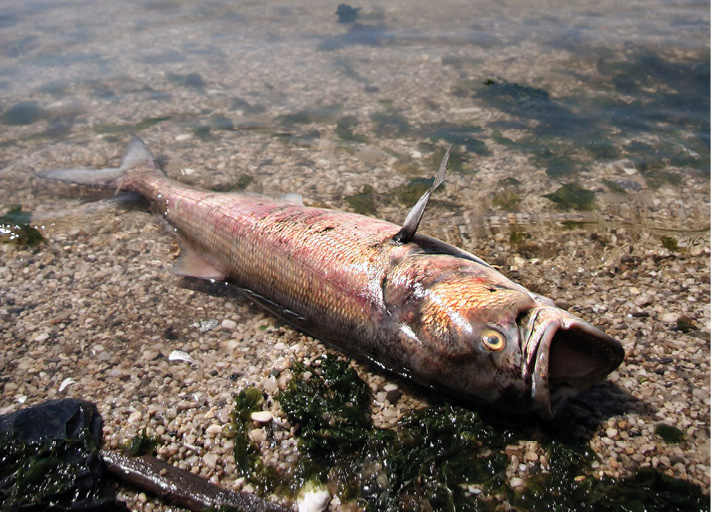
On 9 May 2013, the MEP announced the results of an investigation of groundwater pollution in the North China Plain, which covers Beijing, Tianjin, Hebei, Shanxi, Shandong and Henan provinces. The action targeted 25,875 enterprises and found 558 violations. After the action, 424 violators were ordered to rectify their actions, 88 violators were fined an aggregate amount of RMB6.13 million (US$1 million), and 80 violators had penalty procedures initiated against them. The announcement named 55 enterprises that were found discharging or storing wastewater using leaching wells, sewage pits, ditches and other channels that did not use leak-proof materials.
The MEP announcement on 14 May 2013 revealed the results of a review of major pollutant reductions – i.e. chemical oxygen demand (COD) and sulphur dioxide (SO2) – in 2012 in all provinces and by eight SOEs directly administered by the central government.
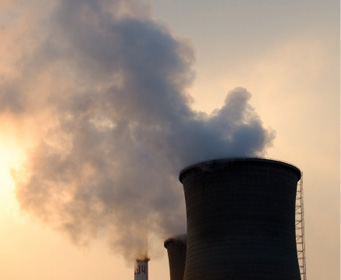 The MEP imposed a moratorium on the approval of new coal-fuelled projects in Inner Mongolia, Henan and Guizhou, and suspended the authority of Bayannur (Inner Mongolia), Puyang (Henan), Xiangyang (Hubei), Jieyang (Guangdong), Dongfang (Hainan) and Wuwei (Gansu) to approve environmental impact assessments for new construction projects emitting COD and ammonia nitrogen. The announcement also specifically named 31 enterprises that were fined or ordered to rectify their actions.
In the MEP announcement published on 24 May 2013, nine cases were singled out for the ministry’s direct monitoring and the names of the polluters were disclosed for public monitoring because the underlying environmental violations were carried out over long periods of time. The MEP clearly considers production without environmental approval to be a severe violation and penalised the violators in seven out of the nine cases for this reason. In the two remaining cases, the violations consisted of an unapproved and uninspected phosphate mining project and the improper disposal of hazardous waste.
How to avoid risks
The adage, “do as the Romans do”, will no longer work when it comes to environmental compliance in China. To avoid the risk of administrative penalties and public disclosure of violations, foreign investors should:
- prepare for a more stringent regulatory environment and take steps to comply with all environmental requirements and restrictions;
- investigate before investing to identify enforcement and supervision risks, especially in regions with strong expressions of public opinion on environmental violations;
- regularly investigate the environmental compliance of existing operations;
- strictly follow environmental impact assessments, project inspections and acceptance procedures to avoid factors that contribute to a “severe” violation and public exposure on the ministry’s website;
- heed public opinion on particular pollution issues because it may very likely spur sudden enforcement actions;
- purchase environmental liability insurance, or self-insure by establishing a fund to cover potential environmental liabilities
Conclusion
The MEP’s intensified enforcement actions show its responsiveness to increasingly outspoken public opinion and the start of a potential shift in how China balances environmental protection and economic growth. Investors operating in China must understand that paying “lip service” to environmental compliance will no longer be sufficient. They must take effective measures to ensure full compliance and avoid the risk of severe administrative penalties and the loss of goodwill.
[/ihc-hide-content]
Business Law Digest is compiled with the assistance of Baker & McKenzie. Readers should not act on this information without seeking professional legal advice. You can contact Baker & McKenzie by e-mail at: Zhang Danian (Shanghai) danian.zhang@bakermckenzie.com