






LinkedIn
Facebook
Twitter
Whatsapp
Telegram
Copy link

As India aims to streamline its dispute resolution system, former law secretary PK Malhotra shares his views on what needs to change.

PK Malhotra retired as India’s law secretary in April 2016. He is currently an independent legal consultant and arbitrator. He spoke to India Business Law Journals Rebecca Abraham about what is needed to bring greater efficiency to the dispute resolution process.

Can India really become a hub for international arbitration?

There is a big question mark on this. I don’t see that arbitrators in India are different to arbitrators in other parts of the world. Our arbitrators are equally competent and equally effective. The only problem is that our arbitrators do this job not on a full-time basis and that gives us a bad name.

Why then does the government chose to appoint arbitrators from other jurisdictions when it is a party to a dispute?

There are multiple factors that come into play for the appointment of an arbitrator … you possibly have to appoint an arbitrator so as to match the person who has been appointed by the opposite side. These are practical aspects, but that does not mean that Indian arbitrators are not competent.

I remember the law minister remarking in a conference that our arbitrators are appointed even in London and Singapore. So it’s not that they are not appointed but their numbers are not large. There are also issues with foreign arbitrators and the statistics show that they have a bias in favour of the developed world as compared with the developing world, which is not a healthy trend.
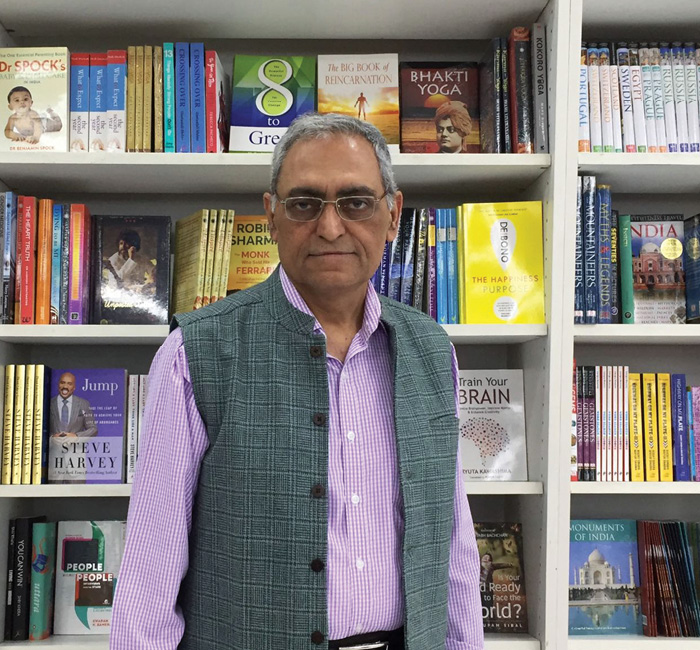
PK Malhotra advises dispute resolution processAd hoc arbitration continues to be the norm in India. Can we expect this to change?

It is the prerogative of parties to decide between ad hoc and institutional arbitration, as arbitration is a private agreement between parties.

There are issues relating to ad hoc arbitration – delays, high fees – because of which I personally have been a votary of institutional arbitration. In institutional arbitration parties are assured that the rules and regulations of the institution provide for a time frame and cost to resolve the dispute and if the arbitration is not following the rules, the institution will correct the situation.

[ihc-hide-content ihc_mb_type=”show” ihc_mb_who=”3″ ihc_mb_template=”2″ ]

Somehow institutional arbitration has not succeeded in India because parties feel more comfortable when they are before an arbitrator that they have appointed instead of an arbitrator appointed by an institution. Yet there is no reason for this as an arbitrator, once he or she is appointed, owes a duty to his clients to be independent and impartial.

Does the fact that judges are preferred as arbitrators in India create a problem?

An arbitrator does not necessarily need a judicial mind. Yes, the arbitrator will need to apply judicial principles, but what is needed is a judicious mind. With a judicial mind you go into too much of the technicalities and the legal formalities, but with a judicious mind the arbitrator has to simply follow the principles of natural justice and give reasons for the conclusion reached.

Institutional arbitration in India will succeed only if the institution has a good panel of arbitrators. They need not necessarily be judges, they can be engineers and other technocrats and professionals.

The problem is that parties in India feel more comfortable with judges and don’t feel the same level of comfort when an arbitrator comes from any other discipline. Personally, I feel this is unjustified for the simple reason that we in India have very successfully introduced the “tribunalization” of justice. In a tribunal there is one judicial member and one technical member, so to say that a person with a technical mind will not apply his mind judiciously is clearly incorrect. Maybe such a person will need some training and that can be provided by institutions in the case of institutional arbitration.

Are you optimistic about mediation being used in commercial disputes?

In commercial disputes where there are no contentious issues and where the stakes are not high, there is a possibility to use mediation.

Take the case of the Delhi metro project, where Mr E Sreedharan [managing director of the Delhi Metro Rail Corporation] ensured that the bare minimum of disputes went to the courts or to an arbitrator. In most cases disputes were resolved through mediation or consultation between the parties. This worked well for the project and as a result he avoided litigation and also ensured that the project was executed on time and money was saved.

India does not have large numbers of trained mediators. Is that a problem?

We have to make a start somewhere. We do have trained mediators but their numbers are not that large or the training they have been given may not be adequate.

At present court monitored mediation [as per section 89 of the Code of Civil Procedure] happens in almost all high courts and district courts in India. This is working well, because the people doing the mediation have been trained, maybe not to an international level but enough for our requirement for some disputes.

Turning to the large number of cases pending before the courts, what can be done? Is increasing the number of judges the answer?

I think implementation of the law and time management are very important if the pendency in the courts is to be reduced. At present adjournments are sought as a matter of routine and granted as a matter of routine in most of the cases. Some judges are strict about this but their numbers can be counted on your fingers. It could be that a judge grants adjournments because the causelist is so heavy that he feels that he cannot dispose of so many cases in a day and adjournments are a way to lighten the load. Many a time there are instances where despite long causelists, the courts wind up their proceedings at 1 pm or 2 pm and don’t sit in the afternoon as adjournments were granted.

What can be done to change this?

This systemic failure is not because of a lacuna in the law but because of a lack of will-power to enforce the law in the manner that the legislature wanted it to be implemented. If a particular judge is not following the law and it is brought to the notice of the high court, the high court should take appropriate action against the judge.

The mindset of the individual has to change. Now that the Commercial Courts Act, 2015, has been passed, almost all the high courts have benches for commercial matters. Strict timelines have been given in the Civil Procedure Code, and the idea is that they will be followed. Some of the judges are trying to see that the law is implemented and if they succeed probably the same sense of discipline can be brought in other courts as well. The legislature can make only enabling legislation – its implementation depends on the person occupying the chair. If judges are strict the law will be followed, if they are casual it will not be implemented and justice will suffer.

What else needs to change to reduce the backlog of cases in the courts?

We do need more judges but that is only one aspect. We should be using technology more effectively in the courts. Why do we need paper filings? In Delhi High Court there are paperless courts. So if we can succeed in one or two courts probably this needs to be carried forward to other courts. There may be some economic constraints but slowly that is being overcome and things are improving. The process is not as quick and so there is resentment in the litigant that justice is not being served.

Technology has brought many changes and improvements, but technology is only a tool and not an end in itself. Ultimately it is the human element that matters most and everybody has to play a proper role.

Until that is done quick disposal of cases is not likely to happen.

[/ihc-hide-content]

PK Malhotra can be contacted at malhotrapk@hotmail.com

LinkedIn
Facebook
Twitter
Whatsapp
Telegram
Copy link