









Legal experts advising a recent acquisition involving Chinese capital have seen an increased level of practical and legal difficulty for Chinese investment in the German market.
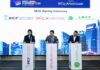
Orrick recently advised a new materials industry fund co-managed by QFAT Investment and ICP Integrity Capital Partners on the acquisition of a controlling shareholding of COTESA, a leading German manufacturer of high-quality fibre composite parts for aviation and automotive engineering.
Beijing headquartered AT&M Advanced Technology & Materials is an anchor investor of the fund and will assist COTESA in expanding its production and sales operations to the Chinese market.
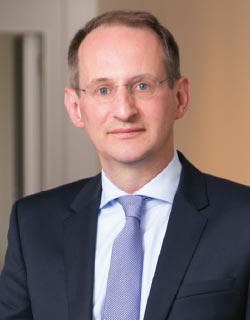
Co-managing partner
Orrick, Germany
Wilhelm Nolting-Hauff, a co-managing partner of Orrick’s Germany offices, told Asia Business Law Journal that various factors had increased the level of difficulty for investment by Chinese investors in Germany.
In the recent past, he said there were prominent samples with comprehensive press coverage where Chinese investors were not able to close the transaction due to a lack of financing. “In addition, the general perception in the German market is that it has become more and more difficult for Chinese investors to arrange for the export of capital from China to Germany,” he said.
[ihc-hide-content ihc_mb_type=”show” ihc_mb_who=”4″ ihc_mb_template=”2″ ]
This capital transfer problem has also created trouble for the purchase of COTESA’s shares. Christoph Rödter, a counsel at Orrick, said that sellers were concerned about the funding of the transaction on the purchaser’s side.
“In transactions with European or US-based purchasers, one would typically request an equity commitment letter from the ultimate parent, but this was not acceptable for the sellers in the transaction at hand,” he said. “We had to endeavour [to find] alternative solutions taking into account also the restrictions Chinese investors face regarding the transfer of moneys outside of China, but giving sufficient comfort to sellers.”
In the COTESA acquisition, the Orrick team advising the acquiring fund was headed by Nolting-Hauff in Düsseldorf and Christoph Rödter in Munich. Compared to the financing problem, Nolting-Hauff said the most important factor for the increase in investment difficulty was probably the recent changes in Germany’s foreign trade regime.
“In line with efforts on the level of the EU, the German Federal Ministry of Economic Affairs and Energy received more instruments to control foreign investments in German companies,” he said. “By taking into account the political debate, it is obvious that these changes mainly focus on Chinese investments.
“There is a general perception by the public and politicians that Chinese investments are, generally speaking, hostile with the goal to move knowledge and technology from Germany to China,” he said, adding that they had seen this perception not only in Germany, but also throughout Europe.
Nolting-Hauff said that these factors may decrease the certainty of a transaction, which typically results in significant premiums Chinese investors have to pay compared to European or US investors.
[/ihc-hide-content]