







From standalone enterprise holdings to a unified statewide domain, the legislative horizon signals a reset: state asset governance is leaving its fragmented past behind. Claire Zhao reports
WHEN, THE ANCIENT Chinese statesman and reformer Guan Zhong pioneered what he called “monopoly of mountains and seas” in the state of Qi in the 7th century BC, he was sketching an earliest blueprint for state assets. By consolidating salt, iron and other strategic commodities into a state franchise, his initiative sought to bolster the public purse and lighten the tax load.
More than two-and-a-half millennia on, that mission endures. State assets today remain dominant in strategic sectors spanning salt, iron, energy, transport, finance, telecoms, minerals, data and airspace, serving as the state’s macroeconomic lever against hard times.
But the legal framework protecting state assets is insufficient. The current Law on the State-Owned Assets of Enterprises, enacted in 2008, principally regulates state assets in commercial operations, while natural resources and administrative state assets remain without a consolidated parent law.
The past decade has also transformed China’s state assets – in scale, in form and in strategic weight. Total state assets nationwide crossed the RMB900 trillion (USD133 trillion) mark by the end of 2024, more varied and more complex to manage than ever, and outpacing the current law’s regulatory reach.
“State asset governance now requires a settled institutional architecture, but the legal toolbox on offer remains scattered and piecemeal,” says Yi Fang, a Shanghai-based partner at JunHe.
A sweeping institutional reset is taking shape. The draft new Law on State-Owned Assets, unveiled late last year, extends regulatory coverage to natural resources, administrative assets and beyond, closing a critical gap in framework legislation.
In addition, the above-mentioned old Law on State-Owned Assets of Enterprises is undergoing its first revision in 17 years. The draft amendments, released early this year, codify key reform measures including specialised supervision, authorised operation, and accountability waivers for diligent decision making.
Haiwen & Partners’ Beijing-based partner Xiao Yi says: “Enshrining these measures into law signals the state’s resolve to deepen reform.”
The twin-track legislative structure now emerging – a parent statute covering all state assets, complemented by a dedicated law for commercial enterprises – is designed to re-engineer the regulatory architecture around state assets, enabling it to underpin the national economy more securely.
Grip and reach
The draft Law on State-Owned Assets of Enterprises debuts a pivotal legal concept of the “body performing the owner’s duties”. For the first time, the draft codifies a comprehensive list of these core duties, spanning: assertion of state ownership; the formulation and implementation of asset plans; creation of management regimes; end-to-end management of asset allocation and disposal; approval of significant matters; fulfilment of investor obligations; and adherence to reporting and supervisory mechanisms.
Ma Mingwei, a partner at the Shanghai office of Zhenghan Law Firm, says the above-mentioned list of duties transcends the normal bounds of shareholder rights. “State-owned enterprises [SOEs] must look beyond financial returns on assets to embrace a full spectrum of public duties, from strategic planning and public service to risk control and security.”
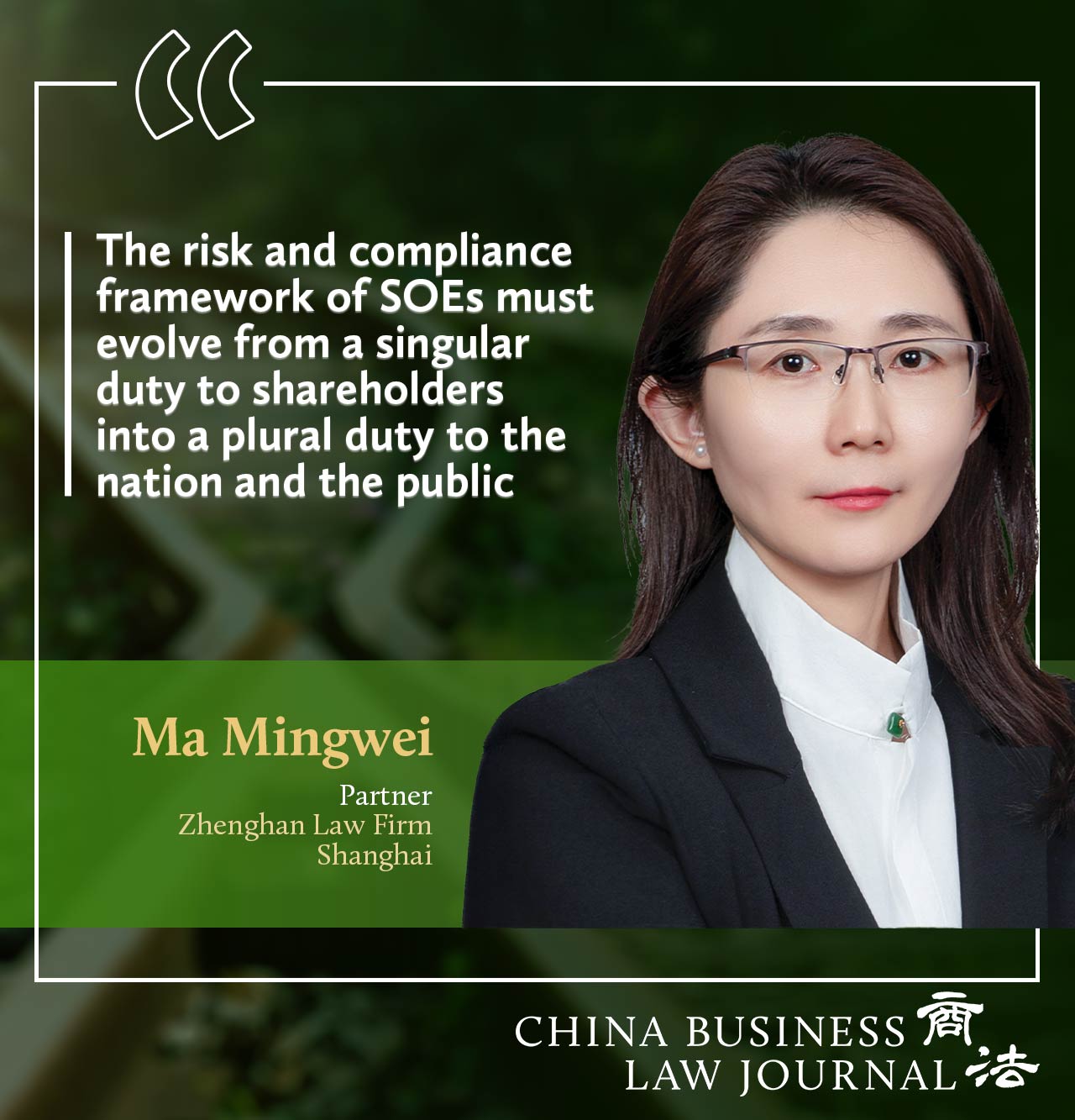
The expanded mandate cements compliance as a legal duty of state ownership. “The risk and compliance framework of SOEs must evolve from a singular duty to shareholders into a plural duty to the nation and the public,” says Ma.
Wu Libei, a Beijing-based senior partner at Dacheng Law Offices, says the list of duties marks a shift in the SOE regulatory rationale from capital returns to comprehensive public accountability. This shift spells a structural reset in corporate risk management and compliance.
“Risk thresholds now extend well beyond asset impairment. Public duty failures, data mismanagement and lax oversight of overseas assets all carry accountability risk,” he says.
In response to the raised bar of risk management, Wu calls for an advance from single-track operational loss prevention to a five-pillar model spanning economic soundness, social responsibility, public duties, state asset integrity and data security, supported by preemptive checklists, control nodes mapped to the owner’s statutory duties, and tripartite risk ledgers for public, operating and data assets.
Beyond pinning the owner’s duties to specific workflows and roles, King & Wood’s Beijing and Chengdu-based partner, Guo Huan, suggests companies build state-asset risk registers and key-scenario lists, threading compliance and risk control into the operational and decision-making fabric of investment, procurement, asset disposal, financing guarantees and offshore activities.
“Companies must shift from post-hoc remediation to a triad of preemptive identification, real-time control and post-event accountability with remedy,” says Guo. “Accountability and remedy must form a closed loop – internal sanctions are not enough. Civil recovery, asset preservation, criminal complaints and insurance claims should follow swiftly to contain the damage.”
The draft new Law on State-Owned Assets carves out a specialised oversight structure that allocates regulatory duties for state-owned natural resources assets, administrative state assets and enterprise state assets to the most competent authorities. This so-called “tiered supervision” aims to boost regulatory accuracy and addressing accountability grey zones.
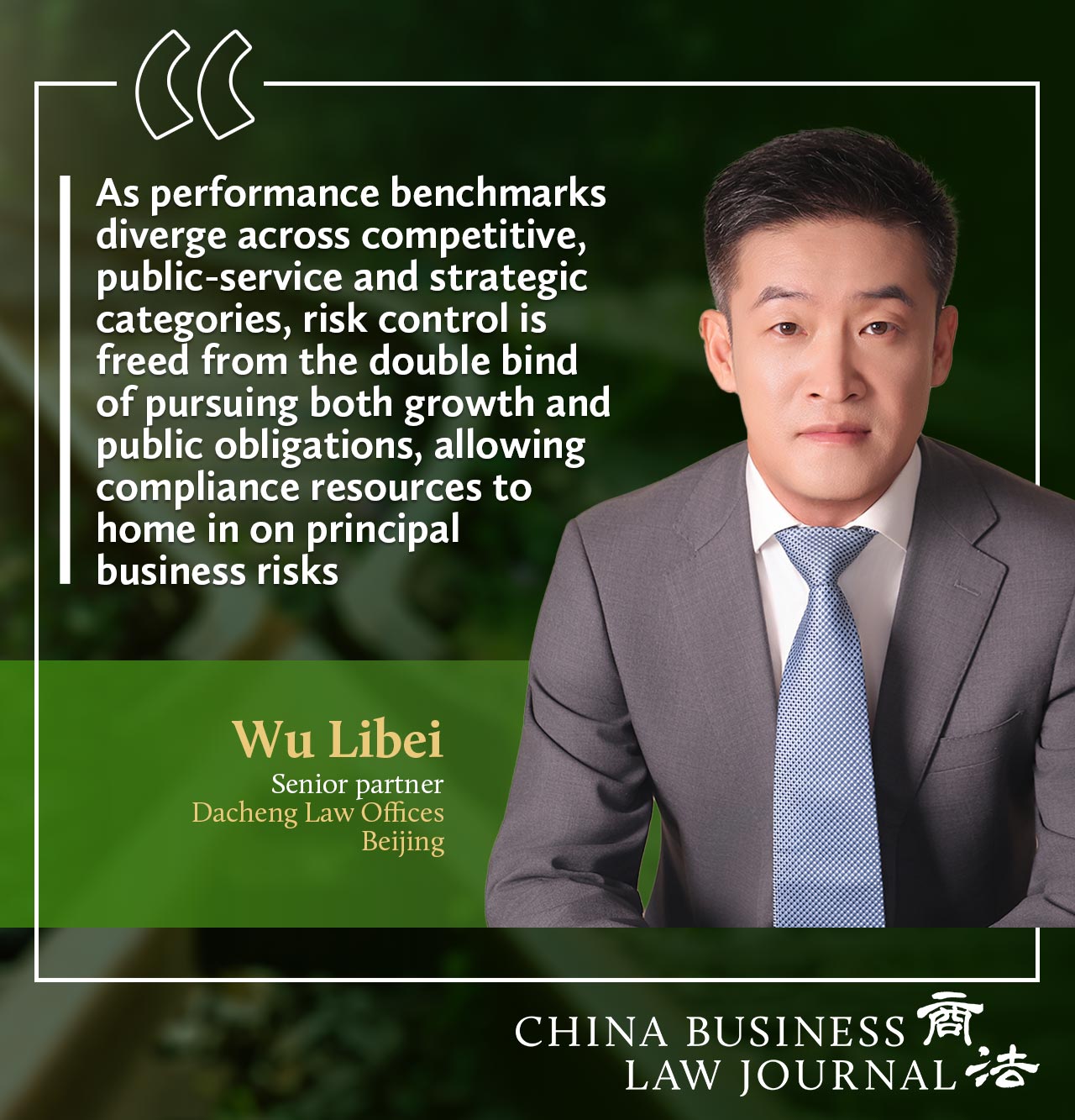
In parallel, the draft amendments to the older Law on State-Owned Assets of Enterprises sort operational state assets by function into competitive, strategic and public-service SOEs, supported by tailored performance metrics.
Wu expects the tiered supervision enshrined in the draft new law will ease the compliance burden. “As performance benchmarks diverge across competitive, public-service and strategic categories, risk control is freed from the competing demands of profit growth and public duty, allowing compliance resources to home in on principal business risks,” he says.
The new draft Law on State-Owned Assets further categorises enterprise state assets into state assets of non-financial enterprises, financial enterprises and cultural enterprises. Wang Weiguo, Jingtian & Gongcheng’s Beijing-based partner, notes these three types of enterprise are overseen by the SASAC (State-owned Assets Supervision and Administration Commission of the State Council); the Ministry of Finance; and the cultural authority, respectively.
Given existing divergence between the three regulatory frameworks on issues such as state shareholder exits and overseas state assets management, he is hoping for greater consistency in any upgrades to the legislation.
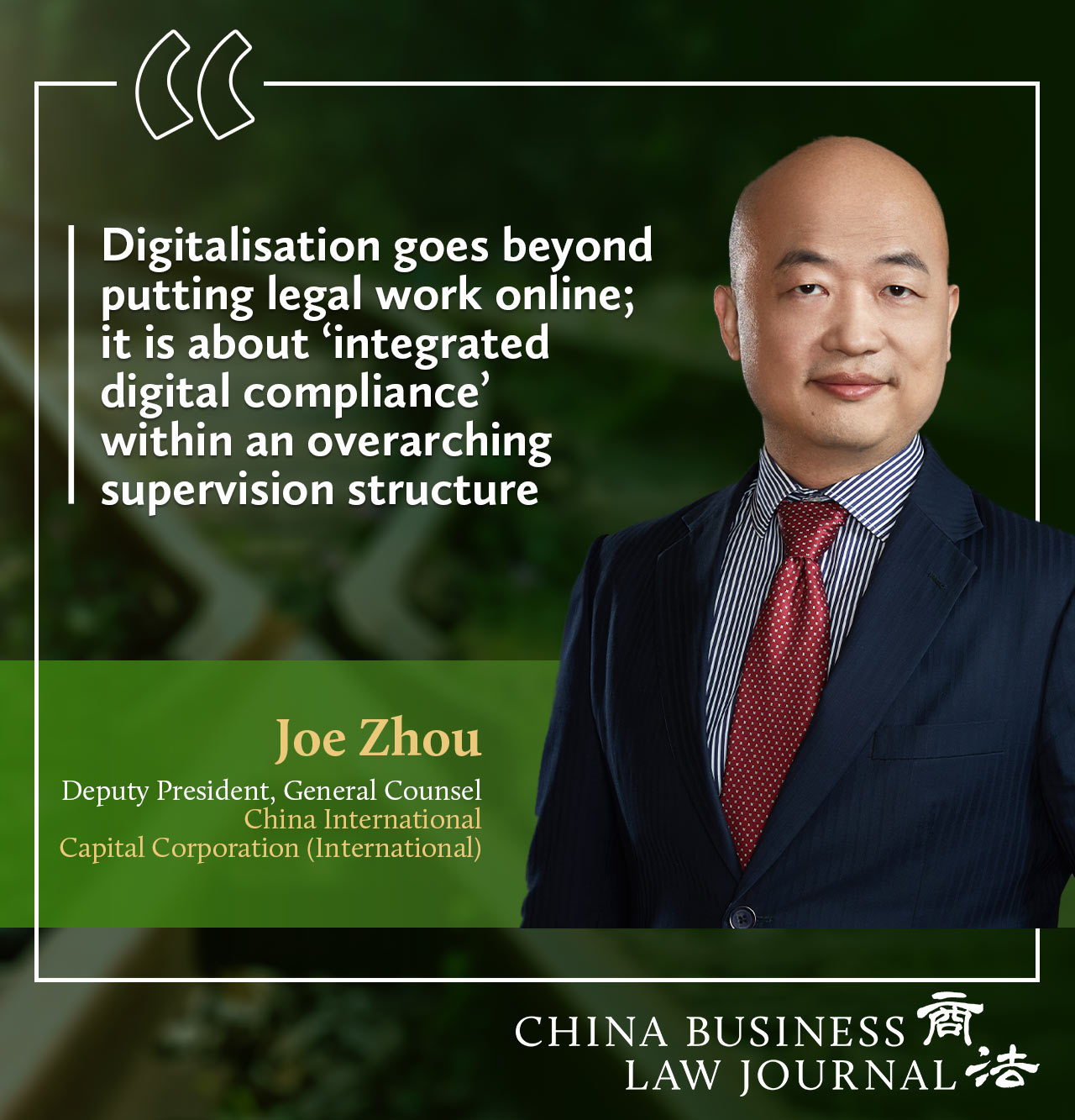
Joe Zhou, deputy president, general counsel and senior managing director at China International Capital Corporation (International), advocates a digital upgrade to achieve seamless data integration across operations. “Digitalisation goes beyond putting legal work online; it is about ‘integrated digital compliance’ within an overarching supervision structure,” he says.
Referring to rigid compliance obligations in the two drafts covering the decision-making mechanism for major issues, boundaries of rights and responsibilities, and procurement compliance, Zhou suggests that in-house counsel spearhead efforts to translate and embed the rules into all operational workflows.
He proposes integrating data points across legal applications, the financial enterprise resource planning (ERP) suite, and internal audit platforms. Big data analysis would enable a leap from manual spot checks to real-time monitoring of complete data sets with automatic anomaly alerts, “providing a tech-driven response to the high-efficiency demands of both public scrutiny and intensive administrative oversight”.
Gaps and gains
Where oversight of overseas assets was once blurred and diffuse, the draft Law on State-owned Assets now imposes a single, unified framework. The draft amendments to the Law on State-Owned Assets of Enterprises further sharpen supervision, streamline the offshore footprint, and harden defence against operational and security risk.
“The signals are clear,” says King & Wood’s Guo. “Security, compliance, transparency, controllability and risk resilience have moved from afterthoughts to priorities in overseas state asset management.”
She notes that SOEs’ offshore operations have outgrown the commercial box and are now judged through the lens of state asset stewardship and national interest. That lens offers sharper focus against improper extraterritorial jurisdiction as well as a stricter regulatory gaze.
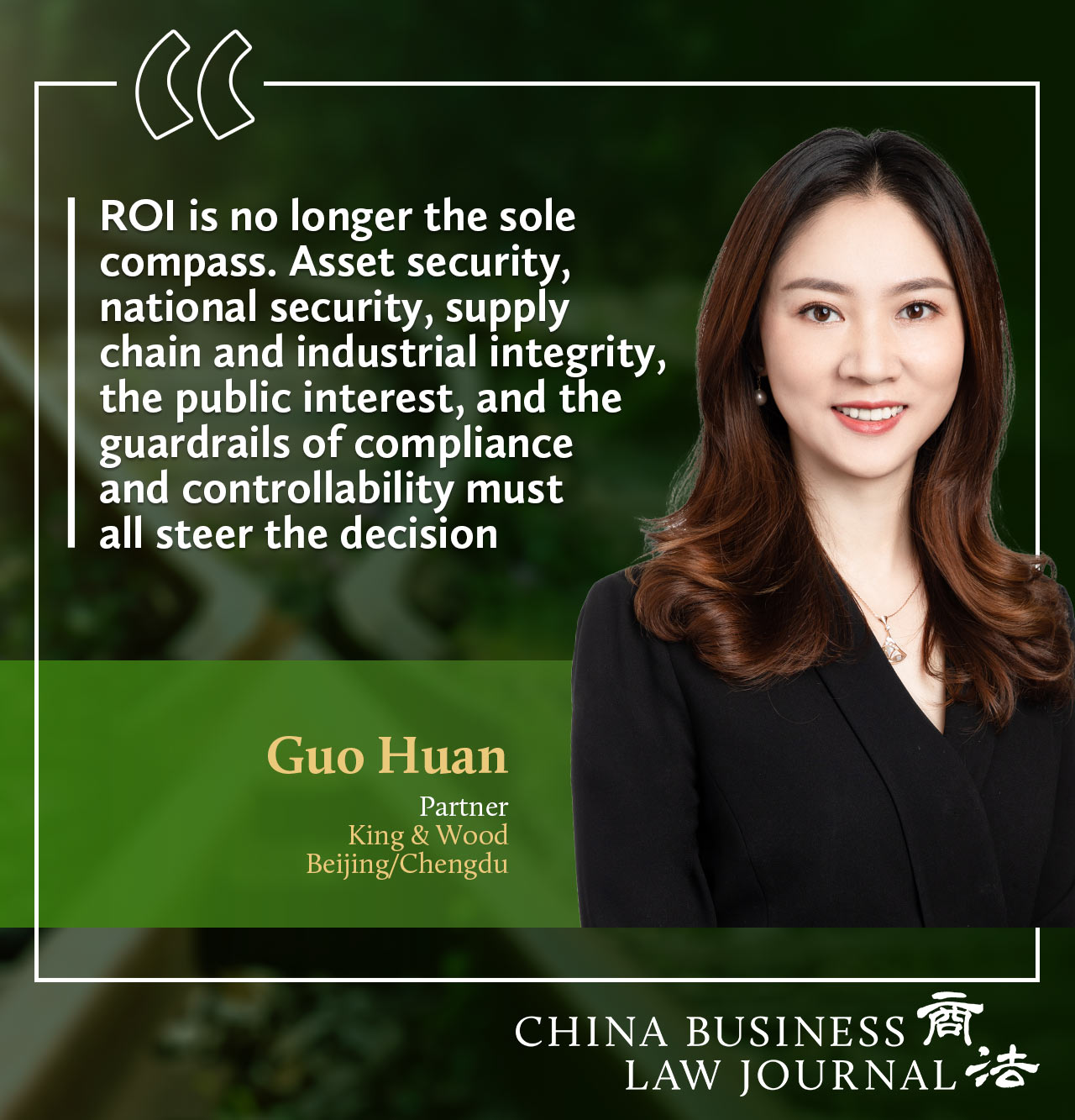
“ROI [return on investment] is no longer the sole compass,” says Guo. “Asset security, national security, supply chain and industrial integrity, public interest and the guardrails of compliance and controllability must all steer the decision.”
In the view of Yi at JunHe, tighter regulation is less about “hitting the brakes” but more about “bolstering the guardrails”, a recalibration that will reshape the pace and pattern of SOEs going global.
“Decision chains will stretch and compliance costs will climb,” says Yi. “Meanwhile, the investment mindset will pivot from chasing deals, scale and market access to weighing strategic fit, clean ownership, tiered control, reportable risk and feasible exits.”
In the short term, Wu at Dacheng expects overseas investment to become more strategically selective and carefully executed, with upfront regulatory requirements raising the bar for market entry.
Looking further ahead, he sees quality energy, high-end manufacturing and projects under the Belt and Road Initiative accelerating under unified regulation that streamlines approvals. He believes the outbound drive will shift from volume-led expansion to quality development, with investment architectures evolving from multi-layered offshore shell vehicles to streamlined, transparent structures.
For SOEs with overseas footprints, Guo prescribes four compliance upgrades:
-
- Ring-fence overseas state assets with live ledgers and risk registers;
- Stretch compliance beyond host-country rules to a dual or even multi-lens, which brings domestic oversight into frame;
- Pre-wire contingency plans for cross-border disputes and crises, with asset preservation baked in; and
- Build local capabilities and decision-making heft at offshore entities, ensuring their inclusion within a comprehensive group-wide risk framework.
Designating data
Another landmark in the draft Law on State-owned Assets is the formal designation of data as a state asset, pulling it under regulatory watch for the first time. The default setting has long been a vacuum. Public bodies and SOEs sit on mountains of data, yet fuzzy ownership and absent oversight have left the data scope unmapped, drained its worth, and kept its deeper value untapped.
Now that data enters the statute books, that vacuum collapses. “SOE-generated data is no longer merely an IT resource,” says Yi. “It is now a state asset that must travel a full governance journey, from identification, valuation and booking to monetisation, authorisation, disposal, reporting and oversight.”
With detailed rules on data asset capitalisation still in progress, Annie Shen, a partner at Fangda Partners based in Hong Kong and Shanghai, flags four operational pinch points:
-
- Public data ownership remains ill-defined and auditing legacy data carries a heavy price tag;
- Financial recognition and valuation proceed without a unified accounting standard;
- No clear rulebook is available for commercialisation and revenue sharing; and
- Disposal frameworks built for tangible assets are an ill fit for data.
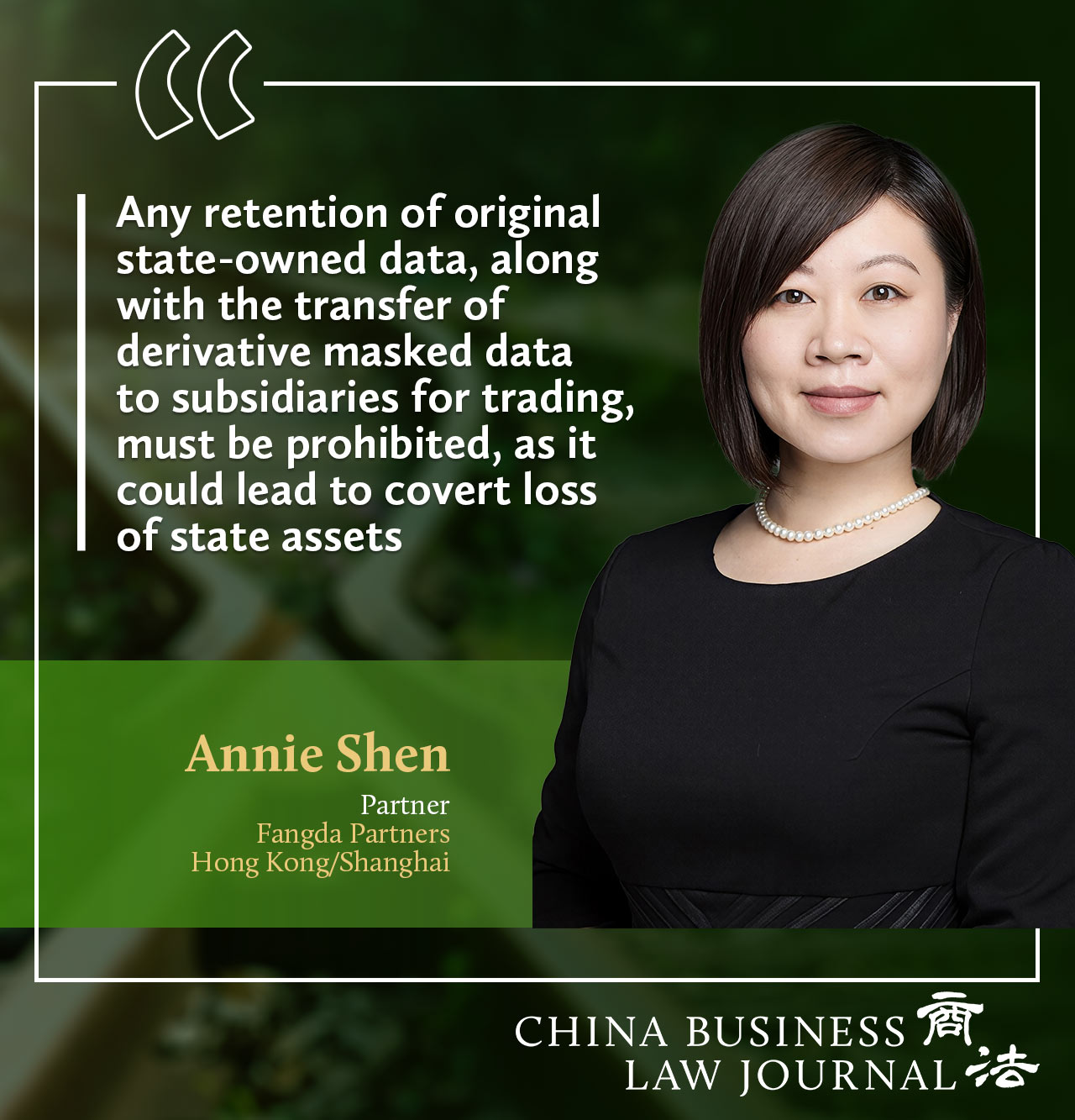
Shen further identifies a regulatory blind spot in data splitting and transfers. “Any retention of original state-owned data, along with the transfer of derivative masked data to subsidiaries for trading, must be prohibited, as it could lead to covert loss of state assets,” she says.
The absence of unified valuation standards and a central data asset registry, she says, also fuels risks such as financial statement manipulation and double-pledging of the same data assets.
For SOE overseas operations, cross-border data transfers will reveal compliance deficiencies over time, according to Tian Xingchuan, general counsel and director of legal & compliance at Harbin Electric International. He predicts that friction with overseas regulation and data protection legislation will mount, with data pooling and sharing by overseas subsidiaries emerging as a key battleground.
Drive and defence
A “due diligence defence” mechanism has been introduced in the draft amendments to the old Law on State-Owned Assets of Enterprises. Within this mechanism, a clause stipulates that management may be exempted from liability for asset losses caused by force majeure or market risks, provided they have acted lawfully, exercised due diligence and sought no personal gain. In-house counsel have widely singled this out as a most encouraging provision.
“This clause aligns with the updated Company Law and imports the ‘business judgement rule’, which acknowledges that risk and uncertainty is inherent to commerce, and that executives should not be held liable for losses arising from decisions made in good faith, on an informed basis and in the company’s best interests,” says Ma at Zhenghan. “This will provide greater predictability for management in their business decision making.”
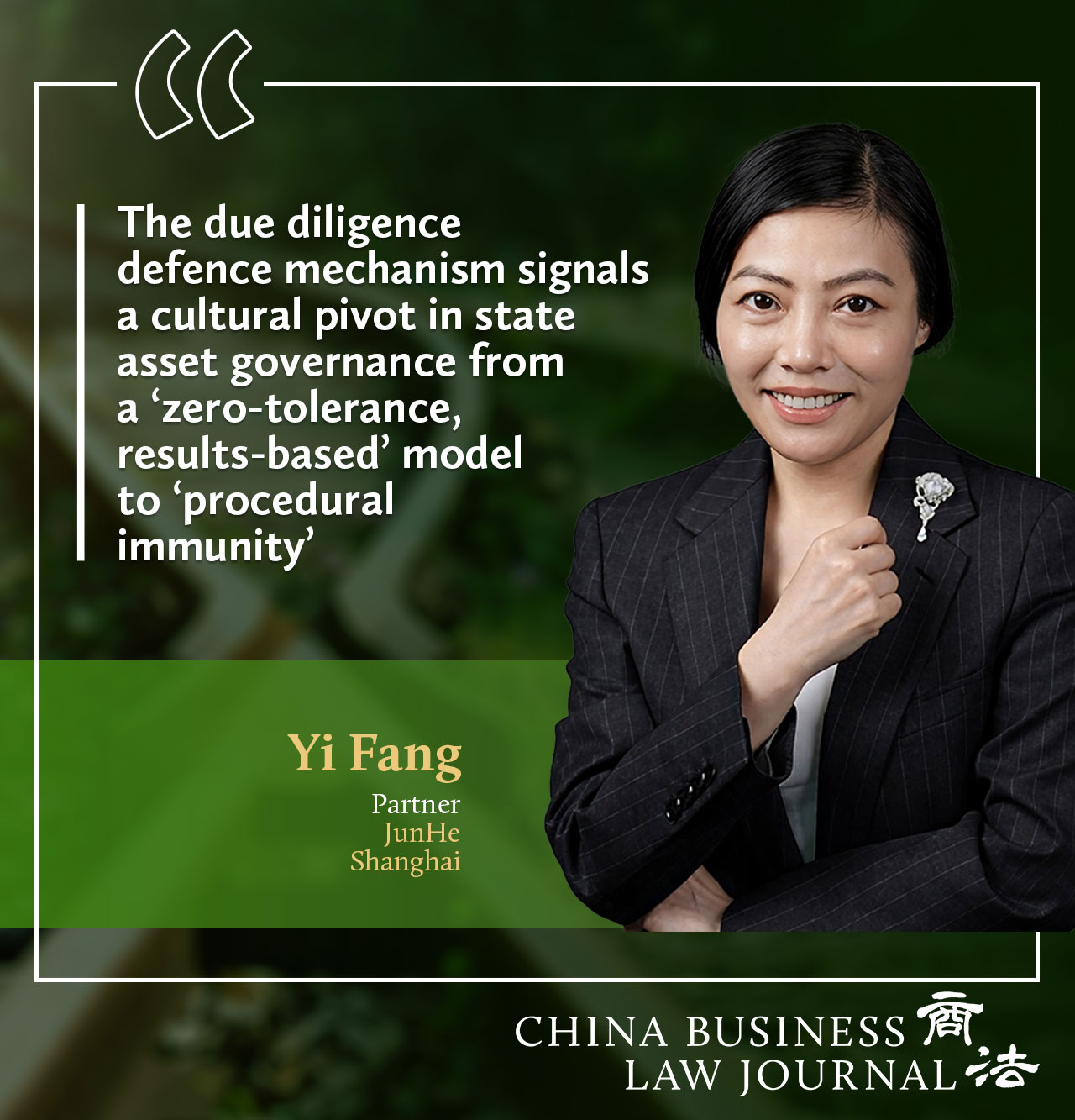
Yi, from JunHe, says: “The due diligence defence mechanism signals a cultural pivot in state asset governance from a ‘zero-tolerance, results-based’ model to ‘procedural immunity’.”
SOE executives have long been trapped by an institutional setup where decision making invites personal liability. Under the rigid mandate to preserve and grow state assets, a defensive “better inaction than error” mentality has stifled innovation and reform.
Han Kun Law Offices’ Shanghai-based partner Denning Xu says: “Management will now be more confident in exercising their delegated authority when making major decisions, and rely less on a cascade of internal referrals and approvals. This is a critical step in enhancing the commercial agility and market-competitiveness of SOEs.”
However, the clause lacks clear standards for defining key elements such as “gross negligence”, “adequately informed” and “reasonable grounds”.
Yi calls for further refinement of the application criteria of these terms to provide legal certainty, along with robust safeguards to forestall potential misuse of the due diligence defence mechanism.
Lyu Rui, a legal business manager at the northwest branch of China Construction Eighth Engineering Division, believes that in-house counsel will play an essential role in building proper safeguards.
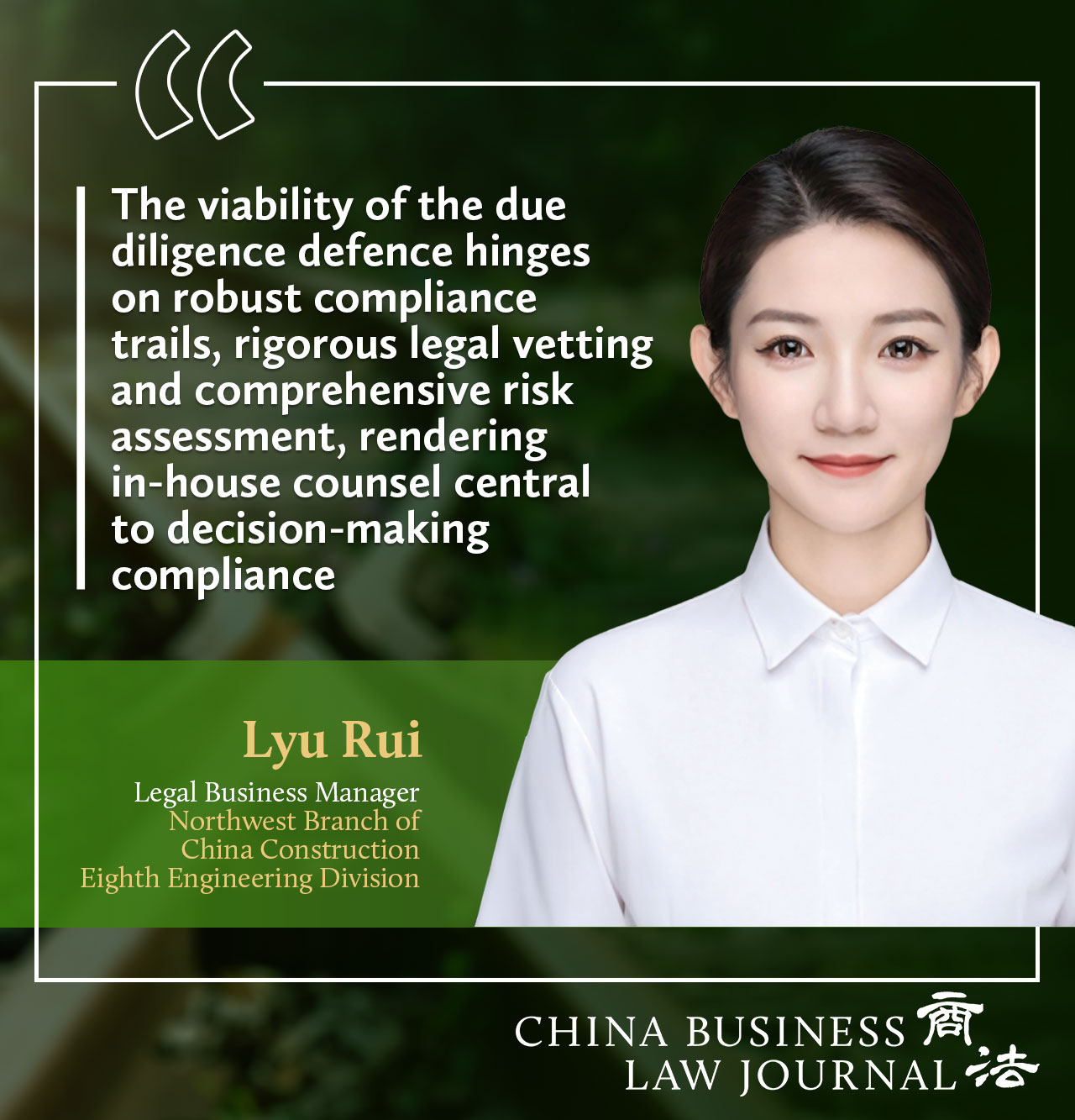
“The viability of the due diligence defence hinges on robust compliance trails, rigorous legal vetting and comprehensive risk assessment, rendering in-house counsel central to decision-making compliance,” she says. “To unlock the true value of the regime, companies must strengthen prior legal vetting, real-time process controls and retrospective evidence retention.”
Ma cautions stringent compliance requirements risk reinforcing a “do more, fail more” mentality, where executives prioritise superficial compliance to avoid liability.
Xiao admits such administrative burdens may weigh on efficiency, yet she maintains the due diligence defence mechanism will ultimately promote proactive and rational decision making.
“The outlook is certainly constructive,” says Xiao. “The mechanism will greatly stimulate entrepreneurial vitality among SOE executives, potentially catalysing new growth drivers amid current economic headwinds.”