










INTA’s Annual Meeting will address critical issues currently impacting the IP community. Board members Sheja Ehtesham, MS Bharath and Jianguo Wang reveal the topics they expect to take centre stage. Sheryl Ubana and Bimal Mirwani report
The growing use of AI in branding, trademark searches and content creation, coupled with the rise of deepfakes and digital replicas, has introduced new layers of complexity to trademark protection, raising pressing questions around ownership, enforcement and liability. These challenges are particularly pronounced in Asia, where rapid adoption of AI technologies intersects with fragmented legal systems and enforcement gaps.
Against this backdrop, the International Trademark Association (INTA) 2026 Annual Meeting from 2-6 May in London comes at a critical juncture for brand owners and legal practitioners, as AI continues to reshape the intellectual property sector.
INTA’s annual gathering is poised to serve as a key platform for addressing how legal frameworks and enforcement strategies can adapt to a rapidly evolving digital environment.
With strong participation from major jurisdictions such as India and China, INTA board members – Sheja Ehtesham, managing partner at ALG India Law Offices; M S Bharath, founder and managing partner at KRIA Law; and Jianguo Wang, general manager of intellectual property and deputy general manager of brand at Haier Group – tell Asia Business Law Journal what key aspects of IP are likely to be thrust into the spotlight.
The generative AI conundrum
The rise of generative AI is impossible to ignore, and its impact is increasingly evident across the legal sector, particularly within the IP practice. As AI-generated branding, trademark search automation and deepfake-related brand misuse become more prevalent, the need to address trademark protection in an evolving, technology-dominated world has grown more urgent.
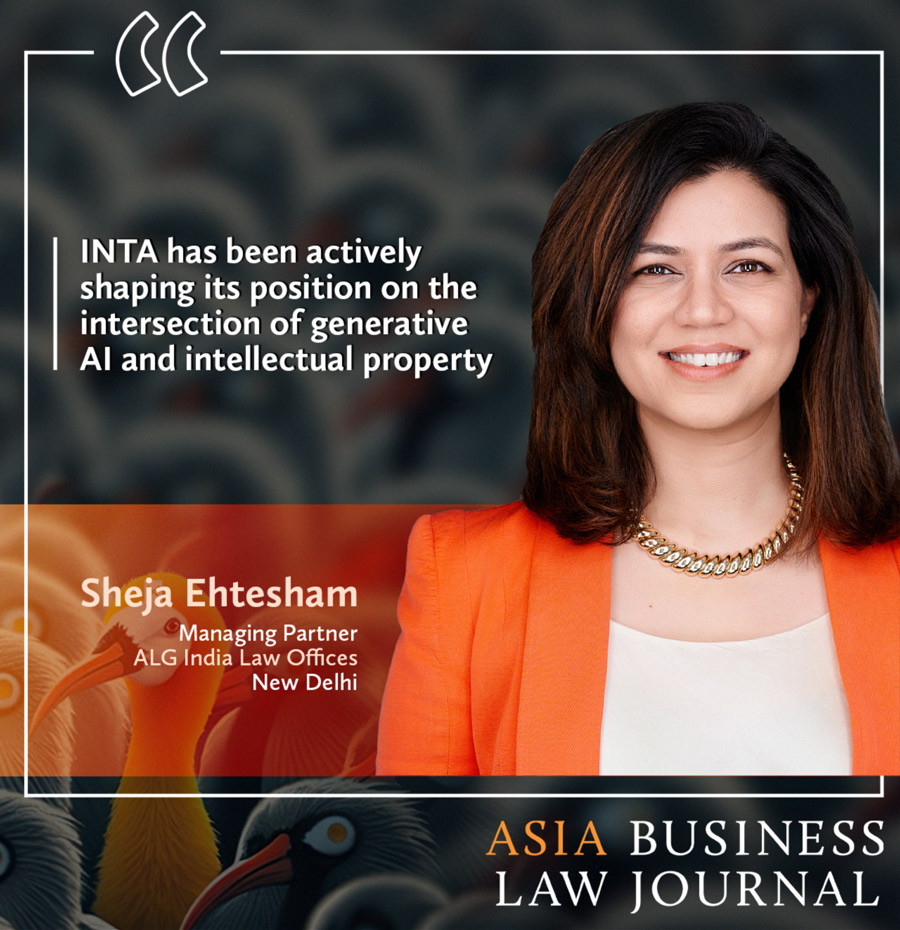
“INTA has been actively shaping its position on the intersection of generative AI and intellectual property, with a focus on ensuring that innovation is balanced with effective protection of brand owners and consumers,” says Ehtesham.
Bharath says that branding generated using AI remains “invariably prone to risks if proximate to senior/prior adopted [branding] both in terms of phonetics and visuals”.
INTA has also addressed the growing risks posed by deepfakes and digital replicas through its February 2025 board resolution titled Legislation on Deep Fakes (Digital Replicas). “This resolution recognises that advances in AI have significantly lowered the cost and increased access to tools capable of creating highly realistic synthetic content, amplifying the risk of brand misuse and consumer deception,” says Ehtesham.
Even with legislation in place, she notes that Asian jurisdictions still need to shore up their defences to address existing legal gaps. “Across Asian jurisdictions, gaps remain in terms of harmonised approaches to AI-generated content, clearer allocation of liability, and more effective enforcement frameworks, particularly in digital environments where misuse can occur rapidly and at scale.”
These challenges are particularly pronounced for trademarks, where AI-generated branding has raised questions around authorship, ownership and accountability. “Many jurisdictions, including in Asia, still lack unambiguous frameworks on how such marks should be assessed, particularly where AI plays a significant role in their creation,” says Ehtesham.
The issue is especially acute in Asia, where trademark infringement remains a significant concern. Fragmented legal systems further complicate enforcement, particularly for Chinese businesses looking to expand internationally, says Wang.
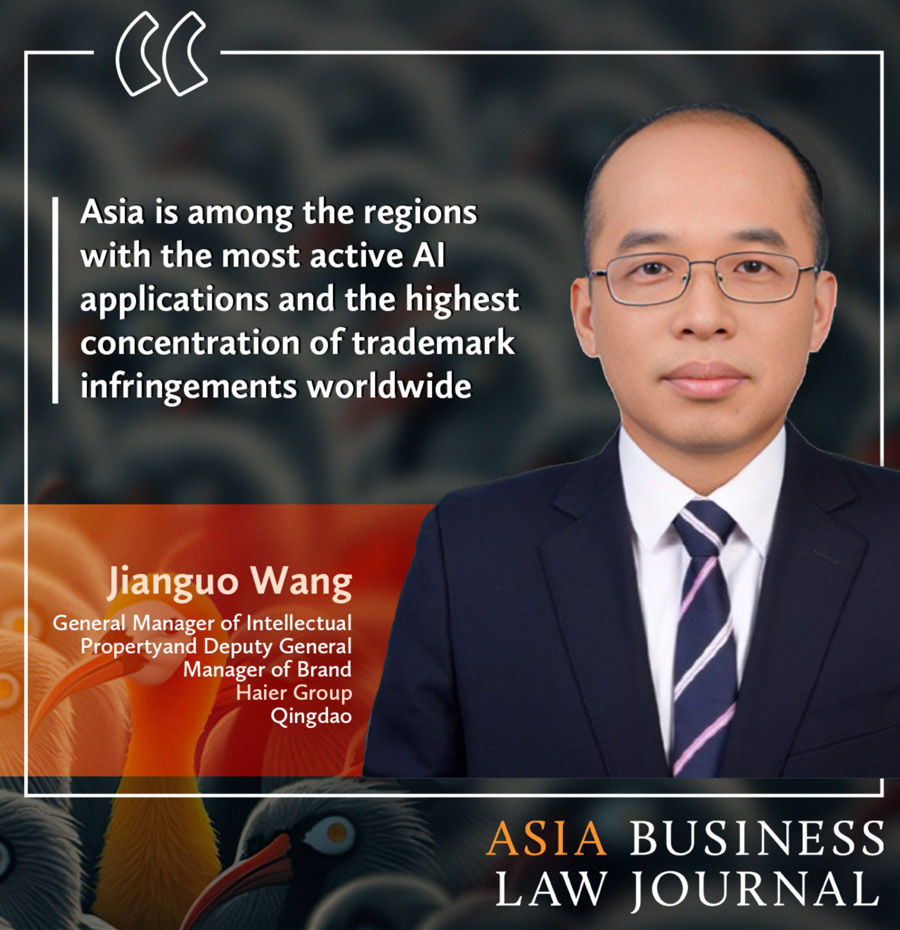
“Asia is among the regions with the most active AI applications and the highest concentration of trademark infringements worldwide,” he says. “However, the fragmentation of legal systems, lagging special rules for AI, and inconsistent law enforcement standards have posed substantial risks for Chinese enterprises going global.”
Wang warns that, while generative AI presents clear opportunities, it also introduces complex challenges that must be addressed. “Generative AI brings transformative opportunities as well as challenges to trademark protection. INTA’s position aligns with the common interests of global brand protection and the practical needs of Chinese enterprises.”
Better co-ordination
INTA has previously advocated for greater co-ordination among enforcement authorities in India. This includes customs, regulators and rights holders working as a cohesive unit. As things stand right now, Ehtesham has seen encouraging signs.
“There have been some noticeable improvements in collaboration in recent years, driven in part by sustained engagement between INTA, enforcement authorities and industry stakeholders,” she says. “Initiatives such as INTA’s March 2026 presidential delegation to India, and collaborative customs training programmes, have helped bring together government agencies, brand owners and regulators, improving awareness and co-ordination in enforcement.”
Although things look brighter, she says there is room for improvement, particularly in ensuring consistency across enforcement efforts. “Enforcement in India can still be somewhat fragmented, with varying levels of co-ordination across customs, police and other regulatory bodies,” she says. “While customs enforcement has strengthened, consistency and speed of action in different states can still be uneven.”
Wang believes Asian jurisdictions should co-ordinate trademark examination standards, enact dedicated provisions targeting deepfake-related brand misconduct, and regulate AI-based trademark search services.
Protecting the brand
Amid the wide range of topics set to be explored at INTA’s annual meeting, Ehtesham and Bharath agree that brand protection stands out as the key trademark issue for in-house legal teams.
“The key challenge for in-house teams this year will be protecting brands in an increasingly digital and AI-driven environment,” says Ehtesham. “This includes risks from AI-generated content, deepfakes, impersonation, and automated infringement at scale such as counterfeit listings, domain name abuse and misuse across social media and e-commerce platforms.”

Bharath notes the problem extends beyond brands as it can impact individuals as well. “Individuals and celebrities have had problems from deepfakes and usages of their names, images and likeness.”
Wang says brand protection will also be a central concern for Chinese participants, alongside a broader set of issues. “My personal prediction is that China-related sessions will likely focus on the following topics: new developments in the revision of China’s Trademark Law; cross-border intellectual property protection; brand risk control; and protection for Chinese enterprises, especially digital and e-commerce businesses going global; as well as the regulation of AI-generated trademarks and deepfake misconduct,” he says.
Ehtesham says that proactive strategies and rapid responses will be crucial in mitigating these risks and ultimately safeguarding brands. “A shift towards more proactive strategies, particularly stronger monitoring, rapid takedowns and AI-aware processes may also be key,” she says. “Ultimately, speed of response may come to be critical for maintaining brand trust.”
Wang says that INTA should leverage platforms like the World Intellectual Property Organisation (WIPO) and Asean to “unify law enforcement criteria, streamline cross-border evidence collection procedures, set up joint law enforcement teams, share infringement blacklists, and intensify cross-border penalties”.
Strong India, China contingent
In 2025, India accounted for about 20% of INTA registrations from the Asia-Pacific region. This strong participation is likely driven by factors including valuable insights on emerging trends such as AI and digital enforcement, and a high representation of Indian practitioners across panels.
“India’s strong participation reflects the rapid evolution of its brand and IP ecosystem, driven by increased startup activity, digital businesses and global expansion by Indian companies,” says Ehtesham, who will be speaking on a panel about key case law developments.
“There is also a growing recognition of IP as a core business asset, not just a legal tool. This year’s meeting will feature a strong line-up of India-focused programming including discussions on cross-border enforcement, brand expansion and developments in Indian trademark law.”
Bharath says the Indian contingent is amongst the top five highest registered participants at INTA from across the world, with more than 100 members contributing to scores of committees “leading to meaningful and timely recommendations for amendments to national laws”. He says the strong representation of Indians on INTA’s board is another factor underpinning sustained interest in the association.
China has also been well represented at INTA, and this year is no exception. INTA recently announced that 597 registrants for this year’s event were from China, making it the third-largest represented jurisdiction behind the US (2,101) and the UK (757).
Wang says this year’s event will enable Chinese businesses to further integrate into the global framework and gain insight into the latest developments across the IP spectrum. “Chinese enterprises expect to keep abreast of the latest global rules and trademark protection standards in the AI era, gain direct access to up-to-date international judicial precedents, examination practices and law enforcement developments, clarify compliance boundaries in major European, American and Asian markets in advance, and reduce risks in global business expansion,” he says.
He notes that the abundance of China-themed roundtables will also add value for Chinese participants at the event. “Chinese participants are not merely audience members, but also co-builders of international rules,” he says. “We look forward to deeper participation in and leadership of global trademark rule discussions, so as to promote international rules to better align with the practical needs of Chinese enterprises.”
Down to business
With strong global participation, this year’s INTA Annual Meeting is set to explore a wide range of issues shaping the IP landscape. As the programme unfolds, delegates and the broader IP community will be keeping a close eye on insights and ideas emerging from the daily keynotes, table topics, committee meetings and general and featured sessions.