






Breaking down walls

0
917
LinkedIn
Facebook
Twitter
Whatsapp
Telegram
Copy link

Foreign law firms will develop, not devour, local talent in the Indian legal market, argues David Jacobs, Baker & McKenzie’s Asia Pacific chairman

During the same 1947 summer that India celebrated its independence from Britain, a 46-year-old Chicago lawyer, Russell Baker, left his successful litigation practice with an eye on the world.
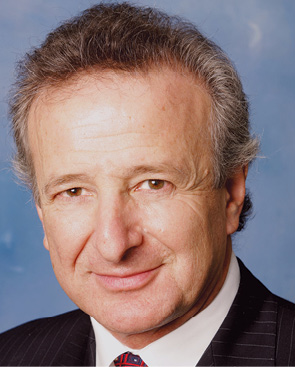
David Jacobs
David Jacobs

In that early post-World War II era, manufacturers in the American heartland had awakened to an explosion of opportunities abroad. Baker had assisted some of them and it dawned on him that hundreds of businesses around Chicago were venturing into challenging jurisdictions abroad without the help of experienced legal counsel. He sought lawyers who were raised, schooled and licensed to practise law in their own countries, and eager to participate in what we now realize was the dawn of globalization. These legal pioneers, he believed, could provide indispensable legal counsel in unfamiliar territories, helping assure his corporate clients’ success in international business ventures.

Baker’s partners decided against his idea for “a practice that didn’t even have a name, a practice that nobody in Chicago had ever heard of … too risky, too new”. Baker & McKenzie, the firm he established, today has nearly 4,000 lawyers in 70 cities across 38 countries who speak more than 65 languages. Of the firm’s 70 offices worldwide only nine are in the US and the majority of the firm’s principals and associates are not US nationals.

[ihc-hide-content ihc_mb_type=”show” ihc_mb_who=”3″ ihc_mb_template=”2″ ]

With such an international scope, the firm has unsurprisingly followed the debate surrounding the liberalization of India’s legal market. We are aware of resolutions by the Bar Council of India that call upon the Indian government “not to open up the Indian legal profession to foreign lawyers or foreign law firms” and prevent their “entry into India for practise in any form as advocates”. These comments are somewhat reminiscent of those of various members of the Bombay Club in 1991 to the then finance minister, the Honourable Manmohan Singh, imploring him not to allow the proposed rules on the liberalization of foreign equity participation.

Lawyers – their suspected schemes and motives – sometimes arouse strong passions. The character “Dick the Butcher,” in Shakespeare’s Henry VI, famously tells his cohorts, “The first thing we do, let’s kill all the lawyers!” Similarly, it was not an apprehensive leader of the Indian Bar, wary of an invasion of alien lawyers, who once remarked that “we may be well on our way to a society overrun by hordes of lawyers, hungry as locusts!” That was the view, expressed only partly in jest, of a former chief justice of the United States Supreme Court, Warren Burger.

We have long wished to invite the best and brightest Indian lawyers to join our firm by forming an office in India. However, the nature of our hoped-for presence is often misunderstood. We have a large number of lawyers worldwide but we have no intention of plotting their “entry into India for practise in any form as advocates”.

Every serious business enterprise deserves – and must have – legal counsel who are licensed and experienced in respective jurisdictions. The idea of “foreign” lawyers, unlicensed, unfamiliar with local languages and conditions, being posted to practice law in other jurisdictions is a preposterous notion. The professionals in our offices worldwide are native-born, locally licensed nationals of the countries in which they practice. A Baker & McKenzie office in India would be no different, and we are eager for an Indian law firm to become a member of our firm.

Like our French lawyers in Paris, our Chinese lawyers in China, our Mexican lawyers in Mexico, and so on, our Indian lawyers will be members on an equal footing with every other lawyer in our firm. Our leadership is democratically elected and transparent, and each of our principals has one vote and equal rights. This is embedded in our culture, one that is genuinely multicultural and passionate about open and highly collaborative relationships.

In our view, the present hurdles found in the Advocates Act of 1961, or in Bar rules and regulations, are in fact restraints on India’s own lawyers, not on foreign lawyers.

Our call is to allow Indian law firms to economically associate with international law firms so that they can enjoy the best those firms have to offer. This will enable domestic firms to join the global legal profession and allow others to continue practising independently if they wish.

Deregulating the legal profession to allow foreign law firms to practise foreign law only for a period of time, with a possible prohibition on employing Indian lawyers, which has been suggested fairly widely, is not, in our opinion, in the best interests of India nor its legal profession. India’s future economic development relies on the transfer of best practice to Indian lawyers, greater opportunities for exposure to the global legal community, and support for the rapid development and deepening of India’s legal profession, which such a policy will not provide.

I’m reminded of Robert Frost’s poem, The Mending Wall, and its memorable lines:

“Before I built a wall I’d ask to know

What I was walling in or walling out”

[/ihc-hide-content]

LinkedIn
Facebook
Twitter
Whatsapp
Telegram
Copy link