













China’s new Futures and Derivatives Law is set to push the country’s large but still developing market to align with international practice, with requirements on cross-border trade bringing in fresh compliance pressures. Luna Jin reports
Unlike the history of futures trading in the West, born spontaneously in the free market and in existence for more than a century, it was not until 32 years ago that the Zhengzhou wholesale grain market witnessed the first futures trading in China. This was a market created entirely by the central government, from scratch.
Since then, along with the gradual unshackling of economic policies and ideologies, the Chinese futures and derivatives market has expanded at a rapid pace. According to the latest data released by the China Futures Association, China has traded 7.51 billion lots of futures in 2021, accounting for 12% of the total volume of the global market.
However, compared to developed economies, China’s vast market, originally set up to price commodities, still has a long way to go, and the longstanding absence of dedicated high-level legislation has hindered foreign investors.
After years of preparation, the Futures and Derivatives Law, the first fundamental law for China’s futures and derivatives markets, was finally passed by the National People’s Congress on 20 April, and will come into force on 1 August.
The new law consists of 13 chapters and 155 articles, which circumspectly regulate the trading of futures and derivatives in terms of market participants, trading practices, clearing and settlement, cross-border trading and regulatory collaboration, among other areas.
The law directly addresses the longstanding concern on whether netting under Chinese bankruptcy proceedings is legally protected for domestic and foreign entities, while clarifying the performance protection mechanism for derivatives transactions.
As part of the series of efforts to update China’s legal framework for financial markets in recent years, the new law provides a comprehensive clarification of trading rules and regulatory attitudes, which opens up huge development opportunities for the industry. It will prompt international industry associations to update China’s jurisdictional status under key provisions, and will fundamentally change the way foreign credit institutions deal with risks associated with Chinese counterparties’ risks.
As James Guo, a senior partner at AllBright Law Offices in Shanghai, says: “After the implementation of the Futures and Derivatives Law, the legal framework of the futures market, with the new law as the core, will be established and become complete, and the legal hierarchy of China’s futures market will be greatly enhanced, which will have a far-reaching impact on promoting the internationalisation of China’s futures market.”
LEGAL PROTECTION ON CLOSE-OUT NETTING
As a leveraged and perilous investment behaviour, one of the greatest risks associated with futures and derivatives trading lies in the netting stage. When a default or termination occurs on one side of a transaction, the other side has the right to terminate all transactions under the master agreement and calculate a “netting amount” in an agreed manner, which is then transferred from the net payer to the net earner. This mechanism, which is designed to reduce the credit risk of the counterparty, is known as “close-out netting”.
However, previously, the smooth progression of the netting process has always been under the threat of China’s bankruptcy law – once a counterparty entered into bankruptcy proceedings, which constituted a breach of the master agreement, its general creditors or bankruptcy administrators were entitled under Chinese bankruptcy law to choose at their own discretion to perform the transaction in their favour, or to apply to the court to suspend certain contracts by avoiding acts they considered to be detrimental to the debtor.
Although Chinese regulators have issued documents in recent years to support the enforceability of close-out netting, this regulatory attitude has not been established at the legislative level and, as a result, China has been considered a “non-netting jurisdiction” for a long time in the memoranda of various international industry associations such as the International Swaps and Derivatives Association (ISDA).
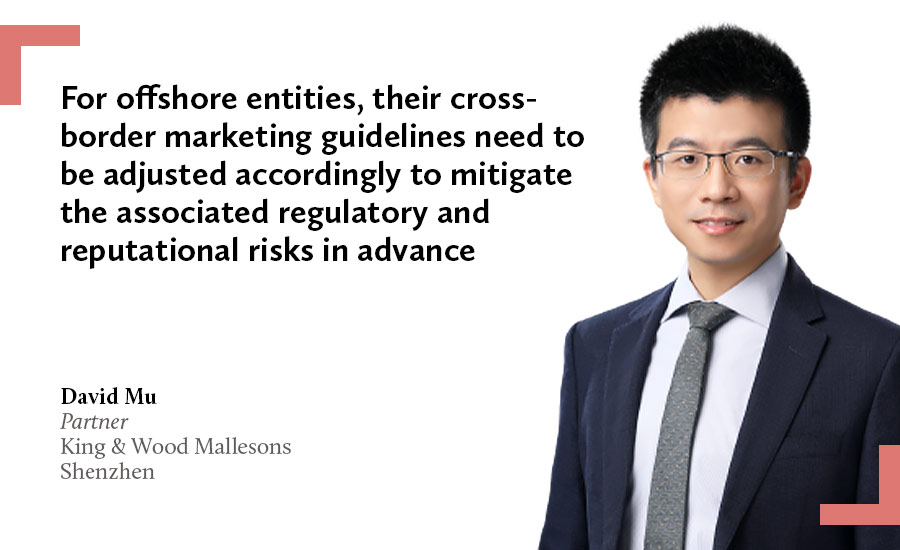
David Mu, a Shenzhen-based partner of King & Wood Mallesons, explains that the process of Chinese counsel issuing a clean netting opinion – i.e., arguing that the close-out netting mechanism is legally enforceable both before and after the commencement of bankruptcy proceedings involving Chinese entities – is a highly complex legal analysis involving not only the application of conflicting Chinese laws and regulations, but also how international practices and contractual agreements were actually treated in Chinese bankruptcy proceedings.
“Traditionally, the laws and regulations that can be applied to derivatives were lagging behind the times and generally of low rank, and there weren’t many exemplary Chinese bankruptcy cases where the close-out netting process of derivatives got tested,” says Mu. “Therefore, a rigorous legal analysis is difficult to achieve, and lawyers were always carefully seeking a balanced approach between regulatory support and market expectations amid the lack of substantive changes to the legal foundation.”
The new Futures and Derivatives Law, on the other hand, provides the first legislative recognition of a close-out netting regime:
Article 35. Where derivatives are traded under the master agreement in accordance with the law, if any circumstance agreed upon occurs, trading may be terminated as agreed upon in the agreement, and netting of all trading profits and losses under the agreement shall be conducted.
Netting according to the provisions of the preceding paragraph shall not be suspended, invalidated or revoked in the event that either party to the transaction enters bankruptcy proceedings in accordance with the law.
Article 37. Where derivative trading is settled in a centralised manner by a clearing institution as a central counterparty approved by the department authorised by the State Council or the futures regulatory agency of the State Council, netting may be terminated in accordance with the law; and settlement property shall be first used for settlement and delivery, and shall not be placed under seal, frozen, impounded, or be subjected to enforcement; and shall not be used by anyone before the completion of settlement and delivery.
The new law also establishes a “single agreement” regime, whereby a breach by one party to a transaction of its obligations under any one document constitutes a breach of the entire agreement, thus preventing the bankruptcy administrators from selectively performing each specific transaction under the master agreement.
Article 32. If the master agreement is adopted in derivative trading, the master agreement, all supplementary agreements under the master agreement, and any agreements made by both parties to the transaction on all specific transactions, among others, shall together constitute a single integrated agreement between both parties to the transaction and be legally binding.
So, looking forward, the relationship between the basic regimes of derivatives transactions and Chinese bankruptcy procedures has been clarified at the legislative level, which will greatly affect the business operations of Chinese and foreign banks.
According to Mu, these changes will enable Chinese institutions (both financial and non-financial) to be treated as “netting counterparties” in cross-border derivatives transactions, thus achieving the same trading status as offshore financial institutions, more favourable regulatory treatment, more favourable capital treatment and lower cost burdens.
“The non-defaulting party will be able to exercise its early termination rights in a timely manner on the basis of a single agreement to prevent the expansion and deterioration of risk resulting from the continued performance of the transaction, and to reduce the impact of credit risk on the defaulting party and the overall financial markets in the event of bankruptcy by promptly reducing the exposure to multiple transactions to a smaller single net amount via the netting process,” he says.
Another major positive impact of the close-out netting mechanism is that efficiency in the use of institutional funds will be enhanced. Under the mechanism, the market exposures of multiple transactions on both sides of the trade can be aggregated. For financial institutions subject to capital adequacy and riskbased capital regulation, it can reduce risk exposures and riskbased capital provisions, and the related margin (especially variation margin) can be charged on a net basis, rather than the full amount on a line-by-line basis, thus improving the efficiency of capital utilisation by financial institutions.
“These changes will not only promote active trading of both domestic and cross-border derivatives in both directions for various institutions, but will also reduce the compliance burden and cost pressure on both sides of the transaction, guarantee a fairer and more equitable trading position, and create an institutional basis and legal environment for financial instruments [especially for hedging instruments] to support the real economy,” says Mu.
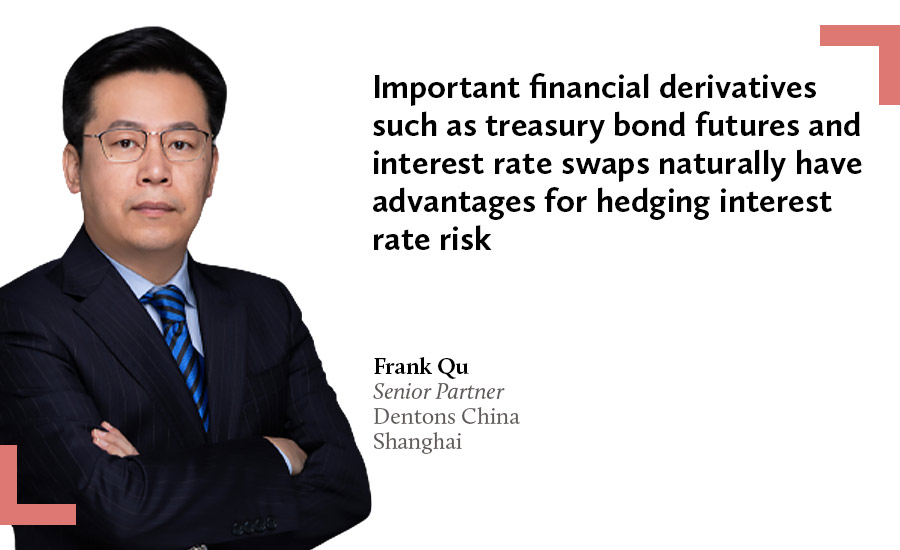
Frank Qu, a Shanghai-based senior partner of Dentons China, points out that the ISDA had already adjusted China to a “netting jurisdiction” in an updated memorandum the same month as the new law was issued. It is important to note that the Financial Stability Law (Draft for Public Comment), issued by China’s central bank on 6 April, provides that the financial authorities under the State Council may, in order to deal with financial risks, take measures including “suspending the close-out netting of eligible financial transactions”. The drafted exceptional provision will undoubtedly affect the legal certainty of the enforceability of close-out netting of derivatives transactions.
In addition, Qu suggests that commercial and investment banks will still need to attach great importance to the agreed terms relating to netting and early termination when conducting derivatives transactions after the new law comes into force, even though the use of these provisions is clear and unambiguous.
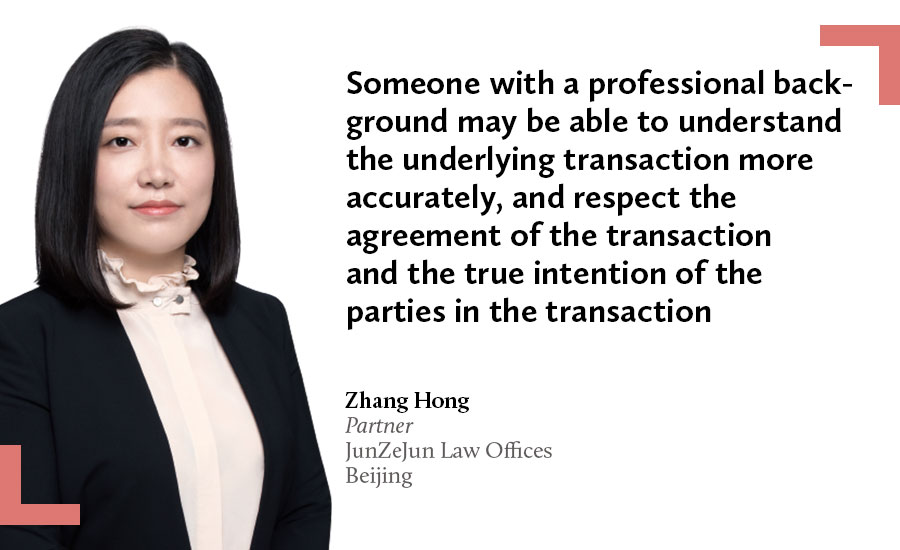
This is because, “in a number of past cases, disputes have easily arisen as to whether each transaction has been concluded, how the early termination payment is calculated, and the nature of the early termination and the breach”, he says.
You must be a
subscribersubscribersubscribersubscriber
to read this content, please
subscribesubscribesubscribesubscribe
today.
For group subscribers, please click here to access.
Interested in group subscription? Please contact us.
你需要登录去解锁本文内容。欢迎注册账号。如果想阅读月刊所有文章,欢迎成为我们的订阅会员成为我们的订阅会员。