

David Buxbaum
LinkedIn
Facebook
Twitter
Whatsapp
Telegram
Copy link

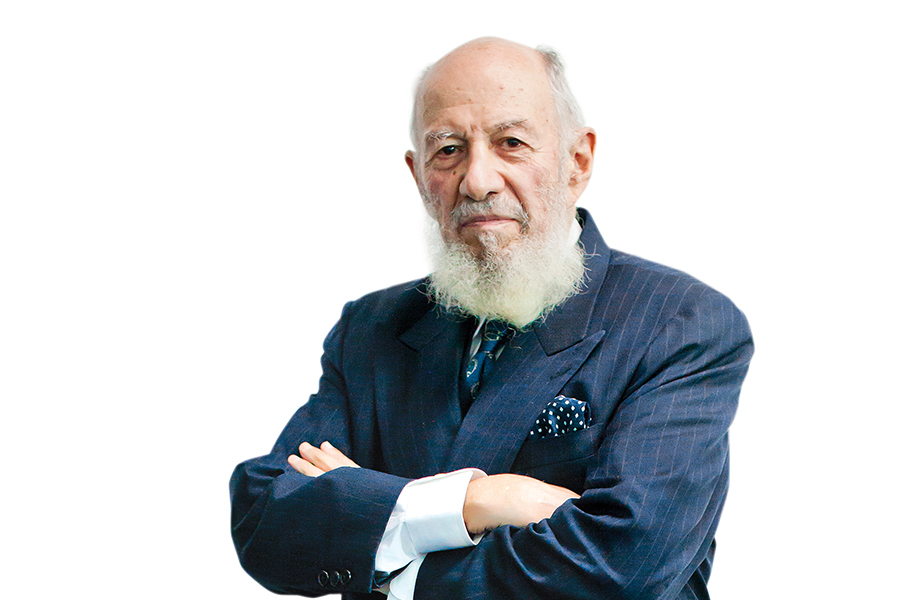
An American octogenarian has spent half his life practising law in China and pulls no punches about what needs to be done to improve its legal system, writes John Church

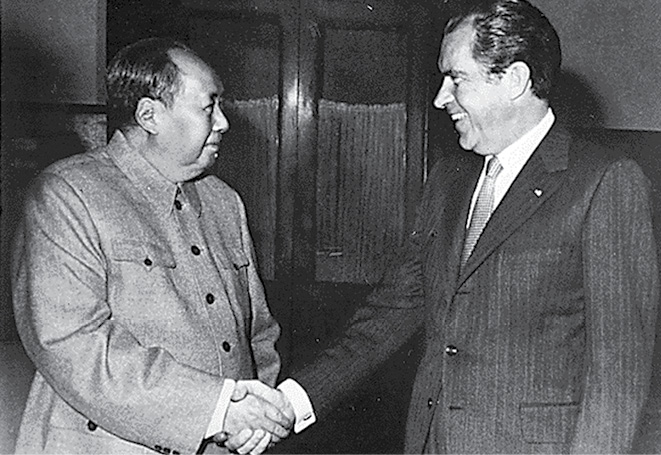
No matter how you stack it, this lawyer has been around. David Buxbaum followed Richard Nixon’s footsteps into China in 1972, just three weeks after the US president had returned from that historic visit.

Picture a white, Jewish, American lawyer landing behind the bamboo curtain after a day-long train ride from Hong Kong (“Before the MTR it was the worst imaginable – you would sit and windows would be wide open and people would walk right through the windows, step on your trousers and onto the train. That was almost de rigeur!”).
Kissinger_Mao2He stood out a little as he steamed into Guangzhou and disembarked onto a crowded platform, the cultural revolution in full swing and not a lawyer of any colour or creed in sight – anywhere. A couple of hours later, he was detained as a spy.

A spy he is not. Bold he certainly is, opinionated, wry, with a cunning sense of humour – this pioneer of sorts is not shy in stating his thoughts and observations, and generously shares a wealth of experience that covers four decades in China, half a century in Asia, and 80 years of life.

His honesty is refreshing, and all the more valued a commodity in the politically cautious realm of Beijing legal circles. Some of his views on China’s legal system are well known, but that doesn’t stop him form banging away at a structure he seems driven to improve to the standards he believes it can achieve.
Nixon_MaoAn expert in transactional law and arbitration, and a talented international litigator, Buxbaum is currently with US law firm Anderson & Anderson. He has been involved in landmark cases including Microsoft v Juren in 1996, one of the first times an American software company filed copyright infringement claims in China. The case in Beijing Intermediate People’s Court was tried on national television and the US$53,000 fine, confiscation of Juren equipment and order to make a public apology was seen as a decisive IP victory at the time.

[ihc-hide-content ihc_mb_type=”show” ihc_mb_who=”1″ ihc_mb_template=”2″ ]

Another highlight of his career was Butz v Economou civil liability case in 1978, where the American Board of Trade and Arthur Economou sought damages against a US federal official after a failed attempt to revoke his commodity futures commission company’s registration. The US Supreme Court overturned a district court judgment and ruled that executive officials are only entitled to qualified immunity in the face of challenges to their conduct. “No-one thought I would win that case,” he recalls with a smile.

Buxbaum was born in New York in 1933, and shared his younger years between a gated but not affluent community in Brooklyn and a farm in Jeffersonville, in upstate New York.

After graduating from New York University in 1954, he joined the US Army as a soldier and was stationed in Germany for two years before returning to the US, where he studied law and Chinese studies at the University of Michigan. “I was the first person to do that combination at the university. From there I went on to a master’s and PhD, which I got at the University of Washington in Seattle, which had a very good Asian and China department.”

International law fascinated him, but in those days the term generally meant European law, as opposed to common law. “But having been in Germany at the end of World War Two, during the occupation, and having viewed some of the niceties of German life at that time I decided I did not want to be a European,” he says with only a hint of humour.

“I thought China would be important some day, especially together with my law background. I also had a slight interest in Chinese art and culture, which made the move easier. China was not that important at the time, but I attracted a lot of attention because I was one of the first people in America to be studying Chinese law.

“In those days, strangely enough, you had exchanges of materials between US and Chinese universities. That stopped sometime around 1958, during the anti-rightist movement period. Then you had the great leap forward and the cultural revolution, so it stopped. But during the time that I was in law school, there was an exchange. There wasn’t that much promulgated law in China at that time, but there was some. And as for unpromulgated law, I was getting all kinds of literature and books and records, so there was something to learn.”

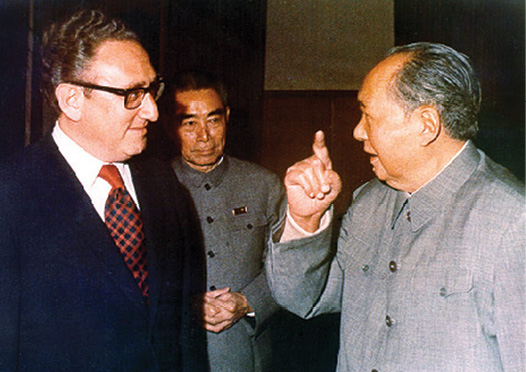
Around the same time, Buxbaum was also a fellow at Harvard for a year. “One of my teachers was Henry Kissinger – a wonderful teacher. He was secretary of state when I first came to China, and the State Department under his auspice was very helpful to us when we first came, in ’72.”

After the year at Harvard, and as a result of a programme with the National University of Singapore’s law faculty, Buxbaum became an exchange faculty member. In return, Tommy Koh, who went on to become a respected legal mind and ambassador at large for the Singapore government, went to Harvard.

“I taught law there, including Chinese law, which at that time was still part of the law of Singapore. So I came first to East Asia in 1963 and I have been here in Asia since then, for most of the rest of my life.”

That included two stints in Taiwan, and a two-year stay in Hong Kong 1966-67, a turbulent time in Hong Kong’s history. “The riots, I was there for that, every day of it,” he says. “I saw the extreme leftists kill a policeman by beating him to death, with my own eyes – and the bombings, and other things.”

Buxbaum’s journey into China began in early April 1972, when the company he chaired, the May Lee Import-Export Corporation, received the first invitation to an American company to attend the Canton Trade Fair. At that time the fair, held twice a year, was the only venue for foreigners wanting to do business with China.

“When I first came, I didn’t refer to myself as a lawyer – I was a consultant and businessman. We set up a practice immediately. I was involved in a business, but I’m not a businessman and never was, so we started to practise law on the day we landed.”

He had to get his visa in Ottawa, Canada, because, despite thawing ties, there was no formal recognition between the US and China (that came in 1978, “and by the way, you had to have a visa for each city and you could only go to a limited number of cities. There was no such thing as a visa for China”).

From Ottawa, he flew to Hong Kong and took the crowded train to Lowu. “You sat in a big waiting room for hours and then took the Chinese train. It was much nicer, but slow as molasses. It took one full day to get from Hong Kong to Guangzhou, and the only way was by train. There were no buses, boats or planes.”

Buxbaum recalls the events leading up to the legal situation at that time. “In 1949, there was the Common Programme, which was like a constitution, and then you had a regular constitution, perhaps the best that China ever had, promulgated in 1954. But in 1949 they had abolished all previous laws, which was the stupidest thing they could have done, and that’s one of the reasons it took them so long to develop a proper legal system.

“There was a developing legal system, but by the time of the anti-rightist movement and the great leap forward [1958], all law faculties were closed, lawyers were sent down to the farms, … When I came to China in 1972 there were no law courts, no arbitration courts, no law firms, and very few laws.”

Buxbaum’s first day in China was eventful. “I think it was 13 April and I was taken to a Guangzhou hotel by an escort. The translator I had started talking to me, and I answered in Chinese, because I could speak Chinese. And he said to me: ‘How is it that we only allow a few Americans to come to this fair and one of them speaks fluent Chinese. You must be a spy. You will remain in your hotel and I will check on you’.

“He came back hours later and said he had made a mistake and that I would be the only person that didn’t need a ‘translator’, which was of course a minder. That individual rose to very high ranks in the Ministry of Foreign Affairs and as he moved up the ladder, from time to time, I would see him and remind him of that incident.”

Such incidents were by no means isolated at a time when meeting a foreigner, especially one-on-one, was forbidden without specific approval. Buxbaum recalls frightened people turning away from him on trains, in restaurants and public places, “so they wouldn’t be seen to be talking to you, because they could be arrested for that. It was unpleasant to say the least”.

“You, and I don’t mean foreigners, anybody couldn’t go anywhere without people knowing about it. Street committees and other people kept track of everybody. To travel, to marry, you needed permission from your unit. It was completely controlled. Nevertheless, it was exciting.”

To begin with, 90% of his work, mostly from the Canton Fair, was contractual work. “It was a bit complicated – not the contracts themselves, which were just buy and sell agreements. One of the complications was that America had frozen Chinese assets in the US, and China had frozen American assets in China. So there was an issue that assets could be nabbed as they crossed borders if you weren’t careful.”

There was also no dispute resolution, at least not in its recognisable form. “Almost all Chinese companies were state-owned and most international business was done through trading companies. So if you signed a contract at one level, with a corporation at the city-level, say, then you went to the provincial-level corporate group and asked them to help you conciliate a dispute.

“And it didn’t work badly because China at the time was trying to impress with how it held contracts, because it wanted to become part of the world. It was isolated and was doing things to end that. There was a much greater percentage of performance of contracts in those days in China than there is today.”

There are many landmarks for this China veteran, but some stand out more than others for a man so inherently close, yet always the outsider, to the development of China’s legal system. Perhaps the intimacy and the exclusion over so many years give him a unique perspective. “You had the first joint venture law promulgated in 1978, very poorly drafted and full of all kinds of errors and very simple, but that was the opening to foreign countries to invest in China,” he recalls.

“So then you had the beginnings of a legal system that was not based solely on the Soviet socialist model, but based in no small part on Western continental law. You had a serious attempt to build a proper legal system starting then, and leading to the crescendo you see today in terms of the promulgation of law, and the tremendous promulgation covering many areas of human endeavour, and doing quite a good job in terms of promulgation.

“Then you have the training of lawyers and law personnel. The beginning of law schools and research institutes, again built on the past, and then law specialists going overseas. The building of a body of knowledgeable young lawyers, which has also proceeded very well.”

For Buxbaum, the judiciary itself is the systemic problem. “They have not met the standards of the quality of the promulgated law or the quality of the young lawyers, many of whom are very well trained,” he says.

“There are numerous problems. One of them is the very low pay that judges receive. As a contemporary graduate of a law department, if I’m a lawyer and you’re a judge, my remuneration is going to be much higher than yours.

“It’s true in Western countries, too, that judges make less than successful lawyers especially, but the level of remuneration is much higher and the level of prestige is much higher. Chinese judges do not get prestige and they have limited authority. They have to do all kinds of work – for example if you want to freeze a bank or seize assets, normally that’s a job for a bailiff in any other society; [in China] you have to take a judge with you. If you want to enforce a judgment you have to go to an enforcement panel, which is composed of judges, instead of administrative enforcement, which you’d have in many continental European jurisdictions. So judges are given neither status, nor good salaries, nor authority. And they have to do a lot of work that judges wouldn’t ordinarily do.”

Buxbaum says the judiciary and arbitration systems have not matched the development of lawyers and legislation, creating a “tremendous lag” between them.

He has led by example on the issue of the judiciary, via his role as chairman of the Rule of Law Forum, a collective of lawyers, entrepreneurs and others promoting the rule of law in China. “One of the things we think we were successful in doing is helping bring about the requirement for judges to participate in national judicial examinations – originally it was just for lawyers,” he says.

“I actually wrote to Jiang Zemin and Zhu Rongji about this – and they actually answered me. And they set up appointments for me to meet with the Supreme Court and other people, and I talked about the rule of law and the need for judges to be at least as well trained and educated as lawyers – at least – and the importance of a national examination.

“People I met with on the Supreme Court, some of them were against. I asked why, and they said ‘because if we had that exam, no-one would want to be a judge’. But the party at the highest level decided it would be a good idea and they instituted it, and I think we played a role in that.”

Buxbaum has other opinions and high hopes for a new leadership intent on addressing corruption and that may also continue with legal reforms. One gets the feeling that if he is not happy with the pace of change, we’ll all know about it.

[/ihc-hide-content]

LinkedIn
Facebook
Twitter
Whatsapp
Telegram
Copy link