













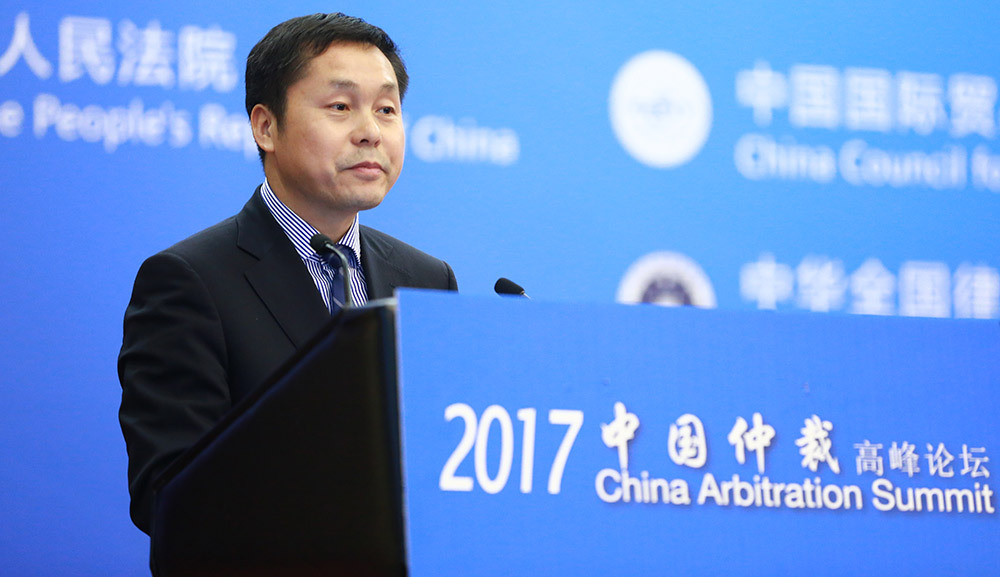
Currently, the Chinese arbitration industry is facing development opportunities and major challenges. On the one hand, with the in-depth promotion of the Belt and Road initiative, the pace of Chinese enterprises’ “going global” has accelerated, and arbitration is becoming an important mechanism for Chinese enterprises to guard against risks in their operations, and for both Chinese and foreign parties to protect their lawful rights and interests. The Chinese arbitration cause is on the threshold of historic development opportunities.
On the other hand, with the further opening up of the domestic arbitration market, foreign arbitration institutions are increasing their publicity efforts in China, intensifying the competition in China’s arbitration service industry. Additionally, the more than 250 arbitration institutions on the mainland are furiously developing, and arbitration cases are continuously increasing. China’s arbitration institutions accepted in excess of 300,000 cases in 2017.
However, there are impediments in the arbitration practice, such as unbalanced development, a relatively weak public awareness of arbitration, defects in the arbitration system, a lack of international arbitration experts, and an urgent need to expand the voice on international arbitration, etc. These issues fetter the development of arbitration to a certain extent. The Chinese arbitration cause is still facing major challenges.
Wang Chengjie is the vice chairman and secretary-general of the China International Economic and Trade Arbitration Commission