







China’s allure remains almost a magnetic force for foreign investors, but the careless can fall mightily. Richard Li explores the opportunities, and perils, of jumping into this market
China is still the land of plenty for many foreign investors, and the recent launch of a free trade zone in Shanghai has ignited the zeal of many of them to set up businesses in this attractive freer-market environment. Like moths to a flame they come to a zone that is still beset with many uncertainties and doubts. Still, investors drawn to buy into more of the China market are hoping this pilot project is a signal that China wants to create an easier and more open environment for foreign direct investment (FDI).
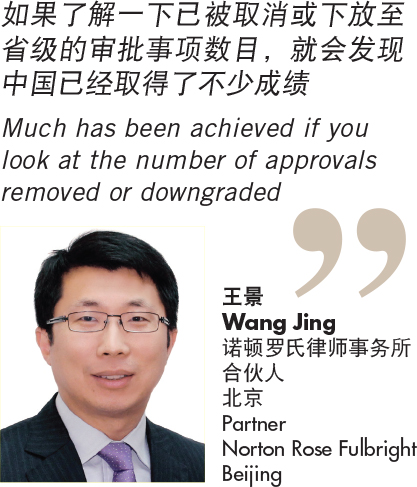
Their perceptions are in line at least with the general trend that China’s central government has been endeavouring to simplify approvals. “Much has been achieved if you look at the number of approvals removed or downgraded to the provincial level,” says Wang Jing, a Beijing partner at Norton Rose Fulbright. Central authorities such as the Ministry of Commerce (MOFCOM) and the State Administration of Foreign Exchange (SAFE) are also on track to loosen their control of foreign investment.
No wonder FDI in China keeps increasing despite a world still haunted by financial problems. The FDI that the country digested from January to September increased by 6.22% year-on-year, according to MOFCOM. June’s inflow was reportedly the single-highest monthly total since 1997.
[ihc-hide-content ihc_mb_type=”show” ihc_mb_who=”1″ ihc_mb_template=”2″ ]
However, an epoch-making transformation of the world’s second-largest economy can hardly be accomplished overnight. China’s regulatory environment remains challenging, and at times downright perilous, for foreign investors. “Due to the vast volume and variation of laws and regulations, investors in China are bound to deal with inconsistencies, duplications and lack of information,” observes Carson Wen, a Hong Kong partner at Jones Day.
Higher regulatory pressure also comes from China’s growing lack of tolerance of monopolistic behaviours and commercial bribery, as revealed in a flurry of recent significant cases, many of which appear aimed directly at foreign investment.
Due diligence is therefore a critical tool for foreign investors to hedge themselves against potential nightmares. “It is of particular significance in China because of its unique investment environment, legal framework, culture and business practices that vary across regions,” Wen warns.
In their due diligence investigations, foreign companies should keep a closer watch on corruption, real property, financial accounts, permits and other particular issues in China. That said, continuous FDI growth is evidence of China’s magnetic pull on foreign money, and the free trade zone may become a milestone in the country’s history of opening its market to foreign investment.
Free trade zone
The recent launch of the China (Shanghai) Pilot Free Trade Zone (Shanghai FTZ), has caught the attention of many foreign investors. The zone consists of four separate sections in the Pudong New Area and is expected to have looser government controls and more opportunities for foreign investment. An overall plan for the Shanghai FTZ was issued by the State Council on 27 September. Two days later, the zone was formally launched, as the Shanghai government published the Administrative Measures for China (Shanghai) Pilot Free Trade Zone – a set of more detailed administrative measures – together with a negative list prohibiting or restricting foreign investment in certain sectors. In response to the launch of the zone, industry regulators such as the China Securities Regulatory Commission (CSRC), SAFE and the State Administration for Industry and Commerce (SAIC) have also issued relevant measures.
“Currently the Shanghai FTZ manages foreign investors with both the pre-establishment national treatment and control pursuant to the negative list. For industries not on the negative list, foreign-established companies only need to complete the relevant registration,” says Jeremy Dai, a partner at AnJie Law Firm in Beijing. “Regarding foreign exchange, free renminbi conversion will also be allowed in the zone.”
Michael Zhang, a Shanghai-based special counsel at Sheppard Mullin Richter & Hampton, says the pilot zone is supposed to open up industries categorised as restricted or even prohibited in the current foreign investment catalogue outside the zone, such as financial service, value-added telecoms, gaming devices, education and logistics. “[In the Shanghai FTZ] foreign-invested companies may enjoy more freedom in exploring these areas, especially in shareholding percentage,” he says.
The Shanghai FTZ will also simplify approval procedures for setting up companies. “That means MOFCOM and SAIC approval, and any applicable pre-approval, are all well combined and integrated at the Shanghai FTZ administration authority,” Zhang says.
However, the new zone is far from reaching any sort of maturity. “Many regulations in the Shanghai FTZ administrative measures still read like slogans or declarations at the moment,” notes Kevin Xu, a partner at Martin Hu & Partners in Shanghai. “The measures don’t have enough regulations or details, nor are they easy to use in practice.”
Zhang says clients may have expected a sudden upgrade of all government authorities in the zone. “We think it is realistic to be patient with issues or problems during the warm-up period for the zone, with respect to the enforcement of all policies on the paper,” he says.
Philip Cheng, a Shanghai partner at Hogan Lovells, says enquiries the firm has received suggest that foreign investors are most worried about whether the Shanghai FTZ will truly replace the approval system with the registration system. “They are also concerned about whether the [registration] system will end up being a substantive review process similar to an approval system,” says Maggie Shen, a Shanghai associate at Hogan Lovells.
Cheng also draws foreign investors’ attention to something they may not have noticed. “Although the overall plan gives a green light to foreign direct investment in a particular sector, and the negative list does not impose any restrictions in that sector, it does not mean that the current industry-specific restrictions are automatically lifted. Foreign investors will need to wait for the relevant industry regulators to give their respective green lights.”
Xu thinks the zone hasn’t made an impressive breakthrough for further opening up industries. “The negative list, much the same as the Foreign Investment Industry Guidance Catalogue, hasn’t further opened important sectors to foreign investment, and the list has even categorised prohibited items not in the catalogue,” he observes. “We can see that this negative list was produced in a bit of rush.”
Many have praised the measures of the zone to transform the regulatory function of government, but Xu finds that the mindset of regulatory bodies seems to be changing at a slower rate. Approval of foreign-invested enterprises and foreign investment projects outside the zone are handled by MOFCOM and the National Development and Reform Commission (NDRC), respectively.
By comparison, registration of both items inside the zone is handled by one authority. But Xu finds two separate administrative measures for the registration of foreign-invested enterprises and foreign investment projects, respectively. He thinks this implies that in essence, the mindset of authorities remains conservative in terms of altering the current two-system administration.
Regulatory improvement
Outside the Shanghai FTZ, developments favourable to foreign investment can also be found. Dai says the caseload of MOFCOM approvals has dropped by 95%, from more than 3,000 in 2005 to just around 100 as at the end of 2012. “The Department of Foreign Investment Administration at MOFCOM says that the ministry has delegated the approval authority for most foreign investment projects to its counterpart administrations at the provincial or an even lower level, and the ministry will focus on post-transaction regulation instead of prior approval in future, to improve the investment environment,” he says.
SAFE is also following the trend of simplification. Michael Yu, a Beijing partner at Global Law Office, thinks three circulars issued by SAFE can significantly help facilitate foreign investment, namely circulars Hui Fa[2012] No. 59, [2013] No. 21 and [2013] No. 19. “[The circulars] have substantially reduced the number of administrative approvals for foreign direct investment, clarified and streamlined the procedures,” he says.
Chinese regulators are also growing more sophisticated. In August, MOFCOM conditionally approved Baxter International’s acquisition of Gambro, and MediaTek’s acquisition of MStar Semiconductor. In both cases, the ministry used the Herfindahl-Hirschmann Index (HHI), a tool for assessing concentration levels in a market.
“Both decisions appear to be more well-rounded and robust in the competition assessments and conclusions, as opposed to simply focusing on the merger parties’ stronger market positions relative to Chinese competitors and customers,” says Hannah Ha, a Hong Kong partner at Mayer Brown JSM.
In the Baxter case, for example, the company has an agreement with Nipro Medical Corporation, a third-party major player, for the production of haemodialysis products. “MOFCOM tied its concerns about the exchange of competitively sensitive information under the agreement between Baxter and Nipro to a co-ordinated effects theory of harm, as well as emphasising the significant increase in HHI as a result of the transaction, rather than just focusing on the merged firm’s combined market share post-acquisition,” Ha says.
Challenges remain
But in general, the regulatory landscape in China is still a complicated subject, and one that overseas investors need to be familiar with. “The issues that foreign investors are often not aware of include regulatory restrictions and mandatory corporate governance requirements that have the effect of protecting Chinese shareholders in case of joint ventures, long approval procedures for establishment of subsidiary corporations and representative offices and granting of work visas, restrictions in internet business activities, complex and high tax rates, tightened employment law regime, etc.,” says Wen at Jones Day.
The multi-level regulatory framework in China can bring foreign investors plenty of trouble. “In certain places in China, the local authorities sometimes offer preferential treatment to, or initiate penalty investigation of, foreign-invested companies, with disregard for national laws and regulations, or they make local rules and policies not in strict compliance with the national laws and regulations,” says Wang at Norton Rose Fulbright.
“They may not be doing this out of malice or self-interest, but foreign investors may have a hard time in formulating their action plans, or find themselves stuck in inconsistent practices between central and local regulators,” Wang says.
Li Li, a member of King & Wood Mallesons’ international litigation team in Beijing, says foreign investors face an increasing risk of environmental litigation. The updated Civil Procedure Law, which took effect on 1 January, added article 55, which states that “legally designated institutions and relevant organisations may initiate proceedings at people’s courts against conduct jeopardising public interest, such as polluting the environment”.
“While the article does not explicitly mention class action, many academics and practitioners argue that, in light of pollution usually affecting a group of people, it creates the right to bring a class action against polluters,” Li says, concluding that the litigation risk posed by class actions has increased.
Bernd-Uwe Stucken, a Shanghai partner at Pinsent Masons, reminds investors of the Guarding State Secrets Law, which became effective in October 2010. “However, it has not captured much attention from foreign investors,” he says.
Stucken says the law can have a wide impact on commercial information received and disclosed by companies in China. “The company may be dealing in state secrets without being aware of the sensitivity of the information,” he says. “If they disclose such trade secrets to the public domain, they may be deemed in breach [of the law].
“A breach would attract disciplinary sanction, or a warning and a fine, together with confiscation of illegal gains. Criminal liability shall apply if any such activities amount to a criminal offence.” The State Administration for the Protection of State Secrets works with other central government authorities to determine the detailed scope of state secrets.
Meanwhile David Yu, a Shanghai partner at Llinks Law Offices, says it’s no secret but foreign investors should attach more importance to a particular tax issue. “Many foreign investors think that they have no tax liability in China for transferring only the equity of the overseas parent company of their invested company in China,” he says.
However, such companies should beware of circular Guoshuihan [2009] No. 698, issued by the State Administration of Taxation to regulate tax collection for proceeds gained from equity transfer by non-resident overseas actual controllers of resident companies in China. As the information exchange between tax authorities and other government bodies and banks has been enhanced, “non-resident companies now face a growing risk of being investigated by Chinese tax authorities for their equity transfers”, he warns.
David Yu also thinks foreign investors should keep a close watch on antitrust issues. China has recently been strengthening its enforcement of the antitrust law, which can be attested by the NDRC’s issuance of fines totalling about US$110 million to Biostime and five other baby formula producers for price-fixing.
“Foreign investors should file necessary notification for their concentration in investment projects according to China’s antitrust law,” David Yu says. “In their everyday operations, they should also ensure compliance and avoid monopolistic behaviour such as concluding monopolistic agreements and abusing their market dominance.”
Ha, at Mayer Brown JSM, says foreign investors are generally aware of MOFCOM’s filing requirements for certain mergers or acquisitions. “However, it may be less widely known that the formation of joint ventures, or that some kind of change in control – such as an increase in an existing shareholding, even where there may not necessarily be a change in the ‘quality’ of control – may also trigger the requirement for a pre-merger control notification in some cases,” she says.
Dai, at AnJie, reminds foreign investors of China’s national security review, established in 2011. “Foreign investors often forget this important review because it’s relatively new, and few significant cases can be found in practice,” he says. “However, the national security review system has a low filing threshold and a long timeframe for filing and review, and the transaction has to be suspended before the review is completed.”
Bribery on the radar
The issue of commercial corruption is also being monitored more closely on China’s regulatory radar. A recent significant case is GlaxoSmithKline (GSK) being accused by the central government of bribing doctors and officials in the country.
“The launch of the anti-corruption campaign has been a surprise to many investors. So far, most of the companies investigated are foreign firms in various industries, in particular pharmaceuticals and food,” Wang says, adding it’s still a bit early to conclude that China’s anti-corruption action is only aimed at foreign companies.
Vincent Chiu, the managing partner at Long An Law Firm in Shanghai, observes that at present the most common means of commercial bribery include providing bribes in the disguised forms of promotion fees, advertising fees, publicity fees, sponsorship fees, scientific research fees, clinical fees, discounts or commissions.
“And bribing through an intermediary, a third party, is well accepted among foreign transnational companies,” he says. “The third party is typically an intermediary service company or a cultural communication company, which pays bribes on behalf of the briber in the form of design, planning, promotion and publicity, and incentive fees or other service fees.” GSK’s use of a travel agency was a case of this kind, Chiu says.
He points out typical features in industries where multinationals are most likely to commit bribery. “[These are] industries with mature competition and concentrated sales terminal channels, in which distributors or terminal vendors often have more dominance than manufacturers,” he says, adding that such sectors include the medical and pharmaceutical industry, the liquor sales industry and the fast-moving consumer goods industry.
Due diligence
Given the regulatory pitfalls awaiting foreign investors in China, due diligence is very important for any FDI project. “The exercise enables a foreign investor to better understand its partners, the target business, proposed project and any potential issues with the transaction,” says Jack Cai, a Shanghai-based of counsel at Eversheds.
Basil Hwang, the Hong Kong managing partner at Dechert, says due diligence can help foreign investors assess the risks and adjust the price for the transaction. “Due diligence can help foreign investors to work out the most appropriate deal structure,” he continues. “If foreign investors do not conduct any due diligence of the target company before the transaction, they would have no idea whether the proposed deal structure will be practicable or not.”
Michael Yu at Global Law Office says in due diligence, foreign investors should focus more on establishing good communication channels with staff of the target company. “People in charge of particular issues can often provide unexpected information for due diligence investigations,” he says. “Also, on-the-ground investigation doesn’t account for the most in the whole due diligence process, but oftentimes it’s necessary to contact the target staff far from the scene to ask for necessary documents.”
Stucken, at Pinsent Masons, believes real property is one of the most important issues foreign investors should pay close attention to in due diligence. “Ownership of real property is one of the most complex and potentially problematic issues in a merger and acquisition transaction in China,” he says.
Ha also points out the importance of checking property. “[There may be] insufficient documents to prove ownership of land and buildings. In the early days, many buildings were constructed without all the requisite approvals from the authorities,” she says.
Ha also reminds investors to check financial accounts and assets of their target company. “There may be more than one set of financial accounts for a company in the PRC. Different accounts are often prepared for different purposes. Security and debt are very often insufficiently documented,” she says. “The list of assets on the books may sometimes be quite different from the assets a company actually holds.”
Given China’s strengthening anti-bribery enforcement, Cai recommends that companies should do anti-bribery due diligence on the target business and their business partners. “Understanding the target’s sales practice, any weaknesses with compliance matters, as well as the general reputation of their partners, is important from both a legal and financial perspective,” he says. “For example, if a buyer bans a certain sales practice after the transaction, sales are likely to drop in the future.”
Cai says it’s also wise to conduct environmental due diligence in some industries, such as manufacturing. “Chinese authorities are increasingly enforcing sanctions for environmental breaches, and as such, this is also an area which could potentially represent significant economic liabilities for the investor,” he observes.
“It is also important to check the business scope and permits of the target, especially for those businesses which operate in ‘grey’ sectors, and compare this with the actual activities undertaken by that company.”
The target may not have the proper business scope, or the necessary permits. “When the target is operated by Chinese owners, a close personal relationship with the authorities, or simply a reluctance to scrutinise Chinese companies, may mean that a breach of business scope is overlooked,” Cai says. “However, when the target is acquired by a foreign investor, it is possible that the same relaxed approach will not be taken.”
Employment is another significant issue with a wide impact. Hwang says China’s employment law system consists of a complex and voluminous series of national, provincial and local laws, regulations, measures, notices and directives, and among them many inconsistencies can be found. “The practices of local labour authorities vary greatly from one locality to another,” he adds.
Hwang says an employment contract should be concluded with each employee. “The signing of a ‘collective’ employment contract between the employer and its trade union is also encouraged by the authorities in China,” he says. “In China, an employer cannot terminate the employment contract with its employee simply by giving notice in advance unless one of the circumstances specified under the PRC Employment Contact Law occurs.”
It is to be expected that various difficulties with investing in China may linger for some time, but the country is in the progress of opening its market and improving regulatory functions of government. Will more revolutionary policies follow the opening of Shanghai FTZ? Will the concept blossom with more zones mirroring Shanghai as foreign investors succumb to China’s charms in a freer investment environment? Regardless, foreign investors would be wise to check the distance before taking their own leap of faith.
[/ihc-hide-content]