






When legal professionals look for inspiration or diversion, where do they turn? Winny Zhang reports
Most of us gravitate to the arts and media for inspiration, guidance, insight, or just plain old entertainment. At China Business Law Journal, this deduction led us to wonder what films, or books, or pieces of music were preferred by our elite lawyers. So, in a survey of our annual A-List selection of top legal talent for China-related business, we endeavoured to find out.
The results from among 150 lawyers working in PRC law firms, and 120 from international firms, were often unexpected and always interesting. Many of those surveyed recommended their favourite book, film or music as a way to expand knowledge and appreciate different cultures, perspectives and experiences; also, sometimes, it was just for fun.
Recommending the South Korean TV series Extraordinary Attorney Woo (2022) and the film Enola Holmes (2020), Yang Yuhua, a partner at Llinks Law Offices in Beijing and London, explains: “I recommend them only because they are entertaining and with some good spirit or intention; also some little, if not big, wisdom.”
Space constraints prevent us from including all the recommendations, but a common conviction among them is that exploring literature and cinema offers diverse experiences and viewpoints that can broaden horizons, foster empathy and enhance creative problem-solving in legal matters.
Such cultural exposure also promotes greater sensitivity and understanding when working with clients who come from diverse backgrounds.
MOST POPULAR FILMS AND TV SHOWS
In contrast to countless and varied book recommendations, several films and television series received unanimous praise. Favourites among legal elites were Forrest Gump (1994), Boston Legal (2004), 12 Angry Men (1957), and The Shawshank Redemption (1994).
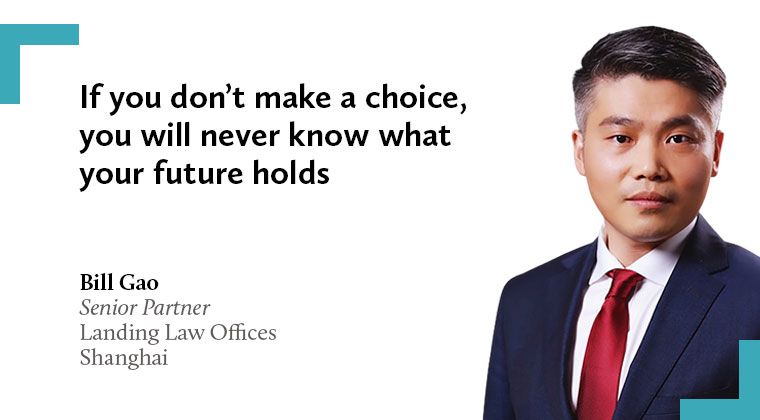
The iconic Forrest Gump quote, “Life is like a box of chocolates, you never know what you’re gonna get” was serendipitously cited by two senior partners as a source of motivation. Bill Gao, a Shanghai-based senior partner at Landing Law Offices, interprets the quote as: “If you don’t make a choice, you will never know what your future holds.” This principle guides his work with clients, exploring every possible solution to achieve the best outcome.
Lin Xiaochun, a Shenzhen-based senior partner at Sundial Law Firm (formerly carrying the name Shu Jin Law Firm in English), sees another connotation: “It is the uncertainty, the expectation of surprises and the belief in living with effort that pulls me forward without distraction.”
Summit Chen, director and senior partner at Dentons China in Shanghai, is among many recommending 12 Angry Men as a must-see for legal professionals.
Particularly notable for its clever use of a single setting, the jury room, the film provides a dramatic introduction to the American jury system; vividly showcasing its features and intricacies through conflicts between the 12 jurors.
A good film or TV series can even influence life decisions. Case in point was Feng Yao, a special counsel at Sunland Law Firm in Beijing, crediting The Paper Chase (1973) for sparking her interest in law. She pursued a Master’s degree at Columbia Law School a few years after watching the film depicting the life of a Harvard Law School student.
Fan Xiangyu, a partner at Tahota Law Firm’s Beijing office, tells a similar story. He was formerly a patent examiner at the China National Intellectual Property Administration when Boston Legal kindled his aspiration to transition from working at a state agency to practising law.
“Although the plot is exaggerated, it showed me an interesting side of lawyers’ work and life,” he says.
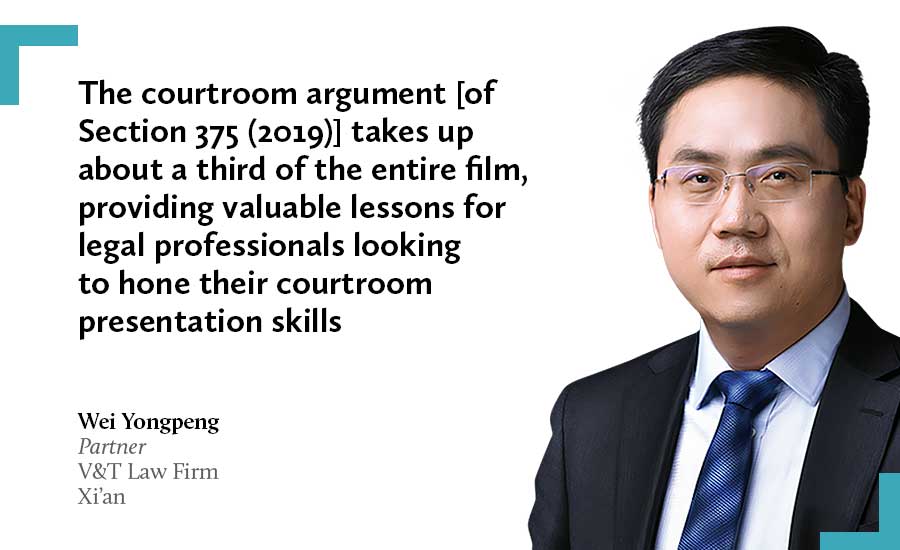
While the US judicial system provides ample fodder for legal drama, other regions also have their gems. Wei Yongpeng, a partner in the Xi’an office of V&T Law Firm, recommends the Indian film Section 375 (2019) for its gripping courtroom arguments.
“The courtroom argument takes up about a third of the entire film, providing valuable lessons for legal professionals looking to hone their courtroom presentation skills,” says Wei.
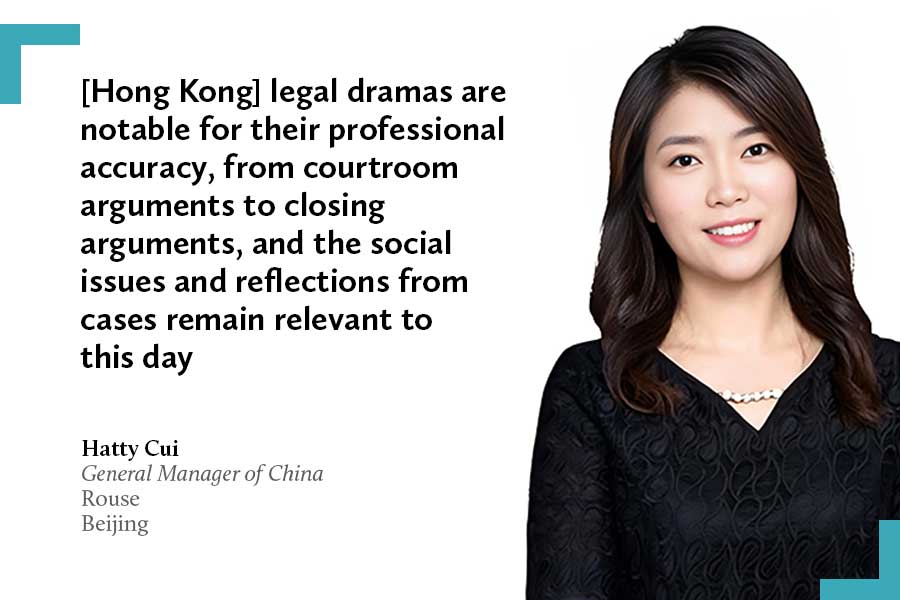
Hatty Cui, general manager of China at Rouse in Beijing, particularly appreciates Hong Kong dramas. Without mentioning any specific title, she notes: “[Hong Kong] legal dramas are notable for their professional accuracy, from courtroom arguments to closing arguments, and the social issues and reflections from cases remain relevant to this day.”
She is also impressed by their portrayal of lawyers’ private lives: “They dress fashionably, play tennis, travel the world, and exude confidence and panache. It turns out that lawyers can be ‘cool’ while maintaining their dedication to justice.”
COMMERCIAL ELEMENT IN LAW
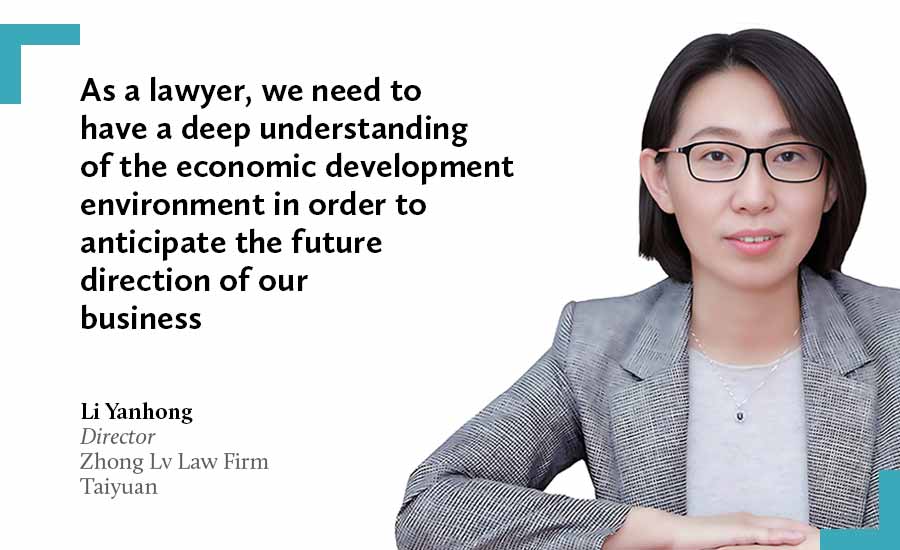
It may come as a surprise, but the most highly recommended genre of books was in the sensible fields of economics and business, as Li Yanhong, a director at Zhong Lv Law Firm in Taiyuan, explains: “As a lawyer, we need to have a deep understanding of the economic development environment in order to anticipate the future direction of our business.”
Li recommends Chinese Economy in Dual Transition, which provides a comprehensive summary of the transformation of China’s economic system since its reform and opening-up more than four decades ago.
This book covers wide-ranging topics such as the reform of state-owned companies, protection of property rights for private enterprises, reform of the income distribution system, and China’s self-innovation and industrial upgrading, providing readers with a robust understanding of China’s past economic environment.
Stressing the value of learning from practical business cases, Richard Chang, a partner at Gunderson Dettmer in its Beijing and Shanghai offices, recommends Barbarian at the Gate: The Fall of RJR Nabisco. It recounts the story of the 1988 leveraged buyout between industrial investment house Kohlberg Kravis Roberts (KKR) and RJR Nabisco – the largest M&A in the US at the time, valued at USD25 billion – providing detailed insight into the thinking of each key stakeholder, including lawyers involved in the transaction.
According to Chang, the insight underlines how “commercial awareness” has become a critical attribute that separates exceptional lawyers from competent ones. While mastering contracts and briefings is crucial, he says: “As you grow, you need to be able to see the whole picture, to understand and think like a business executive, in order to provide solutions for your clients.”
Owen Wang, an international partner at the Beijing and Shenzhen offices of King & Wood Mallesons (KWM), focuses on learning from history. He recommends The Courage to Act, an autobiography by former US Federal Reserve chairman Ben Bernanke, which chronicles his response to the 2008 financial crisis.
The book delves into the transformation of traditional home mortgages into complex financial instruments, the fragmented and loophole-ridden regulatory landscape of financial markets, the Federal Reserve’s inability to identify and resolve the issue promptly, and how the US increased regulation after the crisis.
Wang believes that China’s financial market has encountered similar issues in recent years, prompting the central bank to request public comments on a proposed financial stability law. Reading this book can provide valuable insights and a deeper understanding of China’s present financial environment, says Wang.
[ihc-hide-content ihc_mb_type=”show” ihc_mb_who=”1″ ihc_mb_template=”2″ ]
JUSTICE IN BOOKS
While mastering the principles of economics and business can help lawyers approach legal issues with a broader mindset, the core of being an elite lawyer lies in legal knowledge.
Many top practitioners recommend law-related books such as: A Course in Intellectual Property Law; An Introduction to the Principles of Criminal Law; Studies in Civil Law Doctrine and Jurisprudence; and International Commercial Arbitration.
Rong Chao, a partner at Boss & Young’s Shanghai office, says: “As legal practitioners, we should understand the reasoning behind legislation and its intended value goals, especially in countries with statutory legal systems, where legislative rules may lag behind social development.”
Each law has a specific significance. Intellectual property law safeguards the interests of inventers, while anti-monopoly law seeks to establish a level playing field for business, and criminal law acts as the last line of defence against social violations. For David Zhou, a senior partner in the Changsha office at Kangda Law Firm, all these laws ultimately lead back to an ultimate goal: justice.

Zhou recommends The Supreme Court, a transcript of interviews conducted by Cable-Satellite Public Affairs Network with nine sitting US Supreme Court Justices and two retired justices in 2010. The book’s subheading “A C-SPAN Book Featuring the justices in their Own Words” indicates the theme of justices pointing the way forward through their own interpretations.
Another book on Zhou’s list, Visible Justice, delves into the judicial process of justice, interspersed with various allusions, parables and classic cases to underscore the philosophy and guidelines behind the law. He cites a chapter title within the book as his reasoning for recommending it: “Justice is more than just being achieved, it needs to be visible to the people.”
Denise Shiu, a Beijing-based partner at Cleary Gottlieb, finds encouragement in her pursuit of justice from legal pioneers. For aspiring lawyers, she highly recommends My Own Words by Ruth Bader Ginsburg. “She is such an inspiration,” says Shiu.
As the second female justice in the history of the US Supreme Court, Ginsburg is a source of motivation for many, particularly due to her staunch commitment to gender equality and women’s rights.
The collection of essays by Ginsburg – including practice pieces she wrote as a student, as well as a speech given at a US Senate hearing – offers insights into her views and shares her trial experiences.
Advocating affirmative action and speaking openly about contentious subjects can be extremely risky in any era, and the slightest misstep can result in being labelled or criticised. But despite the risk, there are always brave individuals who stand firm in their convictions in the face of criticism.
Zhao Zhihan, a partner at Han Kun Law Offices in Beijing, recommends To Kill a Mockingbird for embodying such courage. As the story unfolds of a lawyer defending an innocent black man falsely accused of rape, Zhao says: “I believe you will also feel the power of the ‘hero’. A mere mortal, who is righteous but not reckless, a gentleman but not a coward, is indeed a hero.”
LEARNING FROM PAST AND FUTURE
Being human, we often seek comfort in the present due to its certainty, while neglecting the past and future. Despite this tendency, three top lawyers have drawn on ancient texts and science fiction to guide them in addressing problems in their work.

Lui Kanyi, partner and head of China at Pinsent Masons in Beijing, was the only responding lawyer recommending science fiction novels. He believes The Three Bodies Problem by Liu Cixin is an exceptional work that showcases the author’s unique Chinese vision, exploring complex issues from a distinct perspective.
“It really highlighted to me how perceptions and reactions are shaped by culture, and the importance of understanding and bridging these differences – all critical for an international project finance lawyer,” says Lui.
Despite being active in capital markets, one of the most modern practice areas, Dai Lingyun, a Shanghai-based partner at Commercial & Finance Law Offices, has a focus of passing on ancient wisdom, and says: “If there is only one book I may recommend, it will be The Analects.
“Confucianism is one of the most influential philosophies in the history of China, and it has existed for more than 2,500 years. It emphasises inner virtue, morality and respect for the community and its values.”

Cao Huijie, managing partner in the Tianjin office of Grandall Law Firm, says that working as a lawyer “is like walking on thin ice, it requires our constant observation and alertness”.
Cao often looks inward and reflects on herself through the syncretic Ming dynasty work, Caigentan, a compilation of Confucianism, Buddhism and Taoism. The book combines the author’s own experience to form a set of rules for living in both the worldly and unworldly realms.
Cao draws insight from the book: “Keep potential dangers in mind even when everything seems to be going well, while in times of adversity it’s crucial to work on strengthening ourselves even more.”
THOUGHT TRAINING
A good lawyer needs more than a silver tongue in the courtroom. It takes a cool-headed, intelligent and rigorously logical mind to defend client interests.

Ma Yunyan, a senior partner at Sundial Law Firm’s Shenzhen office, says: “Compared to the simple memorisation of legal texts, legal thinking requires constant refinement through a broad range of case practices. That’s why legal thinking is highly general and abstract, and its cultivation is not something that happens overnight.”
She recommends The Legal Analyst as a guide to developing and exercising legal thinking through analytical methods such as gaming, jurisprudence, psychology and problem proofing.
Some lawyers also turn to thought-training books, using what they learn to approach their work with fresh skills. Alan Chiu, the managing partner at Hong Kong-based law firm ELLALAN, sees negotiation as a lawyer’s regular work and learns this technique from the book Getting to Yes.
“A tough negotiator is not necessarily the best lawyer, but is definitely a good one who would be able to fight for the best interests of his or her clients,” he says.
Luo Yan, a partner at Covington’s Beijing office, is guided by The 7 Habits of Highly Effective People to manage her work and life. “The book helps to shape my views on productivity, law firm time management, positive thinking, and more. It’s a must-read for any lawyer,” she says.

Lawyers clearly read books for reasons such as professional development, gaining deeper understanding of the law and legal system, and honing their skills. Some may be specifically geared towards lawyers, while others may be more general in nature and yet still provide valuable insights and knowledge that can be applied to the practice of law.
But perhaps Dentons China’s Shanghai-based senior partner Armstrong Chen should have the last word: “Spend more time in developing new customers – people are good books.”
DON’T FORGET THE MUSIC
In addition to films and books, lawyers inevitably find inspiration in music.
Wang Lixin, a partner at KWM’s Guangzhou office, chooses Beethoven’s classical Symphony no. 3, Eroica.
David Qi, a partner at JunHe’s Shanghai office, recommends the more contemporary music of Italian composer Ennio Morricone, renowned for such film scores as The Good, The Bad and The Ugly, and The Mission, for its “grandeur, yet calming nature”.
Emma Wang, a senior partner at Zhenghan Law Firm in Shanghai, is especially fond of Bach’s masterpiece Violin Partita No.2 in D minor. “This piece has accompanied me through many evenings and early mornings,” she says.
While the practice of law does not require lawyers to read, watch films or listen to music, like anyone they enjoy these diversions. Some even see them as sources of inspiration while working on cases, or as a way to enhance creativity and focus. Their recommendations will hopefully provide inspiration and food for thought.
[/ihc-hide-content]