












Rohan Shah, Rohit Jain and Divya Jeswant outline the key developments, their implications and action points for in-house counsel
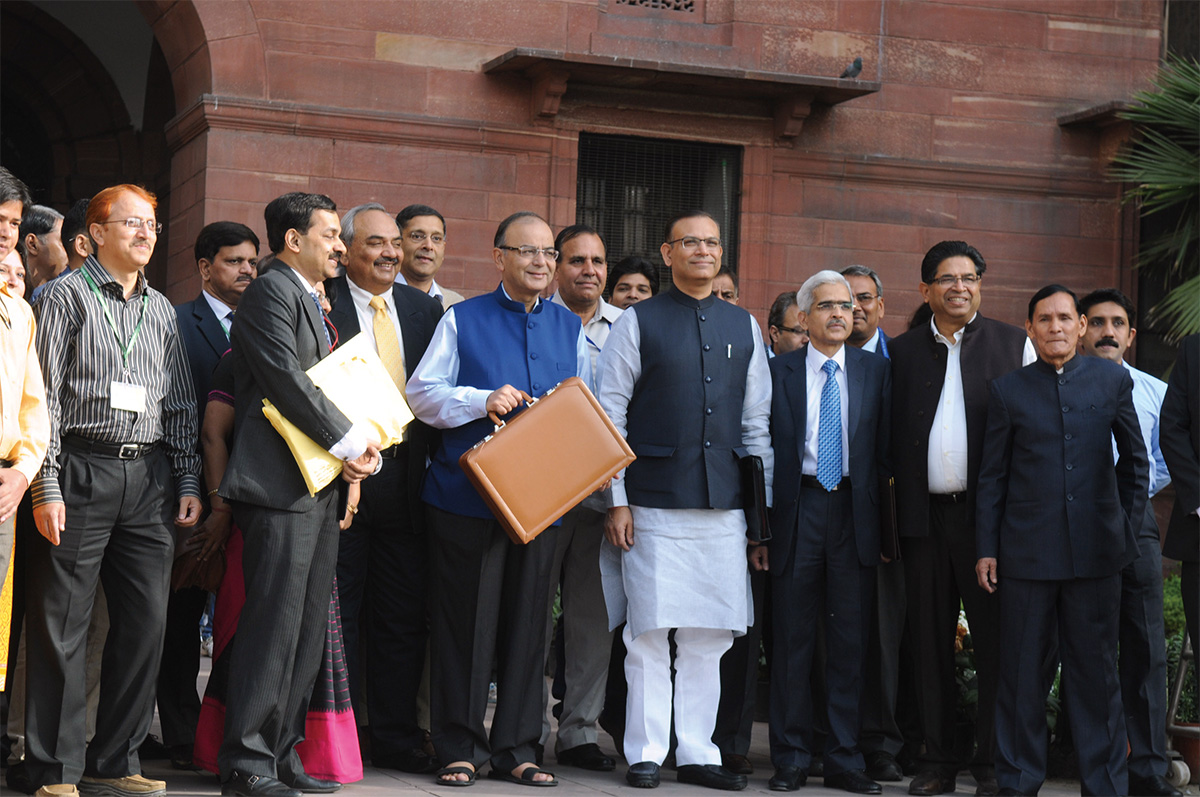
The 2015-16 budget was expected to be a landmark event and finance minister Arun Jaitley announced several far-reaching policy amendments during his speech on 28 February. The manner in which these will be administered and implemented over the next four years will determine the quality and impact of this budget.
This article is written from the perspective of the impact that this budget will have on companies, and highlights the decisions that will confront general counsel and the steps they should take as a result of the budget.
[ihc-hide-content ihc_mb_type=”show” ihc_mb_who=”3″ ihc_mb_template=”2″ ]
Goods and services tax
The finance minister affirmed that the goods and services tax (GST) regime would usher in a state-of-the-art indirect tax system by 1 April 2016. The government’s commitment to implement GST by this deadline was underlined by various measures to widen the tax base, increase rates, and roll back exclusions and exemptions. These measures include:
- Exemption from the education cess and the secondary and higher education cess on manufacturing and rendering of services;
- Increasing the rates of central excise duty and service tax; and
- Pruning the negative list and exemption list for service tax.
Most critical to the implementation of GST is the passing of the Constitution (One Hundred and Twenty-Second Amendment) Bill, 2014. The bill includes amendments to the entries under the constitution which confer taxing powers on the central and state governments, in particular to provide states with powers to tax services, which they currently do not have.
Despite reservations about whether the political consensus and spadework required to introduce GST can be achieved within a year, indications from this budget suggest that businesses should gear up for GST on the presumption and understanding that the transition will take effect from 1 April 2016.
Principally, businesses will need to prepare for the following:
- An overall higher tax cost (at least in the short term) depending on the patterns of sourcing and supply, and any consequential cash flow implications;
- Planning for a wider tax base in which any “supply” is taxed with minimal exclusions;
- Paying GST on imports and on inter-state supplies under the inter-state GST mechanism;
- Dealing with the removal of various exemptions, such as area-based exemptions;
- Tracking credits to ensure they are harvested on the transition to GST;
- Keeping tabs on the continued availability of state incentives and foreign trade policy incentives, which many businesses currently enjoy; and
- Planning for compliance with the GST legislation, including obtaining registrations at both the central and state levels.
Increase in service tax rates
The budget has hiked the service tax rate from 12.36% to 14%. In addition to this, it also proposes to levy an additional 2% Swachh Bharat (clean India) cess on certain services, which will be notified at a future point in time. This cess will effectively take the total service tax impact to 16%. There is no clarity on the concomitant availability of credit of this cess.
Businesses will have to factor this increase into their operations from several perspectives. Firstly, if the business is entitled to credits, the hike may not have a big impact, except to the extent of accumulating credits or proportionate reversal of credits, which may affect cash flow considerations. However, for sectors where credits are unavailable, this increase will have a substantial impact on the cost of procurements.
Secondly, companies will need to carry out a complete review of their contracts, especially where the tax has been subsumed in the contract price. In particular, they will need to examine whether the additional tax qualifies as a new levy or a “change in law” under their contracts and whether the additional burden can be passed on to the customer or vendor, as the case may be.
Thirdly, it will be important to ascertain which transactions are affected by the increase in rate, in terms of the timing of the invoice, payment and rendering of service, under the Point of Taxation Rules, 2011. For instance, if the invoice has been raised prior to the rate change, but the service is completed and the invoice is paid after the rate change, the new rate will apply.
Lastly, given the possibility of a move to GST at the end of this fiscal year, businesses should also anticipate a possible further rise in the service tax rate, perhaps even by way of a mid-year correction.
‘Make in India’
Acknowledging the role of indirect taxes in providing impetus to the “Make in India” initiative, the budget has proposed to reduce manufacturing costs and eliminate inverted duty structures by lowering the rates of basic customs duty on certain imports. A number of items have also been exempted from the special additional duty on imports to address issues of credit accumulation.
As a result of these amendments, entities should re-examine their operations and projects in India with a view to maximizing the tax efficiencies depending on the benefits available for the specific products in question. Moreover, existing contracts will also require a thorough review to determine whether the rate reductions can be factored in and passed on along the credit chain.
Implications for indirect transfers
Following the retrospective amendments to tax indirect transfers, which overcame the decision of the Supreme Court in Vodafone International Holdings BV v Union of India in 2012, the government appointed an expert committee headed by Parthasarathi Shome to make recommendations on dispelling various points of ambiguity in relation to the amendments.
With a view to reinforcing the government’s intent to ensure certainty, predictability and stability in taxation, the concept of “substantial interest” has been defined in relation to indirect transfers in line with Delhi High Court’s judgment in Director of Income Tax (International Tax) v Copal Research Limited (2014). However, all other issues in relation to indirect transfers (such as the potential impact for transactions completed in the past, and the position in cases where a double taxation avoidance agreement exists between the countries in question) have effectively been left open.
In terms of the test prescribed for “substantial interest”, the share or interest of a foreign company or entity is deemed to derive its value substantially from the assets located in India if the value of Indian assets: (a) exceeds ₹100 million (US$1.6 million); and (b) represents at least 50% of the value of all the assets owned by the company or entity.
The “substantial interest” provision will take effect from 1 April 2015 and entities in India will need to scrutinize whether they are covered under the above test. If a substantial interest is found, the Indian entity will be obliged to furnish information relating to offshore transactions which have the effect of directly or indirectly modifying the ownership structure or control of the Indian company or entity. Penalties may be imposed in case of non-compliance with this requirement.
Cuts in corporate tax rate & exemptions
Noting the high tax rate and low collection on account of excessive exemptions under the direct tax regime, the finance minister has proposed to reduce the basic rate of corporate tax in India from 30% to 25% over the next four years. This will be accompanied by the removal of various tax exemptions, incentives and deductions for taxpayers. Bearing in mind the government’s goal of stability in tax policy, advance notice of this move has been provided in this budget, even though the necessary amendments will be implemented only from the beginning of the next financial year.
The scale and extent of the changes may be gauged by the finance minister’s statement that this rationalization is the equivalent of GST in being a transformative measure in direct taxation. This is a positive proposal as the tax rate will decline over time, and companies have notice of the removal of exemptions. However, it remains to be seen which exemptions will be withdrawn and when, and consequently, how this will impact businesses.
Companies therefore need to begin examining the various exemptions, concessions, deductions and incentives that they currently enjoy, and factor into their tax planning the potential rollback of these provisions.
Move to attract fund managers
The government has previously acknowledged that foreign investors remain outside India under the apprehension that their presence in India may have adverse tax consequences. With a view to ending this uncertainty and encouraging fund managers to move to India, the budget provides that fund management activity carried out through an eligible fund manager acting on behalf of an eligible investment fund will not be considered a “business connection” in India of the fund.
This amendment has been proposed in line with international best practices to encourage fund managers of offshore funds to locate to India and is expected to boost fund management and related activities in India. However, the availability of this benefit is subject to the fulfilment of several important conditions, both by the fund (13 conditions) and the fund manager (four conditions).
Businesses will therefore need to ensure regular and complete compliance with each of these cumulative conditions so that they can continue to enjoy the benefits of this provision and ensure that no avoidable tax implications arise in India.
Measures to curb black money
In a bid to address the menace of black money, several measures have been proposed in the budget, including the following:
Concealment of income and assets and evading tax in relation to foreign assets will be prosecutable and punishable by up to 10 years imprisonment as well as a 300% tax fine. Such offences will be made non-compoundable and ineligible for settlement.
Concealment of income or evading tax in relation to a foreign asset will be covered under the Prevention of Money Laundering Act, 2002, to enable enforcement agencies to attach and confiscate unaccounted assets held abroad and launch prosecutions against persons who are laundering black money. This will also enable attachment and confiscation of equivalent assets in India where the asset located abroad cannot be forfeited.
In relation to any foreign exchange, foreign security or any immovable property situated outside India which contravenes the Foreign Exchange Management Act, 1999, action may be initiated to seize and eventually confiscate assets of equivalent value situated in India.
A Benami Transactions (Prohibition) Bill introduced in the current session of parliament will attempt to obviate the generation of black money in real estate transactions by replacing the present law as regards benami transfers (in which property is transferred to one person for a consideration paid for or provided by another person) with one that will enable confiscation of benami property and prosecution for offences.
Banks and financial institutions abetting offences relating to concealment of income and assets and evasion of tax in relation to foreign assets will also be liable for prosecution and penalty.
Given the stringent provisions and harsher approach being taken in relation to such non-compliance, businesses would do well to ensure they take steps to prevent any potential for allegations of wrongdoing under these provisions. In particular, a review of all transactions from the perspective of making appropriate disclosures where any vulnerability exists should become a routine part of business operations. For foreign businesses, it will be critical to ensure that protective clauses are incorporated in all contracts, as a norm, in relation to any dealings pertaining to India.
Lessons of the budget
The budget has addressed several critical issues, perhaps the most crucial of these being the commitment on the run-up to GST this year on the indirect tax side, as well as the expected pruning of exemptions and concessions accompanied by a rate decrease on the direct tax side. Other important issues, as discussed above, include the service tax hike, the grant of benefits towards the “Make in India” initiative, reporting of substantial interest in relation to potential indirect transfers, measures to curb black money, and benefit for fund managers in India.
It is imperative for businesses not only to begin examining the substantive impact of the various changes, but also to ensure efficient and timely implementation of necessary processes as indicated on each of these issues so as to remain compliant with the provisions and also to obtain the various benefits on offer.
[/ihc-hide-content]
Rohan Shah is the managing partner and head of the tax practice at Economic Laws Practice. Rohit Jain is a partner and Divya Jeswant is an associate manager at the firm. This article is intended for informational purposes only and does not constitute legal opinion or advice. Readers are requested to seek formal legal advice prior to acting on any of the information provided.