






LinkedIn
Facebook
Twitter
Whatsapp
Telegram
Copy link

Tax reforms set out in the 2009 budget have been widely welcomed, but an unexpected rise in minimum alternate tax has alarmed investors. Rohan Shah and Anay Banhatti report

India’s complex and opaque tax system may soon be a thing of the past. If recent budget proposals, which include a direct taxes code (DTC) and a goods and services tax (GST), are followed through, the country could be in for its most significant tax policy shift since 1947.

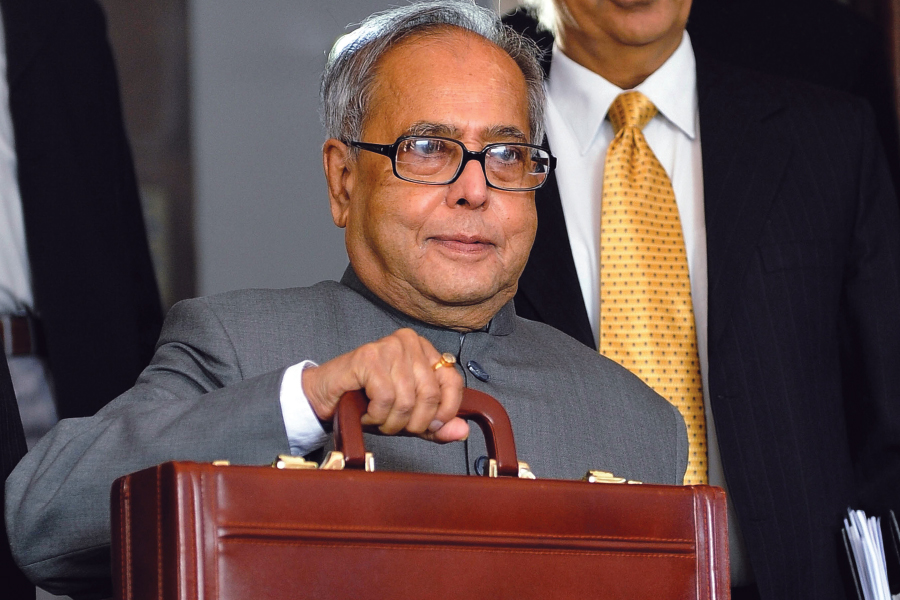
A high level of taxation means that India’s budget has the potential to significantly affect the annual profitability of many domestic and foreign businesses. This in turn generates intense industry and media interest in the budget announcement. The budget presented by finance minister Pranab Mukherjee on 6 July was no exception.

As it was the first budget from the recently re-elected Congress-led government, expectations were high. Unburdened from the shackles of coalition partners of previous years, the government was widely expected to announce major policy initiatives that would affect domestic and foreign participants in the Indian economy.

A promise fraught with challenges

Key hurdles facing the introduction of the GST:

  • Formulating a uniform legislative structure to support the dual levies of central GST and state GST.
  • Setting a uniform revenue-neutral rate.
  • Resolving what will trigger the levy of GST. Will it be the place of supply or the place of consumption?
  • Creating an efficient mechanism for transfer of tax credit between central and state GST.

Tax reforms

Foreign companies and investors, long hoping for an end to a tax system fraught with inefficiencies and delays, had much to cheer when the introduction of the DTC was announced and the time-bound affirmation of the implementation of the GST from 1 April 2010 was made. If introduced in the proposed timeframe, these measures have the potential to reinvent and revitalize a tax system dominated by the verbose Income Tax Act, 1961, and a web of overlapping indirect taxes, which are separately legislated, levied and litigated.

[ihc-hide-content ihc_mb_type=”show” ihc_mb_who=”3″ ihc_mb_template=”2″ ]

Although a date for implementing the GST has been announced, achieving it may prove a tall order (see A promise fraught with challenges, above). Most countries that have introduced similar systems did so with a lead-in period of between 12 and 18 months. In India, the migration to GST will have to be completed in less than six months from the announcement of the architecture of the new tax. Such an announcement is expected to be made by mid-August at the earliest.

Welcome relief: The introduction of a centralized goods and services tax should lessen the administrative burden on Indian and foreign busi
Welcome relief: The introduction of a centralized goods and services tax should lessen the administrative burden on Indian and foreign businesses.

An additional difficulty may lie in the dual structure of the new tax – a central GST and a state GST have been proposed in the budget. The roadmap prepared for the GST’s implementation by the Empowered Committee of State Finance Ministers in consultation with a central government-constituted joint working group, confirms that the central GST will subsume central excise duties and service tax (except specified services of a “local” nature), while the state GST will subsume state value-added tax, service tax on identified “local” services and other local levies such as luxury tax and electricity tax. Significantly, several other taxes, like road tax, stamp duty and toll tax, will be kept out of the GST regime.

While falling short of industry hopes for a unified GST, these proposals are also unlike GST systems in other countries that foreign companies are familiar with it. Nonetheless, any move to simplify a system where multiple levies at both federal and state level can result in indirect taxes of between 28% and 44% will be widely applauded.

New forum for tax disputes

The budget has also proposed an alternate dispute resolution mechanism within the Income Tax Department to facilitate the timely resolution of transfer pricing issues and other disputes relating to foreign companies. Foreign companies that face uncertain tax interpretations and complex tax litigations will be able to use a dispute resolution panel (DRP) created by the Central Board of Direct Taxes. Delivering time-bound decisions, it is hoped that the panel will provide quick solutions to tax disputes involving foreign companies (see The mechanics of the DRP, page 36).

The DRP’s success will depend on it being seen, right from the outset, as a credible, efficient decision maker and one without a revenue bias. Although initially available to foreign companies only, if its implementation is successful, the mechanism should be extended to Indian companies as well.

Sailing into safe harbours

To improve the investment climate in India, the Central Board of Direct Taxes is to be empowered to create “safe harbor” rules that will prescribe transfer prices in international transactions. These prices will be automatically accepted by the tax authorities. Designed to reduce the impact of judgmental errors, it signals a shift from the current arm’s length principle that involves a fact-intensive process. The current process creates a heavy administrative burden on the tax department and complicates compliance issues for tax payers.

The safe harbour rules, which already exist in other parts of the world including the US, Mexico, Australia and Brazil, will make the tax system easier to understand for foreign participants operating in India.

Fringe benefit tax scrapped

The budget has also scrapped fringe benefit tax (FBT), which was introduced in 2005. As a result, an Indian subsidiary of a foreign parent company will not be taxed on shares of the foreign parent that are given in employee stock ownership plans to employees of the Indian subsidiary. Instead, the tax burden will fall on the employee. Fringe benefits offered by companies, including specified securities or contributions of above Rs100,000 (approximately US$2,000) to an approved superannuation fund, will be treated as income of the employee for the purpose of calculating each employee’s personal tax liability.

Service tax on legal advice

Another key change is the introduction of a tax on services related to advice, consultancy and assistance provided by law firms in the corporate, commercial and transactional stream. In introducing this tax, the finance minister has gone against the sentiments of his predecessor, P Chidambaram, an eminent senior counsel who jocularly remarked that he was not levying service tax on legal services as most people did not think lawyers provided a service.

Certain legal services will be exempt from the new tax. They include services provided by lawyers appearing in a court, tribunal or authority, and services offered by lawyers who practise alone, or to clients who are individuals. Indian clients of foreign law firms will be taxed on a reverse charge basis under Section 66A of the Finance Act read with the Taxation of Services (Provided From Outside India and Received in India) Rules, 2005.

The budget has also enlarged the scope of service tax to installations, structures and vessels on the entire continental shelf of India and its exclusive economic zone. So far services provided in areas beyond India’s territorial waters that were not designated by the central government were not taxed.

The mechanics of the DRP

A new forum promises to assist foreign companies with tax disputes in India

The proposed dispute resolution panel (DRP) will be formed by the Central Board of Direct Taxes. It will comprise three commissioners of income tax who will have the power to direct and guide the assessing officers. Intervening at the initial stage of the assessment, the panel will make decisions that are binding on the tax department. A foreign company or person, in whose case a transfer pricing adjustment has been made by the transfer pricing officer, can request its help. The proposed mechanics of the system are as follows:

  • An assessing officer who proposes to make a variation in the income or loss returned of an assessee has to send the assessee a draft assessment order. The assessee can either accept it or object to it.
  • An assessee who disputes the draft assessment order must file his objections with the DRP and the assessing officer within 30 days of receiving the order.
  • The DRP will issue directions based on the objections made by the assessee and the evidence and information collected.
  • The DRP will not issue directions that are prejudicial to the interests of the assessee without giving them an opportunity to argue their case.
  • The DRP must complete the process and issue its directions within nine months from the end of the month in which the draft assessment order is forwarded to the assessee.

Disappointing measures

The budget has not been without criticism and certain aspects of the package have disappointed many observers. Top of the list is a significant increase in minimum alternate tax (MAT) levied on companies that enjoy a tax holiday.

Significantly, the new rate – 15% of the book profits of a company – is half of the current corporate tax rate and 50% more than the previous MAT rate of 10%.

Introduced to ensure that companies that do not pay corporate tax still contribute to the exchequer, the MAT has been misused on many occasions by tax legislators looking to tax streams of income that are ostensibly not taxable in India.

Although this increase may have been softened by an extension of the period for carrying forward MAT credit from 7 to 10 years, it will no doubt impact the expected rates of return on many investments. For example, investments in infrastructure and other sectors critical to the growth of the economy may appear less attractive as a result of the increase.

The hike in MAT is the latest in a series of policy changes that have adversely affected foreign companies in India. Many observers believe that the government should reverse this trend urgently to maintain the country’s credibility as an investment destination.

Legislature v judiciary

A worrying trend in recent years has been the use of the budget to amend tax provisions, specifically with a view to overturning court rulings that were favourable to tax payers. This in a country where litigation of tax disputes can take several years and even after various courts have repeatedly stated that legislative action to negate a judgment is undesirable.

This year’s budget was no different. It contained provisions for the retroactive application of numerous amendments that overturn earlier court rulings. For example, in the recent case of HCL Comnet Systems & Services Ltd the Supreme Court held that provision for bad and doubtful debts should be viewed as diminution in the value of an asset, rather than “unascertained liability”, and should not be considered when preparing book profits for the purpose of calculating MAT liability.

However, the budget has sought to overturn this ruling with an amendment stating that diminution in the value of an asset should be considered when calculating book profits for the purpose of MAT. The amendment will be applied retroactively with effect from the 2001-02 financial year.

When hard-fought victories in the Supreme Court are not honoured by parliament, tax payers not only loses faith in the credibility of the tax system but also give up on their legal rights. This in turn creates an undesirable system where tax administrators consider themselves above the law.

Balancing expectations

While certain aspects of Mukherjee’s budget have alarmed the business community, the package as a whole has been broadly welcomed. As foreign and domestic companies in India hunker down and prepare for the changes, they may recall that similar promises made in the past have fallen woefully short on action. Their scepticism will be justified if this turns into yet another budget that was full of good intentions that went undelivered.

However, if the government can come good on its time-bound announcements for a GST and a DTC, the 2009 budget will be judged as a watershed in India’s tax history.

[/ihc-hide-content]

Rohan Shah is the managing partner of Economic Laws Practice, a law firm based in Mumbai. Anay Banhatti is an associate with the firm.


LinkedIn
Facebook
Twitter
Whatsapp
Telegram
Copy link