






Running out of steam

0
1938
LinkedIn
Facebook
Twitter
Whatsapp
Telegram
Copy link

India must persevere with sectoral reforms to revive India’s battered economy, argues Chandrajit Banerjee

India saw its economy shrink last year after slow-moving reforms coupled with persistently high levels of inflation – primarily due to supply bottlenecks – triggered tight monetary intervention. Investments fell and growth in the country’s GDP decelerated to 6.9% during 2011-12.
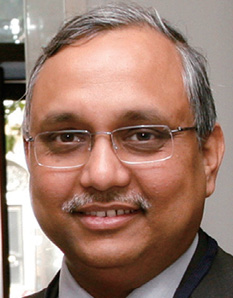
Chandrajit Benerjee
Chandrajit Benerjee

India’s volatile investment climate has also made investors risk averse. Foreign investors have withdrawn capital from emerging markets such as India and parked their funds in relatively low-risk investments such as US dollar treasuries, thus raising the demand for dollars in the international market. The rupee has dropped to a historic low, making it one of the worst performing currencies over the past few months.

Rising inflation has hampered the pro-growth stance of the Reserve Bank of India (RBI). Figures show that inflation surged from 6.9% in February to 7.2% in March. This was driven by a rise in primary goods inflation including food articles, non-food articles and minerals, which rose to 10.5% in March from 9.9% the previous month.

[ihc-hide-content ihc_mb_type=”show” ihc_mb_who=”3″ ihc_mb_template=”2″ ]

India can only revitalize its economy and attract new investments through serious sectoral reforms. Failure to do so will cause stagnation and drive businesses away.

First and foremost, there is a compelling need to ensure fiscal discipline. The government must augment revenues by putting public sector disinvestment on the fast track, implementing the goods and services tax regime and the direct tax code, shifting to outcome-based budgeting, unlocking value from government assets that have become economically unviable, adopting an e-invoicing system, and facilitating out-of-court settlements relating to tax disputes.

Similarly, expenditure could be rationalized with the correction of retail oil prices to reduce the losses of oil-related public sector undertakings and control the government’s subsidy burden. Dual pricing for diesel and the setup of an expenditure reforms commission could also reduce unnecessary government expenditure. Both the central and debt-ridden state governments should focus on fiscal consolidation.

It is also necessary to provide impetus for growth by reviving domestic investments and rejuvenating industrial performance. A reduction in interest rates through more liberal monetary policies will stimulate demand and provide industries with adequate margins to contemplate new investments. The RBI should reignite growth over inflation by easing monetary policy, especially as inflation is triggered by supply side bottlenecks, which is beyond the scope of the RBI. Monetary policy can be eased by further reducing the repurchase rate by 100 basis points and reducing the cash reserve ratio by 100 basis points by December.

Agricultural policy reforms are crucial to achieve inclusive growth in India at a time when 60% of the population depends on the sector for its livelihood. The government should increase investment in agri-infrastructure like storage, communication, roads and markets on a priority basis through the public-private partnership model. The private sector should be incentivized to participate in farm mechanization, agricultural markets and cold chains.

Individual states should provide incentives to adopt the model Agricultural Produce Market Committees Act while minimum support prices should be gradually replaced with a comprehensive crop insurance scheme. The Model Land Leasing Act should also be introduced. Land leasing should be legalized at the state level and the Land Ceiling Act should be abolished. The government should provide incentives for state governments to adopt agricultural reforms and National Rural Employment Guarantee Act funds should be linked to agriculture to enhance profitability. Finally, foreign direct investment (FDI) in organized retail should be liberalized to improve agricultural supply chain systems.

The infrastructure sector is required to generate an investment of US$100 billion over the next five years starting in the next fiscal year. Of this, 50% of the investment needs to come from the private sector. In order to facilitate such a degree of private investment, the government should encourage public-private partnerships, create effective dispute resolution mechanisms, ease land acquisition policies (for example, the government should be able to deliver at least 80% of land before awarding a project), and ensure greater transparency in the bidding and awarding of projects. In the power sector, there is a need to address supply constraints in key segments like coal, power and oil, introduce reforms in distribution and create an infrastructure debt fund and extend the definition of infrastructure to include exploration and the laying of pipelines. More funds must be incentivized towards infrastructure, leveraging pension and insurance funds.

There is an urgent need to restore macroeconomic credibility through a multi-pronged approach. We must focus on addressing the problem of fiscal deficit, modernize agriculture, incentivize labour-intensive manufacturing and boost the health, education and infrastructure sectors. We must move forward with tax reform legislation, revamp land acquisition rules and the mining bill to ensure transparency, extend FDI limits in retail, insurance and aviation, and simplify administrative procedures.

Domestic and international investors acknowledge the strong fundamentals of the Indian economy and its inherent resilience to cope with shocks. A 6.9% rate of growth in today’s volatile global economy is no mean feat. But economic reforms are vital if India is to enjoy its high growth trajectory again.

[/ihc-hide-content]

Chandrajit Banerjee is the director general of the Confederation of Indian Industry.

LinkedIn
Facebook
Twitter
Whatsapp
Telegram
Copy link