






LinkedIn
Facebook
Twitter
Whatsapp
Telegram
Copy link

As international regulation brings tighter controls to offshore investing, the leading jurisdictions are setting the pace for safe sanctuary with Chinese interests well in mind, writes Paul Campbell

The wave of international regulation of finance and taxation that began with the aftershocks of Lehman Brothers’ collapse in 2008 is building into a tsunami this year, and many in the offshore world say they welcome it.

“These changes will enhance stability over time,” observes Denise Wong, a partner at Walkers in Hong Kong. International agreements on the exchange of information between tax authorities are “beneficial for the relationship between onshore and offshore territories, and help offshore jurisdictions better position themselves in the eyes of foreign investors, governments and the general public as transparent, reliable and legitimate”.

For Chinese companies and high net worth individuals, the coming changes mean a loss of some of the confidentiality they have come to expect from offshore finance centres, as well as greater oversight by the PRC tax authorities.

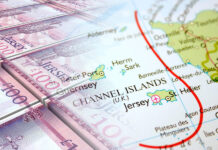
Guernsey was one of more than 40 jurisdictions, including neighbouring Jersey, the Isle of Man and other offshore centres such as Cayman Islands, British Virgin Islands and Cyprus that in November agreed to become early adopters of a new common reporting standard, or CRS, for automatic exchange of information on assets held by non-residents with other countries for tax purposes, which was published by the Organisation for Economic Co-operation and Development (OECD) in February.

In August 2013, China became the last Group of 20 nation to sign the OECD’s Multilateral Convention on Mutual Administrative Assistance in Tax Matters, with all members of the group due to begin exchanging tax information by the end of 2015.

“Whilst the measure is designed to tackle global tax evasion, all affected individuals should make sure their tax affairs are up to date before the data is exchanged, so that the data match their returns and do not trigger an investigation,” says Jason Collins, a London-based partner at Pinsent Masons.

[ihc-hide-content ihc_mb_type=”show” ihc_mb_who=”1″ ihc_mb_template=”2″ ]

The OECD standard calls on jurisdictions to obtain information from their financial institutions and automatically exchange the data with other jurisdictions on an annual basis. The standard also sets out the financial account information to be exchanged, the institutions that need to report, types of accounts and taxpayers covered, as well as common due diligence procedures to be followed.

The OECD is gearing up on other fronts too, tackling what it calls base erosion and profit shifting (BEPS) – where companies structure their businesses in a way designed to shift earnings to jurisdictions with more favourable tax regimes, thereby eroding governments’ tax bases. The Paris-based rich-countries club will put forward its recommendations for harmonising global regulations and tax treatment this year.

“The Chinese tax authorities may consider adopting principles in BEPS into domestic legislation to further strengthen the existing anti-avoidance rules on beneficial ownership, commercial substance, indirect transfer,” says Robbie Chen, a tax expert in the Shanghai office of Pinsent Masons. “Profit allocation purely based on contractual, without reasonable supporting on functional analysis, is likely to be denied.”

Safe outposts-Robbie Chen

One concern is that provisions to limit the use of vehicles whose sole purpose is to garner the benefits from double taxation treaties will be drawn wider than necessary, drawing legitimate commercial structures into their net, Collins says. “In turn, this is likely to lead to a substantial increase in disputes with tax authorities, with more than one country seeking taxing rights over the same income, and arguments over whether treaty benefits are due,” he says.

Reaching and implementing a global framework for taxation may help ease some of the political heat from the US and European capitals, where governments are increasingly serious about collecting their dues on their citizens’ undeclared assets. KPMG estimates that up to a quarter of the total Swiss private banking market – the world’s biggest – comprises “at risk” assets of non-resident EU citizens.

As these are uncovered and repatriated, smaller banks – which are already struggling under the considerable cost burden of the added regulation and compliance – may be forced to close or merge.

The big question is whether money from China will help make up for the outflow. “The issue here is how portable the Swiss banking model is,” the KPMG report said. “Some of the traditionally strong selling points such as discretionary, managed mandates, tax advantages and particular service standards do not necessarily translate into advantages” in the Chinese market.

Many businesspeople in China prefer to take a more direct role in managing their assets than the archetypically Swiss managed portfolio, says Paul Christopher, Mourant Ozannes’ managing partner in Hong Kong. Yet for all their increased wealth and influence, China’s businesspeople are often failing to make best use of the planning and continuity advantages offered up by offshore financial centres, he adds.

In a recent case, the 80% owner of a BVI company died, without adequately planning for the event. The company was an operating entity with assets, employees and an ongoing business – all of which were thrown into turmoil. Banks in Hong Kong froze the company’s accounts and lawyers had to scramble to keep the business afloat while they untangled the mess, Christopher says.

Many Chinese hold direct shares in BVI companies but don’t realise the implications of that, should they die, he says. Proper planning and structuring would avoid the risk. “BVI has been bought so heavily for planning that hasn’t been thought all the way through.”

Safe outposts-Paul Christopher

Over the past 15 years, the leading offshore jurisdictions have introduced more flexible legislation covering trust products – such as Vista trusts in the BVI and STAR trusts in the Cayman Islands – while trust laws in Guernsey and Jersey have been updated, providing, for example, for settlor reserve power trusts.

One product that may be suited to such clients is the private trust company (PTC), where settlors, beneficiaries, family members and other advisers may all be on the board. A PTC structure can be developed as a specific solution to suit the needs of the client and their family, taking into account important aspects of their financial, tax and regulatory requirements while retaining flexibility of management.

Considerations when choosing where a PTC is founded and operated – the two are not necessarily the same – include the perception of the jurisdiction, Christopher says. While established centres are giving up some of their traditional confidentiality under the OECD and other reforms, clients should carefully weigh up the likely disadvantages of choosing jurisdictions that fail to enter into such international dialogue, including restricted or penalised access to markets, reputational risk and difficulty in finding a deep pool of professional and competent advisers and service providers.

Rather than fight greater global oversight of the offshore industry, many centres are touting their co-operation with the fight against tax evasion and stressing instead competitive advantages that include political stability, certainty of legal outcomes, and political administrations that are flexible, nimble and finely attuned to clients’ needs.

“Many offshore centres, including the Cayman Islands, make an active effort to ensure that their laws and regulations are competitive,” says Walkers’ Wong, citing the Exempted Limited Partnership Bill (2014), which was gazetted on 21 February 2014 and was expected to pass into law as this issue of China Business Law Journal went to press.

Safe outposts-Denise Wong

“The revisions to the existing law are based on three broad principles: to confer even greater contractual flexibility on the partners; to reflect developing trends in the formation, regulation and operation of private funds; and to ensure consistency of advice on matters of Cayman Islands law,” Wong says. Exempted limited partnerships are favoured offshore vehicles for many Chinese when structuring any private equity, venture-capital or real estate fund set-up, owing to the great flexibility provided by the partnership framework and the familiarity of investors with the product, says Jonathan Culshaw, Hong Kong managing partner at Harneys.

Under the old law, the general partner of a limited partnership had an obligation to act in the best interests of the partnership in all circumstances. The revised law is expected to allow partnership agreements to expressly specify certain circumstances in which a general partner may instead act in its own interests or in the interests of a third party, he says.

Partnership agreements usually contain detailed default provisions that outline various penalties that can be applied by a general partner against limited partners that fail to fund agreed commitments on a new investment. These provisions have included reduction in capital accounts and forfeiture of all or part of a partner’s interests, and there has been a concern that some of the remedies may be unenforceable in the Cayman Islands as penal provisions.

“The new law is expected to make such provisions strictly enforceable in accordance with their terms, which is of benefit to general partners as certainty of funding is critical to a closed-ended fund’s business,” Culshaw says. “Both Chinese GPs and LPs should make sure they take advice on the changes when drafting or agreeing the provisions of limited partnership agreements.”

Safe outposts-Jonathan Culshaw

Another successful Cayman Islands legal adaptation was in mergers – with the low approval thresholds and relative simplicity of the procedures making it an attractive option for Chinese companies listed in the US to go private. In the past two years, more than 30 companies listed in the US, with business operations primarily in China, have announced an intention to go private.

“We still see companies preparing for going-private deals and there is no obvious trend of slowing down of delistings by Chinese companies that traded in the US,” Wong says. Walkers is advising on China Hydroelectric Corporation’s sale to NewQuest Funds, announced in January. Just last month, Giant Interactive Group, one of China’s leading online game developers and operators, said its parent company teamed up with private equity firms to take it private in a US$3 billion deal.

Other offshore centres are also competing hard for the Chinese market.

Guernsey is targeting the real estate and private equity fund industries, both into and out of China, says Fiona Le Poidevin, chief executive of Guernsey Finance, who was in Beijing for meetings with regulators last month.

Guernsey and the China Securities Regulatory Commission signed a memorandum of understanding in November 2013 to work more closely together, with China eager to tap the island’s growing expertise in fund regulation and administration, she says. Private equity funds under administration in Guernsey have jumped 45% in the past five years, and the island now has a large number of professionals in private equity administration. “They’re not just administering vanilla investments,” Le Poidevin says.

As Chinese investors look to diversify their assets internationally and take part in the nascent recovery in the US and Europe, Guernsey is well positioned to prosper. “In the Chinese market, they’re going to be looking West,” she says, adding that proximity to investment targets in the UK and continental Europe and a time zone that bridges Asian and US working days are important assets. “You can’t ignore or knock the basics.”

Safe outposts-Fiona Le Poidevin

That’s a sentiment shared by Geoff Cook, Le Poidevin’s counterpart in neighbouring Jersey. The Jersey practice of Appleby, for example, advised Blackstone on the sale of its interest in Chiswick Park Estate to China Investment Corporation, the sovereign wealth fund, for £780 million (US$1.28 billion) in January 2014.

Increased regulation also gives an advantage to those centres with the deepest pools of experienced advisers. “Given Jersey’s specialist expertise in fund governance, we see real opportunities for managers to draw on that and outsource their administration needs to Jersey, to help facilitate increasingly complex reporting requirements,” Cook told a London client conference for Jersey Finance on 19 March 2014.

In addition to competing on reputation, flexibility and depth of service, offshore centres are also positioning themselves as “one-stop shops” for China’s wealthy. The Bahamas plans to open an electronic aircraft registry, rounding out the centre’s suite of services.

“Many high net worth individuals, if they have a yacht, the chances are they have a private plane,” says Llewellyn Boyer-Cartwright, a partner at Callenders in Nassau and former pilot who has been a keen proponent of a register for several years. “Like our ships register, we don’t want to be a flag of convenience. We want to be a flag of excellence.”

offshore2The Bahamas is entering a fast-growing and increasingly crowded field that meets a surging Chinese demand for aircraft, both commercial and private. Bank of Communications, ICBC and China Development Bank have all set up leasing operations in Ireland. The aircraft leasing business may reach US$130 billion by 2025, PricewaterhouseCoopers estimated in an October 2012 report.

In the past two years, San Marino and Malta have set up their own aircraft registries, with Guernsey set to open one soon. Aruba and Bermuda both have well established and growing registries. Key features to consider are the flag-jurisdiction’s safety standards and reputation, along with the taxation advantages – the Isle of Man is part of the EU’s VAT area, for example. For Chinese clients, having a foreign flagged plane may make it difficult to fly freely inside China, though the government is making moves to free up the civil aviation sector.

“Chinese buyers tend to go for larger jets because they prefer to travel with bigger entourages,” says Brian Johnson, the Isle of Man’s first director of civil aviation, who now works at law firm Appleby in the capital of Douglas. Johnson set up the Isle of Man’s registry a little more than six years ago – it now has more than 650 aircraft – and plans to do the same for Jersey this year.

[/ihc-hide-content]

LinkedIn
Facebook
Twitter
Whatsapp
Telegram
Copy link