







The Supreme Court judgment in the long-running Property Owners’ Association v State of Maharashtra dispute says privately owned resources must not be indiscriminately made “material resources of the community”, writes former deputy advocate general Varun Kumar Chopra
The Property Owners’ Association v State of Maharashtra case marked a pivotal moment in Indian constitutional jurisprudence, addressing the intersection of property rights and public welfare.
Originating in 1991, the case was a legal challenge by the Property Owners’ Association against amendments to the Maharashtra Housing and Area Development Act, 1976 (MHADA). Introduced in 1986, the amendments empowered the Mumbai Building Repair and Reconstruction Board to acquire dilapidated “cessed” properties for repair and reconstruction, if 70% of residents give consent. The legislative intent lay in article 39(b) of the Indian constitution, which advocates equitable distribution of resources for the common good.
The case ascended to a nine-judge bench of the Supreme Court, underscoring its constitutional significance and the high stakes for property owners, tenants and the state. The core issues were balancing individual property rights under the constitution’s article 300A against the state’s authority to regulate property for public welfare. The property association claimed the amendments undermined ownership rights; the state claimed they were essential for addressing urban decay and promoting housing equity.
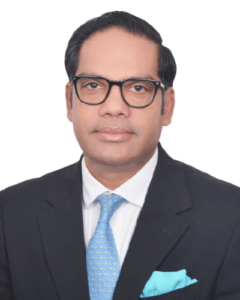
Former deputy advocate general and an advocate in the Supreme Court
The landmark judgment reaffirms the state’s authority to enact welfare legislation but outlines clear safeguards for property rights. It holds implications for urban redevelopment, signalling the constitutional boundaries of property regulation and fostering dialogue on balancing economic interests with social justice.
Article 39(b) of the Indian constitution places a positive duty on the state to formulate policies so “ownership and control of material resources of the community” are for the “common good.” In 1977, the Supreme Court’s judgment in State of Karnataka v Shri Ranganatha Reddy shaped the interpretation of 39(b).
The Karnataka Contract Carriages (Acquisition) Act, 1976, sought to nationalise all contract carriages in the state. This legislative action was defended as fulfilling the state’s obligation under article 39(b) to ensure equitable distribution of material resources for the common good.
Led by Chief Justice MH Beg, a seven-judge constitution bench delivered a 4:3 split decision. The majority held that private resources, like the contract carriages, were not “material resources of the community” under article 39(b). However, in a powerful dissent, Justice Krishna Iyer argued that excluding private resources would undermine the fundamental objective of redistributive justice, and would “cipherise” article 39(b)’s “very purpose of redistribution the socialist way”.
This resonates in the Property Owners’ Association v State of Maharashtra case. The acquisition of “cessed properties” (properties for which a cess or tax is paid by the owner under chapter VIII-A of the act) by the Mumbai Building Repair and Reconstruction Board drew on article 39(b)’s principles. Justice Iyer’s 1977 dissent bolsters an argument that equitable resource allocation, even involving private property, is fundamental to public welfare.
Subsequently, in Sanjeev Coke Manufacturing Company v Bharat Coking Coal Ltd (1983), a five-judge bench led by Justice Chinappa Reddy reconsidered this interpretation while determining the constitutionality of four 1971-73 union laws to nationalise coal mines and coke oven plants.
The court embraced Justice Iyer’s minority view, affirming that “material resources of the community” under article 39(b) encompassed privately held resources as well as natural and publicly owned resources. The court reasoned that the “constitutional goal” was to establish a “sovereign, socialist, secular democratic republic”.
In 1997, a nine-judge Constitution Bench led by Chief Justice AM Ahmadi, in Mafatlal Industries Ltd v Union of India, endorsed this interpretation while addressing claims for refunds on unauthorised tax levies. The bench reaffirmed the position in Sanjeev Coke, holding that “material resources of the community” included privately owned resources.
Moving forward to the property owners versus Maharashtra case, many argued that their property rights were infringed by the state law’s 70% consent requirement for state acquisition, repair and reconstruction. The argument was that it effectively allowed a majority of tenants to dictate the acquisition of privately owned property. This tension culminated in 1991, when the owners’ association filed its legal challenge, asserting the 1986 amendments undermined the article 300A constitutional right to property.
The Property Owners’ Association is a collective of more than 20,000 Mumbai landowners. It argues the amendments grant excessive powers to the Mumbai reconstruction board, effectively enabling it to take control of residential properties without adequate checks or safeguards.
In December 1991, Bombay High Court dismissed the association’s petitions. The court held that the state had a fundamental responsibility to ensure adequate shelter for the general populace. Additionally, It referenced constitutional article 31C, which shields legislation enacted in pursuit of article 39(b) from challenges based on articles 14 or 19, thereby reinforcing the constitutional validity of the 1986 amendments.
The owners’ association and other concerned petitioners then escalated their challenge to the Supreme Court. This produced a series of interconnected cases, including Shivram Ramayya Yerala v State of Maharashtra and Pramila Chintamani Mohandas of Bombay, Indian Inhabitant v State of Maharashtra. These cases — now some of the oldest pending matters before the court — highlight the complexity and significance of the issues. Initially, the matter was heard by a three-judge bench; as legal questions grew in scope, the case was referred to a five-judge constitutional bench in May 1996.
In March 2001, the five-judge bench identified a critical discord between the 1977 Ranganatha Reddy majority judgment and the 1983 Sanjeev Coke Manufacturing Company ruling. The core issue was whether private property could be considered “material resources of the community” under article 39(b). The bench noted this had not been definitively settled in the earlier judgments.
The five-judge bench referred the matter to an even larger bench for a comprehensive review of the relationship between private property rights and the broader social and economic goals enshrined in the constitution.
In February 2002, a seven-judge bench led by Chief Justice SP Barucha expressed reservations about the stance taken in the 1997 Mafatlal case; specifically, the broad interpretation that extended “material resources of the community” to include privately owned property. The bench had “some difficulty” with this expansive view and suggested re-evaluation before escalating the matter to a nine-judge bench for further scrutiny.
As the matter awaited hearing before the nine-judge bench, the on-ground situation in Maharashtra began to shift. Allegations emerged that the state government had failed to restore the “cessed” properties it had acquired. Frustrated landowners and tenants began to explore alternative solutions. In several instances, they entered development agreements among themselves to independently restore the properties.
These landowners and tenants petitioned the Supreme Court, seeking to halt the acquisition process and return the properties to original ownership. They argued that, if properties were returned, tenants could acquire ownership of their flats, while landowners would be appropriately compensated for losses.
In July 2013, a three-judge Supreme Court bench declined to grant interim relief to the petitioners, but acknowledged “inordinate” delays in the government’s efforts. The bench reasoned that halting acquisition would contradict the very essence of chapter VIII-A of the Maharashtra Housing and Area Development Act, to address urban decay and ensure equitable distribution of housing resources.
This again highlighted tension between the government’s responsibilities and the rights of property owners and tenants adversely affected by delayed redevelopment. The case thus became a focal point, not only for legal discourse on property rights, but also for ongoing debate about the effectiveness and fairness of government intervention in urban restoration.
While the legal challenges remained unresolved, the Maharashtra government decisively introduced further amendments in 2019. That August, the government mandated time-bound redevelopment. It stipulated that, if landowners failed to restore their properties within a specified period, the state would assume control and manage redevelopment.
The government presented this amendment as a welfare-oriented initiative. However, landowners saw it differently, arguing it was an attempt to seize private property under the guise of promoting the public good.
Property Owners’ Association President BR Bhattad argued the government’s true objective was to acquire valuable real estate at “throwaway” prices and hand it on to large-scale developers and contractors for profit.
As of now, a consolidated set of petitions challenging the 2019 amendments remains before the Supreme Court. Among the 24 oldest cases, a significant portion is associated with the Property Owners’ Association.
Despite the 2019 amendments, the court only resumed hearing the matter in October 2023, a clear indication of how long and drawn-out the judicial process has been in resolving this high-stakes property rights dispute. The case remains a significant battleground between individual property rights, government intervention and the broader goals of social welfare.
You must be a
subscribersubscribersubscribersubscriber
to read this content, please
subscribesubscribesubscribesubscribe
today.
For group subscribers, please click here to access.
Interested in group subscription? Please contact us.