






Global survey finds China GCs not as proactive as elsewhere

0
1742
LinkedIn
Facebook
Twitter
Whatsapp
Telegram
Copy link

Chinese general counsel lag developed nations in terms of playing more proactive roles as boardroom advisers rather than acting as back office legal workers, according to a survey of 320 general counsel in countries around the world.

The KPMG report entitled Beyond the Law sought opinions from general counsel in 32 countries.

Grant Jamieson, head of forensic, KPMG in China and Asia-Pacific, told China Business Law Journal that in China the report found that general counsel are seen more as legal advisers, and they’re only brought in when there is a situation, so in a very reactive basis with the accounting advisers, etc., and deal with an issue. But they’re probably not going to be routinely consulted on business strategy”.
relationship-with-the-board

[ihc-hide-content ihc_mb_type=”show” ihc_mb_who=”1″ ihc_mb_template=”2″ ]


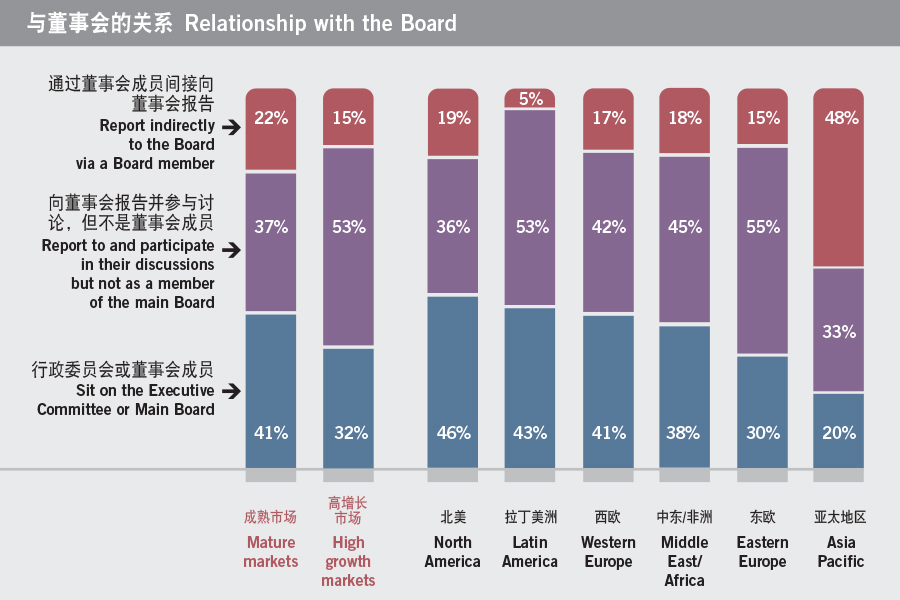
In Asia-Pacific responses to the survey, Only 20% of respondents said that the legal department was represented on the main board (versus 38% globally; China stood at 20%). Nearly half said that they report to the board indirectly (19%; 60%), while a third take part in board discussions but do not have a board member (43%; 20%). The Asia-Pacific included China, Japan, Australia, India, New Zealand and Singapore, so percentages between developed and developing nations at times varied widely.

Jamieson said he believed this will change as regulation and litigation increase. “It is not enough for businesses to use GCs purely for questions of law as and when they arise. The most successful organisations will have general counsel who are integrated in the businesses, advising on the management of risks and the avoidance or resolution of disputes and offering commercial solutions that can be readily understood and implemented.”

areas-of-risk

Globally, the survey found that 86% of respondents flagged up regulatory risks as a key issue, while data security and protection was seen as a risk by 84% of respondents. Other principal areas of concern related to reputational risk (80%), increased complexity of third party contracts (79%), supply chain failure (76%) and anti-bribery and corruption (73%).

[/ihc-hide-content]

LinkedIn
Facebook
Twitter
Whatsapp
Telegram
Copy link