



The biotechnology industry is highly reliant on patent protection. Due to the extreme complex and unpredictable nature of living things, biotech patents are distinctive in terms of patentability of subject, disclosure sufficiency of the specification and support requirements of the claims. China has developed an examination and protection regime for biotech patents full of its own particular quirks of which foreign investors should be aware.
Gene patentability
The US Supreme Court’s controversial Association for Molecular Pathology vs Myriad Genetics decision may have triggered debate over the patentability of genes, but China’s policy on granting patent protection to isolated genes has not been seriously challenged to date. Pursuant to the Patent Law, a gene or DNA fragment that has been isolated or extracted from nature for the first time may be accorded patent protection if its base sequence has not been documented in prior art, it has industrial value and can be duly characterized.
The focus of Chinese gene patent debates is currently more concentrated on whether it should be expressly required that claims for gene patents be limited to the function or application of the gene sequence. Pursuant to the Patent Law, gene sequences are granted a scope of protection equivalent to that for ordinary chemical substances – an absolute protection.
[ihc-hide-content ihc_mb_type=”show” ihc_mb_who=”1″ ihc_mb_template=”2″ ]
In practice, gene sequence patent claims are limited to neither the biological activity nor the medical use of the proteins coded for by the genes. During the examination, all that is required is that the function or application of the gene sequence be fully disclosed in the description. The applicant is not required to limit the function or application in the gene sequence claims.
Yet genes have specific characteristics that set them apart from ordinary chemical substances, and the absolute protection conferred by gene patents seriously restricts subsequent research on and development of unknown functions of the sequence. There have been persistent voices demanding new consideration as to whether the scope of current protection under the Patent Law is overly broad. Only time can tell if this view will be incorporated into patent examinations.
Full disclosure and support
As with the patent laws of other major jurisdictions, the Patent Law stipulates express requirements on full disclosure in patent descriptions and whether the description sufficiently supports the claims. However, the State Intellectual Property Office (SIPO) adopts more stringent examination standards of such issues as support and full disclosure for biotech patent applications, which has set off considerable debate.
When examining biotech patent applications, SIPO requires that the specification contain experimental data on usage or effect, a requirement that cannot be satisfied by theoretical predictions or simulated experiments. Foreign applicants, and American applicants in particular, must pay special attention to this point when submitting a biotech patent application in China.
SIPO has recently relaxed its requirements on experimental data somewhat for the usage and effect of compounds in its examinations – mainly due to the push by foreign applicants, global pharmaceutical companies in particular. It has also strengthened its examinations for inventiveness. Further, with respect to patent applications involving methods of high throughput screening of agents or pharmaceuticals, the doubts that applicants face in China concerning whether their disclosures are sufficient are clearly on the high side as compared to other major jurisdictions such as the US, the EU and Japan.
On the other hand, SIPO examinations are also relatively strict in terms of deciding whether claims are supported by the description. Examiners will normally only permit limited generalization from the scope disclosed in the embodiments, and will reject any overly broad or secondary generalizations made during examination. Foreigners submitting biotech patent applications thus must pay particular attention to the experimental data description and regularly generalize and summarize the data in respect of the invention solution.
Swiss-type claims
Methods of diagnosing and treating illnesses are not patentable in China under the Patent Law. However, SIPO has long accepted Swiss-type claims, indirectly granting patents for certain treatment or diagnostic methods. The typical method of drafting such a claim is: “Application of substance X in the manufacturing of the medicine for the diagnosis or treatment of illness Y”.
It should be noted that the normal scope of protection of a Swiss-type claim is a new diagnostic or treatment usage for a known substance. If a restriction on the treatment process is involved, e.g. a restriction on the time that the medicine is to be administered or its dosage, jurisdictions differ in whether protection can be secured through the use of a Swiss-type claim.
A recent Supreme People’s Court judgment completely obviated this possibility in China. The judgment held that the “pharmaceutical manufacturing process” could only include such features as the raw materials, the preparation steps and the preparation conditions, and not such features as the method of administration of the medicine, the dosage, the patient subgroups and so on. Foreign applicants thus must pay particular attention to these special restrictions placed on Swiss-type claims under the Patent Law.
Patent rights enforcement
In comparison to the communications, IT and internet sectors, the intensity with which China enforces patent rights in the biotechnology sector is unsatisfactory. This may be due to competition in the Chinese biotech sector being in no way comparable to that in the communication and IT sectors at present. At the same time, the early biotech patents granted in China were commonly associated with a narrow scope of rights, thereby severely restricting holder’s ability to enforce their rights.
It can be anticipated that China will grant increasing numbers of biotech patents in the near future, meaning the entire biotech patent rights enforcement scene may be in for a change. Companies and organizations should thus be proactive in applying to secure biotech patents in China in order to effectively safeguard their rights.
[/ihc-hide-content]
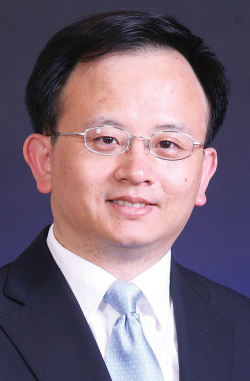
Wu Li is a senior consultant of AnJie Law Firm. He can be contacted on +86 10 8567 5952 or by e-mail at wuli@anjielaw.com