













The future direction of India’s legal market may be influenced by a little-known case that has languished in the country’s courts for 13 years. Alfred Romann reports
For over a decade Lawyers Collective v Bar Council of India et al sat dormant in the files of Bombay High Court. It emerged again in 2007, resurrected amid a growing discussion about the role foreign lawyers play in India, and the fact that many of them are effectively practising in the country.
This work takes place not in law firm offices, but in the lobbies and bars of the best hotels. It is accomplished either through cooperation agreements with local firms, or by the foreign lawyers themselves “parachuting” in from London, New York or Singapore.
Over the last 10 years, the liberalization of India’s legal market has been an issue of little political importance, far down the list of priorities for successive governments pursuing a delicately balanced agenda of economic growth, social stability and reform. It is this same agenda, however, that has recently brought the issue back into the limelight.
Economic reform and the resulting growth have transformed India into an attractive destination for foreign capital. At the same time, Indian multinationals have emerged, hungry for acquisitions abroad. Like it or not, interaction with foreign lawyers has become a necessity.
Despite this new reality, the Indian legal establishment has fiercely guarded its 47-year-old prohibition on foreign law firms opening offices in the country. The only exception was a short-lived experiment with liberalization in the early 1990s when the Reserve Bank of India (RBI) permitted the establishment of foreign “liaison” offices. These offices were neither allowed to offer legal advice nor have lawyers on their staff.
Three foreign law firms – Ashurst, Chadbourne & Parke and White & Case – were granted two-year licences to set up liaison offices in India, strictly and solely to handle marketing operations. Controversy was soon to follow.
Indecisive action
Lawyers Collective is a Mumbai-based not-for-profit pressure group run by lawyers. It has limited funds and usually campaigns on social issues such as civil rights, HIV/AIDS and affordable medicines for the poor. In its history, it has filed just a single case in its own name.
That case began in 1995, when Lawyers Collective applied for a legal review of the RBI licences granted to the three foreign law firms. Widely interpreting the Legal Advocates Act, 1961, the collective argued that foreign firms should not be allowed to have a presence in India.
[ihc-hide-content ihc_mb_type=”show” ihc_mb_who=”3″ ihc_mb_template=”2″ ]
More importantly, it asserted that virtually any activity by foreign lawyers relating to Indian law was tantamount to practising. Lawyers Collective successfully argued that the monopoly on the “practice of law” afforded to Indian advocates under the Advocates Act was not restricted, in essence, to the conduct of litigation in court and the peparation of court pleadings and other court documents, as had been the widely held view. Its argument was that, given the breadth of the act, it would require no stretch of the imagination to interpret events such as a casual lunch between a foreign lawyer and an Indian businessman as constituting the practise of law.
According to Lawyers Collective’s argument, this is especially true given that “practising law” in India (depending on how one reads the act) encompasses virtually every facet of the legal profession, including drafting documents and advising clients on international standards and customs.
Lawyers Collective filed its case in Bombay High Court, which ordered the RBI to review the licences it had granted, but itself took no position. Ashurst, Chadbourne & Parke and White & Case challenged the case in the Supreme Court, but that bench hastily passed it back to the high court.
With none of the litigants pushing the issue, and Lawyers Collective having effectively achieved its objective of keeping more foreign law firms out, the case was buried. That was the last anyone heard of it for the next 11 years. “Everybody lost interest after the order was given,” says Anand Grover, a director of Lawyers Collective.
In compliance with the high court order, the RBI reviewed the three licences, but left them in place. It still conducts regular audits of the one office that remains in the country (Chadbourne & Parke and White & Case have packed up and left, but Ashurst still has an office) to ensure it is strictly a liaison office and not a legal practice.
Sleeping dogs
From 1996 to 2007 the status quo was undisturbed. When the issue (and the case) did resurface, it was the result of a government initiative.
In September 2007, the Law Ministry revisited the issue of liberalizing the legal services sector in order to meet India’s obligations under the World Trade Organization’s General Agreement on Trade in Services (GATS). In a written statement, India’s law minister, Hansraj Bharadwaj, said the government would only lift barriers after considering the views of the Bar Council of India and the interests of the legal profession.
Two months later the Bar Council of India released a statement opposing the entry of foreign firms, saying this would adversely impact Indian lawyers. But it left the door open for reciprocal agreements.
A heated debate has raged ever since, with many interest groups looking to the dormant Lawyers Collective case to establish a precedent.
A point of principle
Lawyers Collective’s 1995 lawsuit includes almost every organization with a stake in the debate.
The 15 defendants are the Bar Council of India, the Bar Councils of Maharashtra and Goa, the Bar Council of Delhi, the Bombay Incorporated Law Society, the Bar Association of the Supreme Court of India, the Bar Association of India, the RBI, the Directorate of Enforcement of the RBI, the Central Board of Direct Taxes of the Ministry of Finance, the Chief Commissioner of Income Tax, White & Case, Chadbourne & Parke, Ashurst Morris Crisp (as Ashurst was known at the time) and the Society of Indian Law Firms.
Anand Grover of Lawyers Collective says his organization wants to stand on principle in the case. The Advocates Act bars foreigners from practising law in India and Lawyers Collective argues that it is not the role of the RBI to change those rules.
Grover is adamant that the action is a matter of principle. The collective is not taking any money for this work and is not funded by any other person or group, he says. He is offended by suggestions that the ultimate goal of the lawsuit is to promote third-party interests, even though he is aware that the case has worked to the benefit of some.
“This is an impression many foreigners have. I’m frankly surprised they still think that,” he says.
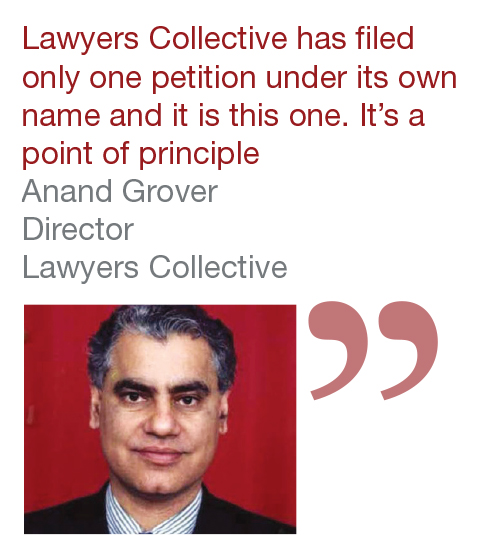
“Lawyers Collective has filed only one petition under its own name and it is this one. It’s a point of principle,” Grover says. “We are not allowed to practise law in the US, why should they be allowed to practise in India?”
However, he continues, “we know very well that our case has benefited others.”
Vested interests
The main beneficiaries of the protectionist policies have arguably been Indian law firms. Shielded from foreign competition, many domestic firms have profited handsomely from India’s economic growth and increasing openness to cross-border transactions.
Those in favour of liberalization argue that the majority of Indian lawyers will not be threatened by the entry of foreign firms. Most of India’s 600,000 lawyers focus exclusively on domestic litigation, an area of little interest to foreign firms. It is thought that less than 10% are involved in any form of international work.
Foreign firms, by comparison, would base their India practices on advising on international commercial laws: mergers and acquisitions, capital markets, private equity, multi-jurisdictional regulatory issues, and so on.
Relatively few Indian firms have the capacity to handle such issues on an international level. Prohibited by law from expanding beyond 20 partners (although some have found ways around this restriction), most are family-run establishments with less than 50 lawyers.
In spite of this, strong elements within the domestic profession are fiercely opposing any steps towards reform. One of the most vocal opponents is Lalit Bhasin, president of the Society of Indian Law Firms and managing partner of Delhi-based law firm Bhasin & Co.
Bhasin has consistently argued that any move towards opening the market would first require a change to the Indian Advocates Act. Even then, he believes, the entry of foreign firms would be damaging to the domestic legal profession.
Chinks in the armour
Few expect India’s legal market to remain closed forever. The very idea of it seems at odds with the more interconnected India that is increasingly visible in international culture, politics and business.
There are also signs that chinks are appearing in the armour of unity against the entry of foreign firms. The Bar Council of India recently suggested it is willing to consider unlocking the market, as long as issues of reciprocity can be resolved.
In a statement at the end of October, Bar Council chairman Suraj Narain Prasad Sinha told newspapers that, while “still undecided”, the Bar Council of India has “chalked out some terms and conditions on the entry of foreign firms.
“We will not take a final decision till a give-and-take formula with foreign jurisdictions is finalized,” he told Livemint.
On 1 November, India’s Economic Times quoted Chief Justice KG Balakrishnan as saying: “I don’t think the Indian Bar Council can continue to resist [the proposal to allow foreign law firms to operate in India].” The same article quoted India’s high commissioner to the UK, Shiv Shankar Mukherjee, as saying: “of course it is going to happen … I cannot give you a timeframe but this is being handled at the senior level and it will be done.”
India’s law minister, HR Bharadwaj, has long espoused the concept of a more open legal market, and has discussed the idea openly with representatives of the Indian legal profession and overseas bar associations. He has not expressed commitment to any course of action, however.
The final verdict
After 11 years on the sidelines, Lawyers Collective v Bar Council of India et al will come up for what is expected to be its final hearing in Bombay High Court in late January. Nobody seriously expects that this decision will be the end of the saga. The case will most likely find its way back to the Supreme Court on appeal. Still, what happens in January may either help pave the way for greater access for foreign lawyers, or make their entry more difficult.
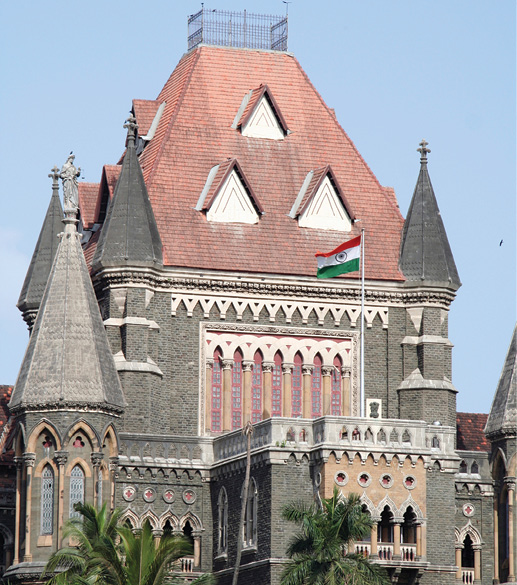
The case is pivotal for the future of foreign lawyers in India and a large number of stakeholders will be watching the result closely. A decision in favour of Lawyers Collective will dismay the international legal community and may precipitate attempts to challenge the Indian Advocates Act in front of the World Trade Organization. A result in favour of the foreign firms, however, is likely to meet tough opposition from elements in the domestic legal establishment.
Either way, the debate over foreign law firms practising in India is unlikely to go away any time soon. One lawyer who has followed the case closely since its inception said a resolution is probably two years away – but, he jokes, it has been two years away for a decade and a half.
As one would expect, the three firms involved in the lawsuit are keeping tight-lipped on the issue, following the case and participating as needed through local counsel, but not making any public comments.
Grover, meanwhile, is adamant that Lawyers Collective’s case is motivated by a desire to uphold the law rather than by protectionist sentiments. “We don’t mind American or British lawyers coming here and litigating, as long as we can do the same,” he tells India Business Law Journal.
“That is our point. I’m not interested in the other point about whether it is good for the country … I’m only interested in that it is against the law.”
[/ihc-hide-content]