













Investment prospects are improving in southern state of Kerala, but are local law firms rising to the challenge of providing the sophisticated services that investors demand?
In September, the twin cities of Kochi and Ernakulum, the commercial heart of Kerala, played host to around 2,000 delegates attending a three-day conference called Emerging Kerala, aimed at wooing investors. Addressing the much publicized event, the prime minister, Manmohan Singh, spoke of the need to build “an enabling environment” for investment.
Kerala has a dismal record of attracting investments even though it has some of the highest human development indicators in India and receives about 30% of its GDP as remittances from Keralites working overseas. The state attracted only 0.3% of all industrial projects implemented in the country between 1992 and March 2012, compared with 4.54% in neighbouring Tamil Nadu.
With remittances projected to fall and unemployment rising, especially among the educated and the skilled, the state’s image clearly needs a makeover.
But as Pathrose Matthai, a senior advocate of Kerala High Court, points out, there is little chance of that happening when less than a month after the conference, industrial consumers of electricity in the state were asked to reduce their consumption by 25% during peak hours.
[ihc-hide-content ihc_mb_type=”show” ihc_mb_who=”3″ ihc_mb_template=”2″ ]
The Kerala way
The industrial stalemate in the state is reflected in a low demand for corporate services, including in the legal realm. Perhaps partly for this reason, lawyers who do only corporate work are unheard of.
Kerala has a large number of expert litigators who practise in courts across the state and in Ernakulum, where Kerala High Court is situated. Santhosh Mathew, a partner at Ninan & Mathew Advocates in Ernakulum, points out that the reason for this may well be that the “judiciary in Kerala plays a very proactive role in common causes affecting the common man”.
While most lawyers operate as sole practitioners, a few have formed partnerships that they continue in after being designated as senior advocates, which is unusual in India. Joseph Kodianthara, a partner at Joseph & Kuriyan, a prominent law firm in Ernakulum, is one such lawyer. Kodianthara, who says he does “everything except pure criminal law”, is a fourth-generation lawyer and a senior advocate of Kerala High Court.
India’s national law firms, which focus on high-value transactional work and corporate legal advice, choose to largely ignore the state.
“You can’t do a M&A transaction in Kochi, it’s the wrong place,” says EK Nandakumar, managing partner at Menon & Pai, which is recognized as Ernakulum’s leading law firm. However, Nandakumar adds that the firm does have expertise in mergers and acquisitions. It is currently executing a scheme of arrangement in Kerala High Court for Harrisons Malayalam, a plantation company that has almost 60,000 acres of land in Kerala.
Menon & Pai takes pride in its full-service capabilities. But given the nature of work that comes its way, Nandakumar, who is one of two senior advocates at Menon & Pai, says the firm’s “core business is litigation”.

The firm is also well known for its role in grooming judges, which Nandakumar humourously describes as its USP (unique selling proposition). Several partners have gone to the bench directly from the firm, and two former partners are sitting judges of Kerala High Court.
Family matters
Menon & Pai has six partners and 15 associates, and an “unwritten policy” to not allow more than one member of a family to work at the firm at any one time.
While this is unusual even in Mumbai and Delhi, it is especially remarkable in Ernakulum, where several prominent lawyers work with family members or in family firms.
Typical of this is Dandapani Associates, a well-known local firm set up by a husband and wife team: KP Dandapani, who is currently advocate general of Kerala, and Sumathi Dandapani. Both are senior advocates of the high court. Their son, Millu Dandapani, who practises at the firm, says he is taking on increasing responsibilities.
Joseph & Kuriyan is also built on family networks. The firm, which is seen as a competitor to Menon & Pai, has four partners and five associates. One of the partners is also a partner at Joseph & Markos, a Kottayam-based firm, which in turn is linked to Markos & Co, a Bangalore-based firm.
Family networks are important even in younger firms, such as Veritae Legal, a partnership founded in 2008 by three second-generation lawyers: brothers Aswin and Anwin Gopakumar, and Praveen Hariharan. The firm, which has three partners and 11 associates, provides both general corporate and litigation services and its clients include spice manufacturers and two car dealerships. Veritae Legal has recently opened an office in Bangalore.
Aswin Gopakumar says that they call on the services of his parents, who are both litigators at Kerala High Court, when clients require a more experienced litigator to represent them in the courts.
The tendency to keep work within the family can be seen across India. However, unlike other legal centres such as Chennai, where the market is similarly dominated by independent practitioners and family firms, in Ernakulum there appears to be little concern about more professionally organized law firms entering the market and upsetting this business model.
A new face
A recent entrant to the market from outside Kerala is Fox Mandal, which set up in Kochi in August 2008. The firm has one senior associate and four associates in its Kochi office. A Bangalore-based partner, Shyamal Mukherjee, and a Chennai-based partner, Kaustav Chunder, oversee the office, travelling to Kochi twice a month.
“We had a number of clients who had interest in Kerala and so thought it was prudent for a firm of international stature to open an office there,” says Mukherjee, pointing out that “Kerala per se had no regular law firms that you can talk of”. He says that the Kochi office of Fox Mandal is generating revenue “to an extent”.
But few local lawyers see Fox Mandal as any real competition, as there is a general belief that only home-grown lawyers can flourish in the state.
Solicitors are different
In addition, as the legal market in Kochi and Ernakulum is dominated by litigation specialists, some are dismissive of the role played by other lawyers.
“A solicitor’s work is not lawyers’ work,” insists Bechu Kurian of Bechu Kurian & Co. Kurian, a sole practitioner whose father is a former judge of the Supreme Court, works with a team of seven associates. Kurian’s clients include Marico, a consumer products company that has a US$740 million turnover. He remarks that solicitors merely “cut and paste” documents, a task that requires little skill as compared to practitioners such as himself who stand up in court and argue cases.

These sentiments are echoed by George Poonthottam, another prominent lawyer in Ernakulum, who declares that “non-litigation is a fraud”.
The new frontier?
Be that as it may, most lawyers in Kochi and Ernakulum provide both litigation and non-litigation services. Some are even trying to push open doors to work that is traditionally done by lawyers in Mumbai and Delhi.
Sunil Shanker, a partner at KN Sivasankaran & Associates, says that investment fund activity in Kerala’s real estate, hospitality and technology sectors has created the space for local lawyers to do transactional work. He believes Kerala lawyers who are steeped in litigation work are ideally suited to putting together and vetting documents for joint ventures and other investment structures.
“Litigation people are best at judging what can stand in a court of law,” says Shanker, adding that transactional work is best done after obtaining some experience in litigation.
Shanker says that transactional work has come his way through his links – created through university alumni networks – with lawyers and others in Mumbai. This work is only a part of his practice.
Good networking skills have also helped other firms to attract clients.
Long-standing relationships
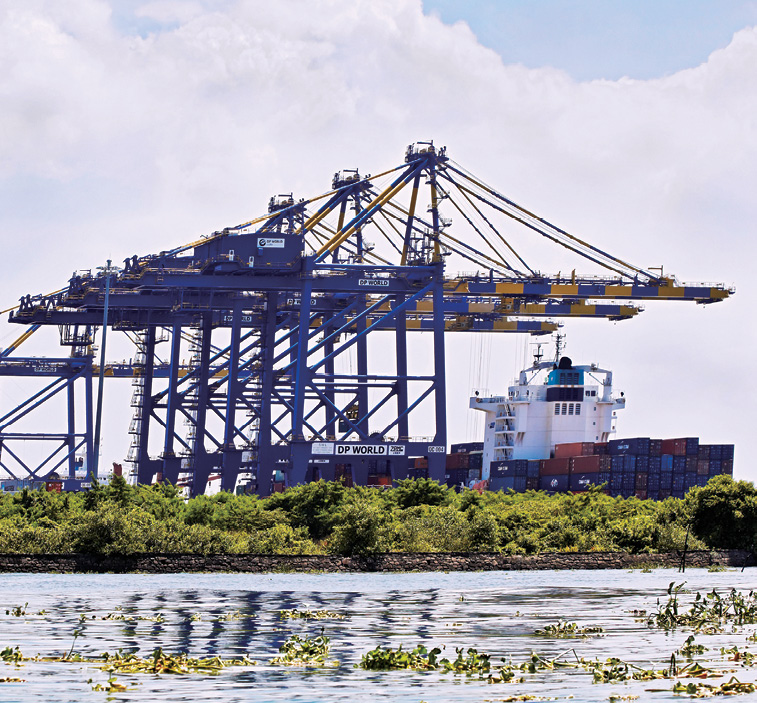
Menon & Pai has some large public-sector undertakings, such as Cochin Port Trust and Bharat Petroleum, as retainer clients. The firm’s other corporate clients include several companies in the Tata group; DP World, the developer and operator of India’s first international container transshipment terminal, at Vallarpadam outside Kochi; and both Coca-Cola and Pepsi.
Kodianthara at Joseph & Kuriyan says the firm’s list of clients includes Hindustan Unilever and Apollo Tyres, a company with a US$2.5 billion turnover that established its first manufacturing unit in Kerala nearly four decades ago and now has two units in the state.
Poonthottam is standing counsel for the University of Kerala and Mathew at Mathew & Ninan Advocates is standing counsel for the University of Calicut. Educational institutions are high-profile entities and education-related issues can produce controversies in Kerala.
“Education is lucrative [as an area of law] because of the pettiness of the executive,” says Poonthottam. He provides an insight into some of the disputes involved when he goes on to say that “subsidized education provided by the state is enjoyed by the affluent classes”.
Fox Mandal reports that its clients include government entities that work in infrastructure development, such as Kerala Industrial Infrastructure Development Corporation, and Infrastructure Kerala (Inkel).
Sumathi Dandapani at Dandapani Associates says she has been standing counsel for Southern Railway since 1986.
“Those days standing counsel was chosen from a panel of lawyers provided by the chief justice,” remarks Dandapani, suggesting that obtaining such coveted positions is no longer as straightforward and requires strategic connections.
Most lawyers in Kochi and Ernakulum agree that more change is on the way.
Small pool of clients
“The legal scenario in Kochi has changed because investments have increased,” says Kurian at Bechu Kurian & Co. He believes that several investments made in the state are “opening up vistas for litigation”. As a result Kurian says the profession’s prospects “are looking up”.
A recent decision by the central government to relax cabotage rules for transshipment of containers through the international container transshipment terminal at Vallarpadam is expected to lead to increased investment and economic activity in Kerala.
“India is going to emerge as a maritime hub,” predicts VB Hari Narayan, a partner at United Maritime Law Chambers. “More cargo and mother vessels are coming to Kerala.”

Demand for lawyers in Kerala who are experts in maritime law is expected to rise and several lawyers in Kochi and Ernakulum report that their repertoire of legal skills includes maritime law.
However, Syam Kumar a partner at Southern Law Chambers, who does marine litigation, says “there is nothing maritime about maritime lawyers, including me, in Kochi”.
“All of us handle only simple cargo claims, which is nothing, and any lawyer can do it,” says Kumar who points out that most of their work involves matters to do with the carriage of goods by sea. He says most of the claims are for petty amounts and that he has “never come across a suit for more than ₹1 crore [US$185,000]”.
Kumar reports that he has appeared for almost all the shipping lines – through their protection and indemnity (P&I) clubs – that have had disputes in Kochi. Southern Law Chambers, which is recognized as one of the first in Kochi to handle shipping matters, has four partners and three associates and maritime law is one of several areas of law that it is capable of handling.
A recent high-profile case in Kochi, which went beyond cargo claims, involved an Italian merchant vessel, MT Enrica Lexie, that opened fire on an Indian fishing boat killing two fishermen off the coast of Kerala. The case went all the way to the Supreme Court and Kumar appeared for one of the fishermen, Ajeesh Pinku.
The owners of the ship were represented by VJ Mathew & Co, a firm that has worked on maritime matters from the early 1980s. VJ Mathew & Co has four partners and 12 associates, but only three lawyers are based at its principal office in Kochi. The firm has six other offices including one in Dubai.
“We are parties to 99% of shipping work in Kochi,” says VJ Mathew, managing partner of VJ Mathew & Co, who is a senior advocate of Kerala High Court. Mathew says that his clients include several P&I clubs.

Other lawyers who report that they have handled maritime cases include Santhosh Mathew at Ninan & Mathew Advocates and Narayan at United Maritime Law Chambers.
“A new class of maritime lawyer is emerging,” says Narayan, referring to young lawyers, such as himself, who have set themselves up as maritime lawyers after completing a university course on the subject.
New groupings
Narayan is on the governing council of the Maritime Law Association of India (MLAI), which he says is three years old and has “around 50 members” across India. The MLAI is seeking membership of Comité Maritime International (CMI), which works towards the unification of maritime laws across jurisdictions. Membership would add to the credibility of the lawyers involved. The CMI has no members from India.
The MLAI plans to set up a maritime law arbitration centre in Kochi. “The Indian Chamber of Commerce and Industry, Kochi, have tentatively agreed to provide the venue … subject to approval by their board,” says Narayan, adding that he expects the centre to be in operation by December.
Talent to call on
Prominent law firms in Ernakulum and Kochi
|
Bechu Kurian & Co |
|
BS Krishnan Associates |
|
Fox Mandal |
|
Jaochim & Janson |
|
Joseph & Kuriyan |
|
KN Sivasankaran & Associates |
|
Marks & Rights |
|
Menon & Pai |
|
Ninan & Mathew Advocates |
|
Southern Law Chambers |
|
Sukumaran & Usha |
|
United Maritime Law Chambers |
|
Veritae Legal |
|
VJ Mathew & Co |
|
This list is not exhaustive. |
Mathew at VJ Mathew & Co reports that he and other “hard core” maritime lawyers across India – including S Venkiteswaran, a reputed Mumbai-based maritime lawyer – have recently formed a similar organization, Committee Maritime India. This organization has 15 office bearers (Mathew is a vice-president) and it is also seeking membership of CMI.
Making its mark
Another area of law that is seeing increasing activity is intellectual property (IP).
“There is a growing awareness of IP in Kerala,” says Anup Jaochim, a patent agent and managing partner of Jaochim & Janson. The four-lawyer firm offers a wide range of IP services, including registration of trademarks and patents.
Joachim says the market for IP services in Kerala is affected by the presence of consultants who offer low-cost services but are unable to deliver as they lack the necessary skills.
“If they say the price is ₹6,000 [US$110] it hurts us … this price can’t happen,” says Jaochim, pointing out that unlike lawyers, consultants can advertise their services and this makes the problem worse. He adds that there is little IP-related litigation in Kerala as most people “are not ready to fight”.
However, that could be changing. TM Raman Kartha, who practises at Kerala High Court, suggests that with brand awareness on the increase there are signs that trademark-related litigation is developing in the state. But he adds that not many lawyers are keen on it as IP is seen as a “strange and new subject”.
Expanded horizons
While most lawyers in Kochi and Ernakulum are focused on serving clients within Kerala, some younger lawyers are finding opportunities in legal processing outsourcing (LPO).
Tariq Akbar, CEO of LegalEase Solutions, an LPO provider that has operations in Kochi and Chennai, says LegalEase began operating with four pilot offices – in Bangalore, Chennai, Delhi and Kochi – and found that its pilot office in Kochi performed the best. Akbar admits that this may have been a result of good management in Kochi, but says that with three law colleges in the area, Kochi has “good legal talent” and a good supply of lawyers. For an LPO looking to scale up operations this can be critical.
Retaining local talent, however, may be tough. “Often, good lawyers don’t want to stay in Kochi,” says Aswin Gopakumar at Veritae Legal. This may be in part due to the lower fees that lawyers in Kochi and Ernakulum charge.
With Kerala facing a long struggle to convince the rest of the country that it is open for business, the status quo looks set to continue.
 “Investors are scared to come in due to the fact that for everything a PIL [public-interest litigation] is filed … fortunately the frivolous ones are thrown out,” says Mathew at Ninan & Mathew Advocates.
[/ihc-hide-content]
An impenetrable ceiling
While Kerala takes prides in its gender statistics, the upper echelons of the state’s legal profession remain almost exclusively male
Of the 30 judges at Kerala High Court, only one is a woman from Kerala: Justice K Hema. The only other woman – Chief Justice Manjula Chellur – moved to the court last November after 11 years at Karnataka High Court. For many women lawyers in Kerala the under-representation of women at the top of Kerala’s judicial system is deeply troubling.
“We have made many representations to the government, and to the Bar Council of Kerala and Bar Council of India … but to no avail,” says NN Girija, an Ernakulum-based lawyer who is secretary of the Kerala Federation of Women Lawyers. She points out that there are several high-calibre women lawyers in Kerala, but few are considered for the bench.
This disparity is in sharp contrast to the Kerala’s much-publicized gender statistics, which suggest that the state’s women enjoy the best quality of life in India. Kerala has 1,084 females for every 1,000 males. The life expectancy of women is 76 years, and the maternal mortality rate is a relatively low 81 for every 100,000 births. Female literacy stands at 91.98%, compared with 96.02% for males.
Pushing their way in
Kerala also boasts many women lawyers. Girija says her organization has 1,304 active members, and around 15,000 women lawyers are practising across the state, alongside 50,000 men.
Girija believes the odds are stacked against women. “A lawyer’s income is low, but the workload is high and while men somehow manage to cope, women often move on to less strenuous jobs as soon as they find one,” she explains. “A woman lawyer typically has multiple responsibilities, and the pressure of work can be intolerable.”
Working conditions for women lawyers at the Kerala High Court have improved steadily over the years. The court – a modern building that has been in use for six years – has separate rooms complete with a library and secretarial facilities for women lawyers to use while they wait for their cases. But none of this came easily.
“We insisted that lady lawyers needed separate space within the high court,” says Justice KK Usha, a former chief justice of Kerala High Court and the first woman in Kerala to be elevated to the bench from the bar. Justice Usha says some male members of the bar opposed facilities specifically for women lawyers when the new high court building was designed. But the court allotted space, which was furnished by the Federation of Women Lawyers and contributions from the family of Justice Janaki Amma, a former judge of Kerala High Court.
More such facilities may be sought when the large numbers of women currently studying law enter the profession.
A changing scenario?
“More than 70% of students at the School of Legal Studies are women,” says NS Gopalakrishnan, a professor at Cochin University of Science and Technology. He suggests female students regularly outnumber males in law colleges across Kerala. As a result, Gopalakrishnan expects that the profession in Kerala will have many more women in the future and “the legal function will be under women” in a few decades.
The success of lawyers such as Sumathi Dandapani, a senior advocate of Kerala High Court, indicates that clients do not necessarily consider the gender of a lawyer while deciding who to turn to for legal advice.
“As long as you can do the job it doesn’t matter whether you are a man or a woman,” says S Karthika, a lawyer who practises at Kerala High Court.
Karthika is Justice Usha’s daughter and chances are she will know what it takes to push her way forward. Many more women practising in Kerala will need to figure this out if there is to be some semblance of a gender balance at the top of the state’s legal system.